"AI-Generated" Label Now Mandatory as EU Implements New Rules
AI Office of Dozens Launched Under the Commission
Rectification Orders and Fines Imposed on Companies Violating Regulations
The European Union's (EU) AI regulations, which include a mandate for labeling content created by artificial intelligence (AI) as "AI-generated," went into effect on August 2 (local time).
Previously, the EU introduced the “AI Act,” the world’s first comprehensive legislation regulating AI, in 2024. With the enactment of the AI Act, new AI-generated content released from this day forward must clearly indicate that it was created by AI. In addition, users must be informed in advance that they are interacting with an AI system, such as a chatbot, rather than a human.

To enforce these regulations, the EU has established the AI Office under the European Commission, comprised of dozens of technical experts, lawyers, and economists, to oversee whether general-purpose AI models, such as chatbots, comply with the regulations. The EU may order companies found to be in violation of the regulations to rectify any infractions, and if they fail to comply, they may face fines. The highest possible penalty requires companies to pay either up to 7% of their global annual revenue or 34 million euros (approximately 56.2 billion won), whichever is greater. However, existing AI systems are granted a grace period until December 2 of this year to comply with the new rules.
With the authority to impose penalties on companies that violate the AI regulations, the European Commission is expected to solidify its position as the world’s most influential regulatory body in the field of AI technology.
Additional regulations under the AI Act will also be implemented sequentially from the end of this year. From December, AI systems that generate explicit deepfakes will be banned. This measure was introduced following controversy over "Grok," the AI chatbot from Tesla CEO Elon Musk, which generated nude images without subjects’ consent. Regulations targeting high-risk AI models deemed to pose threats to safety, health, or citizens' fundamental rights will come into effect from December next year, allowing companies ample time to prepare for compliance.
Henna Virkkunen, Vice President of the European Commission, explained ahead of the implementation of the AI regulations, "This measure is intended to reduce deception and manipulation and to help people make the right choices based on sufficient information." She continued, "AI is an innovative technology that can offer tremendous benefits to European citizens and businesses, but if not properly designed and used, it can cause harm. In particular, it has been confirmed that the most advanced AI models can introduce a new scale of risk that is fundamentally different from what we have seen before."
Hot Picks Today
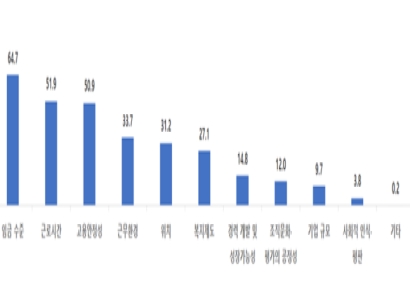 "Please Pay Me at Least 3 Million Won a Month": More Than Half of Young People Today Prioritize "Working Conditions" Over Company Size
- Selling Like Crazy Every Year... 30-Year-Old Hetbahn Takes on a New Challenge: Tastes Better Than "Mom's Home Cooking" [On-Site Report]
- Ran 18 km With 9-Year-Old Tied to Him at the Waist... "Man Banned From Competing for 3 Years"
- "Hey, Lady, Teach Your Kids to Behave!" ... 300,000 Won in Cash and a Bodily Injury Claim Demanded Over Child's Door Ding
- Beachgoer Finds 'Plastic' That Turns Out to Be Perfume Ingredient Worth More Than Twice as Much as Gold
Meanwhile, there is speculation that the United States may push back against the EU's AI regulations. The Trump Administration has previously complained that the EU is pressuring American big tech companies under the guise of digital regulation.
© The Asia Business Daily. All rights reserved. Unauthorized AI training and use prohibited.




![[Market ING] KOSPI Seeks Rebound in Superweek Packed with Corporate Earnings and FOMC](https://cwcontent.asiae.co.kr/asiaresize/307/2026102514484873155_1792907327.jpg)