Land Ministry to Create 'New Daedongyeojido'... Entire Country to Be 3D-Mapped by 2030
"4th Basic Plan for Fostering the Geospatial Information Industry" Finalized
By 2030, the government plans to create a 3D map of the entire country, with all 120,000 km of national roads marked to the centimeter—including the exact positions of lanes, crosswalks, and traffic signs. Artificial Intelligence (AI) will be trained on this information to predict disaster risks and determine in advance the possibility of land and factory permits.
The Ministry of Land, Infrastructure and Transport confirmed on August 3 its "4th Basic Plan for Fostering the Geospatial Information Industry (2026-2030)." This new plan was established in line with the nationwide transition toward AI transformation, aiming for South Korea to become one of the top three AI powerhouses in the world.

Geospatial information refers to the data that contains the locations of all natural and artificial objects located on land, underground, or on water. It serves as foundational data for various decision-making processes, such as autonomous driving and disaster prediction.
Currently, national maps are mainly two-dimensional, with a scale of 1:5000. The government plans to transform these into a three-dimensional map with an image accuracy of 5 centimeters, referred to as the "New Daedongyeojido." For more detailed maps at a 1:1000 scale, the coverage area will be expanded from cities, counties, and districts to towns and townships, and the current seven-year update cycle will be shortened.
Of the 120,000 km of national roads, precision road maps have been created for 40,000 km as of now. The government aims to expand this to the full 120,000 km by 2030. For outdoor mobile robots, standards for pedestrian maps will be established by 2027 before construction begins. The integrated underground map will be expanded to include not only facility locations such as water and sewage systems, but also 14 additional types of information such as strata and ground conditions.
The data will be processed to enable AI learning, and a "GeoAI Foundation Model" for analyzing locations and surrounding conditions will also be developed. This will be used in urban development, transportation and logistics operations, disaster response to landslides and flooding, and will also expand services for pre-assessment of land development and factory permits.
Following the launch of the National Land Satellite No. 1 and No. 2, the government will introduce satellites No. 3 and No. 4, along with radar satellites capable of observing surface changes regardless of clouds or lighting. Regulations will be revised to allow private companies to distribute geospatial information after security processing. In addition, the number of "Geospatial Information Secure Zones," currently operating in Seoul and Daejeon, will be increased.
As of the end of 2024, the domestic geospatial information industry had sales of 11.3 trillion won, 5,854 businesses, and 74,067 employees. The government plans to establish start-up support centers in regions outside Pangyo and to designate four-year universities as specialized institutions for geospatial information, in addition to current designations in high schools, junior colleges, and graduate schools.
Yoonduk Kim, Minister of Land, Infrastructure and Transport, stated, "This 4th Basic Plan for Fostering the Geospatial Information Industry focuses on transitioning geospatial information from a government-driven data construction industry to a core convergence industry led by the private sector in the AI era, in line with the nationwide Korea AX transformation policy."
Hot Picks Today
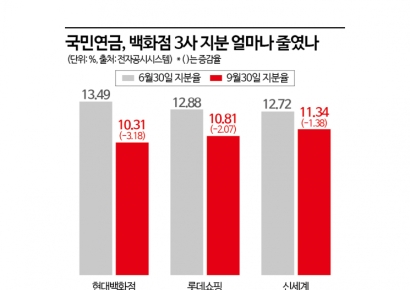 'Big Investor' NPS Has Already Cut Its Losses... Sold Department Store Stocks in Q3 Despite Strong Earnings Outlook
- "There's a Drink Like This?"... Chinese Beverage With "Korean" in Its Name Rakes in 85 Million Won in Monthly Sales
- "Female Teachers Must Wear Skirts in Class"... Outrage Erupts Over Principal's Demand: What's Happening in North Korea?
- "I Put in 10 Million Won, but Only 2 Million Won Is Left" ... 77% Plunge Leaves Retail Investors in Samsung Electronics and SK hynix Leveraged ETFs Crying Out
- "The leggings are all see-through. It's so embarrassing to look at," complaints prompt Lululemon to fire development staff.
The Minister added, "With high-precision 3D geospatial information and GeoAI as a foundation, we will support solutions to challenges across society and industries such as cities, logistics, mobility, and disaster safety, and proactively foster the geospatial information industry as a future growth engine that underpins Korea's leap to become a leading AI country, the fostering of new industries, and balanced regional development."
© The Asia Business Daily. All rights reserved. Unauthorized AI training and use prohibited.