Police Confident in 'Separation of Investigation and Prosecution'… Launch Task Force to Address Criminal Procedure Act Amendment
Separation of Investigation and Prosecution... Police Highlight "Legislative Decision by the National Assembly"
National Investigation Headquarters Aims to Enhance Completeness While Maintaining Speed
The police have launched a dedicated task force to respond to changes in the criminal justice system, such as amendments to the Criminal Procedure Act focusing on the separation of investigation and prosecution. The goal is to address key issues, including enhancing the completeness of investigations and reallocation of investigative personnel.
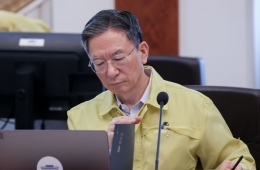
Seokki Hong, Chief of the National Investigation Headquarters at the National Police Agency, told reporters on August 3, 2026, "Since police gained the authority to conclude investigations in 2021, we have undergone various pilot operations. With the elimination of direct investigations or supplementary investigations by the prosecution, we established a task force (TF) to check if there might be issues such as whether more police investigators will be needed or whether case handling will be prolonged." The TF will be led by Investigation Planning and Coordination Officer Seungnyeol Yoo.

Seokgi Hong, Director of the National Investigation Headquarters at the National Police Agency. Photo by Yonhap News Agency
View original imageRegarding changes following the amendment of the Criminal Procedure Act, the police expressed both confidence and a sense of responsibility. Chief Hong addressed concerns about police investigations, stating, "It is now explicitly stipulated that prosecutors are responsible for indicting and maintaining prosecutions, while judicial police officers are responsible for investigations. This serves to clarify the inherent roles of each institution," adding, "We respect the National Assembly's legislative decision, and at this major turning point in the criminal justice system, we feel a deep sense of responsibility."
The task force established to respond to the amendment of the Criminal Procedure Act is expected to operate within the police as a temporary organizational structure, tasked with addressing major issues. Topics under discussion include revisions to investigative guidelines and rules, as well as the reallocation of investigative staff in response to the amended law. Chief Hong explained, "Basically, once the police take charge of a case, they must conclude it within three months, either by sending it to the prosecution or by deciding not to send it. If a prosecutor requests a supplementary investigation, a response must be provided within an additional two months. Primarily, we aim to ensure that investigations are conducted swiftly and with greater completeness from the outset."
Hot Picks Today
 "30,000 Won in Korea, 70,000 Won in Japan"—Koreans Fill Suitcases as Illegal Direct Purchases Soar
- "Only 400m from Accommodation": Body Believed to Be Jang Miran Found After 104 Days, Sparking Investigation Negligence Controversy
- In Korea, It's a Beloved Side Dish... But Miami Spends $4.1 Million to Remove 9,000 Tons from Its Beaches
- "Monster That Eats Gold" Turns Out to Be Real: Uproar in China as 5-Year-Old Swallows $7,500 Gold Bar, Sparking Questions About Family's Wealth
- Homeless Man with Necrotic Leg Refusing Help Opens Up to Police After Two Months of Consistent Visits
The police will consider whether the additional personnel needed for investigations should be assigned directly to frontline investigation teams or allocated to review and check for improvements in the investigative process. Chief Hong noted, "We are reviewing various approaches, such as supporting newly secured personnel for direct investigation teams or assigning experts to scrutinize cases more thoroughly, particularly as requests for supplementary investigations may significantly increase."
© The Asia Business Daily. All rights reserved. Unauthorized AI training and use prohibited.