"If You Dive in After Seeing the Romance on Social Media..." Sewage, Rat Urine, and Superbugs Abound
'Wild Swimming' Boom Amid Heatwaves Spreads via Social Media
Sewage and Agricultural Runoff After Heavy Rains Raise Infection Risks
Open-water swimming, also known as wild swimming, where people enjoy natural waters like rivers and lakes to escape heatwaves, is rapidly spreading in countries such as the United Kingdom, the United States, and Australia. On social media, videos of people swimming in emerald-colored rivers and lakes nestled in forests are gaining tremendous popularity.
However, experts warn that the risks of various infectious diseases can significantly increase in water contaminated by sewage, agricultural wastewater, rodent droppings, or toxic algae.

Photos are not directly related to the specific content of the article. Photo by AFP Yonhap News.
View original image'Wild Swimming' Craze... European Cities Accelerate Water Quality Improvements
On July 26 (local time), the BBC reported that wild swimming has established itself as a new leisure culture worldwide, driven by its spread through social media and urban policies promoting 'Blue Space.' Research showing that swimming in nature or walking along rivers helps reduce stress and improve mental health has further fueled its popularity.
In response, major European cities are accelerating efforts to improve water quality so citizens can swim in rivers.
In Paris, France, approximately 1.4 billion euros (about 2.2 trillion won) have been invested in the Seine River purification project, including the construction of a large underground reservoir near Austerlitz Station capable of holding about 50,000 cubic meters of rainwater. The city accelerated its water quality initiatives ahead of last year's Olympics and has recently opened some sections of the river to the public.
In London, the United Kingdom, the city operates the Tideway, a super-sized sewage tunnel spanning about 25 kilometers, to improve the water quality of the Thames River. Its goal is to store up to 1.6 million cubic meters of sewage and rainwater and send it to treatment facilities, reducing direct discharge into the river.

The photo is not directly related to the content of the article. Photo by AFP Yonhap News.
View original imageWater Quality Worsens Rapidly After Heavy Rain... 'Good Water Quality' Ratings No Guarantee
Nevertheless, experts caution that even with ongoing water quality improvement projects, the quality of rivers and lakes can deteriorate rapidly immediately after heavy rainfall.
When it rains heavily, the capacity of sewage treatment facilities may be exceeded, causing wastewater to flow into rivers, while livestock manure and fertilizers from farmland can enter the water, carried by rain. On top of that, road pollutants and riverbed sediments may mix in, causing a sharp decline in water quality in a short period of time.
Isabel Douterelo Soler, an environmental microbiologist at the University of Sheffield, explained, "After heavy rain or storms, sewage discharge, surface runoff, and sediment can make the water quality of urban rivers unsafe for swimming for at least 24 to 72 hours."
The bigger issue is that locations previously rated as having 'good water quality' are not exempt. Most water quality tests are conducted at set intervals, so contamination that occurs immediately after heavy rainfall may not be reflected right away. This is why experts advise verifying not just the official water quality ratings but also checking recent rainfall in the area.

The photo is not directly related to the content of the article. Photo by AFP Yonhap News
View original imageE. coli, Superbugs... 'Avoid Entering Water for 2–3 Days After Heavy Rain'
Swallowing contaminated water increases the risk of contracting gastrointestinal illnesses such as diarrhea and abdominal pain. Risks also include exposure to bacteria like E. coli and enterococci, as well as so-called 'superbugs' that are resistant to antibiotics. Other major risk factors include leptospirosis, which is spread via rodent urine; various pathogens contained in agricultural wastewater; and toxins from cyanobacteria (blue-green algae) that proliferate in summer.
If infected, symptoms may include diarrhea, vomiting, fever, skin rashes, and inflammation of the ears and eyes. People with weaker immune systems may experience more severe symptoms. While rare, leptospirosis can lead to kidney or liver damage, and toxic cyanobacteria can cause skin irritation or, in severe cases, affect the liver and nervous system.
Hot Picks Today
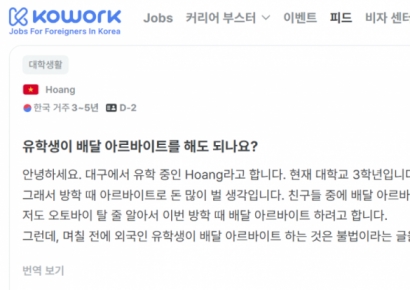 "I Came to Korea and Easily Made 3.3 Million Won a Month"... The "Easy Gig" Everyone's Talking About Among International Students Turns Out to Be...
- Record Results Expected, but SK hynix Weighs a "Split-Off Listing" Amid High Expectations
- President Lee's Approval Rating Falls 2.2 Percentage Points to 35.2% [The Asia Business Daily-Realmeter Poll]
- "Hand in Your Resignation and Get a Year's Salary"... This Country Pushes Early Retirement for Civil Servants
- "Oh Eunyoung's Consultation Fee: Millions of Won? Not Expensive"... Yonsei Professor's Sharp Rebuke over "300,000-Won Lecture Fee"
Experts recommend avoiding entry into natural waters for at least 2–3 days after heavy rainfall, and also advise people not to swim if they have open wounds or are in poor health. They also warn against swallowing water as much as possible and stress the importance of washing off thoroughly with clean water after swimming to reduce infection risks.
© The Asia Business Daily. All rights reserved. Unauthorized AI training and use prohibited.