[Financial Planning for the 100-Year Life] Korea, the First to Enjoy AI Prosperity, Also Hears the Earliest Warning Signal
![[Financial Planning for the 100-Year Life] Korea, the First to Enjoy AI Prosperity, Also Hears the Earliest Warning Signal](http://www.asiae.co.kr/news/img_view.htm?img=2023080113345426361_1690864525.jpg)
"The country that first tasted the prosperity promised by artificial intelligence (AI) may also be the first to have it taken away."
Recently, The Economist, a British weekly magazine, offered an uncomfortable yet thought-provoking perspective on the Korean stock market (July 29). Korea stands as one of the biggest beneficiaries of the AI data center investment boom. The soaring demand for cutting-edge memory such as high-bandwidth memory (HBM) has concentrated massive profits in Samsung Electronics and SK hynix. As semiconductors have fueled exports, corporate earnings, and share prices all at once, AI has become a new growth narrative for the Korean economy.
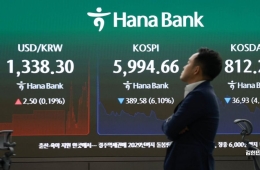
However, the stock market cares more about the sustainability of future profits than current earnings. As concerns have risen that memory prices may be near their peak, the stocks that had most fully reflected expectations for AI were the first to falter. The recent sharp decline in the Korean stock market cannot simply be attributed to a temporary adjustment by some semiconductor companies. The market is now fundamentally questioning not only how long the AI investment craze will last, but also whether the fruits of that boom can continue to be concentrated in Korean memory companies as they are now. This is why The Economist described the Korean market as a "prelude" to potential developments in the global market.
Global big tech companies are spending astronomical sums on building data centers and developing AI models. In this process, Korean companies supplying high-performance memory are reaping the greatest benefits. However, a structure in which excess profits are overwhelmingly concentrated at a specific stage in the supply chain cannot last indefinitely. If the pace of data center investment slows, if memory supply increases and prices are adjusted, or if client companies reconsider their long-term supply contracts, profit forecasts could quickly deteriorate.
The vulnerability of the Korean stock market lies in the fact that the benefits from AI have merged with policy-driven optimism, strong individual investor enthusiasm, and the proliferation of single-stock leveraged exchange-traded funds (ETFs). When fundamental performance improvement is fueled by policy expectations and leveraged capital, the pace of rising prices accelerates. But once prices begin to fall, forced selling and profit-taking can amplify downward pressure. The Economist’s assessment of Korea as a laboratory where state capitalism and market speculation converge can be understood in this context.
This does not mean that the government's stock market revitalization policies are problematic per se. However, if such policies are perceived by market participants as a signal that "stock prices will eventually rise," vigilance toward risks may weaken. Market trust is built not by driving the index upward, but by having institutions and discipline that can withstand both ups and downs. In a market with an increasing number of leveraged products, mechanisms to protect investors and prevent excessive herd behavior are especially crucial.
Semiconductor companies themselves also face significant risks. If Chinese memory companies rapidly catch up technologically, the technology gap and pricing power could be eroded. If AI companies reconsider data center leasing and long-term supply contracts due to an economic slowdown or declining investment returns, order visibility will decline. While the mutual reinforcement between Nvidia and big tech investment currently appears virtuous, if just one link falters, declining expectations could spread rapidly.
Going forward, the market will need to verify memory prices and inventories, big tech’s AI investment and long-term contracts, a technology gap with China that can be maintained, and the normalization of foreign inflows and leveraged funds. If even one of these factors is shaken, any short-term rebound in stock prices is likely to be a mere correction within a continuing downtrend, rather than a trend reversal.
AI clearly represents a seismic industrial shift, and the competitiveness of Korean semiconductor companies will not easily disappear. What is required now is not to deny AI’s future, but to soberly assess just how much of that future has already been priced into today's stocks. As The Economist noted, it appears highly likely that the Korean stock market will become the world’s first warning signal of the global AI boom.
Hot Picks Today
 "Expensive, Smelly and Scary"... What's Happened to the "Honeymooners' Paradise" Tourists Have Abandoned?
- Women Who Say "A Husband's Annual Salary of 100 Million Won Is a Given"... Matchmaking CEO: "They Talk About It Like It's Nothing"
- "I Want to Eat Like Koreans..." Foreigners Who Once Opened Ramen Packs Now Keep Gochujang in Their Pantries
- FSC's Once-Unthinkable Move to Sejong Spreads Tension at State-Run Banks, Financial Supervisory Service
- "They Said Today Was the Cheapest..." "Let's Get Wedding Jewelry!" Why Did the Luxury Brand Crowds Flocked To Cut Prices by 1.08 Million Won?
Kim Youngik, Adjunct Professor at Hanyang University Future Talent Education Institute
© The Asia Business Daily. All rights reserved. Unauthorized AI training and use prohibited.