Improved Dollar Supply Lowers Monthly Average Exchange Rate by 39.1 Won...Will It Fall Below 1,400 Won in August?
July Exchange Rate: Down 39.1 Won on Average, Plunges 125.4 Won at Month’s End
Foreign Investor Hedge Adjustment and SK hynix ADR-Led Supply Improvement
Yen Weakness Spurs Unprecedented US-Japan Joint Intervention
Watching for Attempt
The average KRW-USD exchange rate in July fell by nearly 40 won in just one month. On a month-end basis, it plunged by 125 won. This resulted from several factors: a weakening selling trend in domestic equity rebalancing (asset adjustment) by foreign investors, an expansion of corporate foreign exchange demand due to expectations of capital inflow from the issuance of SK hynix’s American Depositary Receipts (ADR) in the US, among others. In addition, coordinated intervention by the US and Japan toward the end of the month, responding to the weaker Japanese yen, also contributed to the depreciation of the KRW-USD exchange rate.
Experts believe that, given that the drivers of won appreciation were heavily concentrated last month, the KRW-USD rate is likely to enter a consolidation phase in August. However, since many of the factors supporting the won’s strength remain valid this month as well, it will be important to watch whether there will be further declines pushing the rate below 1,400 won.

On the 3rd, employees are monitoring the stock market and exchange rates in the dealing room at the headquarters of Hana Bank in Jung-gu, Seoul.
View original imageIn July, the exchange rate fell by an average of 39.1 won; 125.4 won decline on a month-end basis
According to the Economic Statistics System (ECOS) of the Bank of Korea on August 3, last month’s average closing KRW-USD exchange rate (at 3:30 p.m. each week) was 1,488.9 won. This is the lowest level since April (1,485.0 won). Compared to the June monthly average of 1,528.0 won, the rate dropped by 39.1 won in just one month.
The decline was even sharper on a month-end closing basis. The closing weekly rate on July 31 was 1,424.0 won, down 125.4 won from the end of June (1,549.4 won). This is the largest monthly fall since March 2009 (-150.5 won) during the global financial crisis. On that day, the rate increased from the previous session’s closing, moving around 1,430 won. As of 9:40 a.m. on August 3, the KRW-USD rate is at 1,432.4 won in the Seoul foreign exchange market.
Foreign hedge ratio adjustments and HY ADR drive supply-demand improvement
Experts attributed the recent decline to an expansion of short-term capital inflows, increasing the dollar supply. This is the result of improvements in domestic dollar supply conditions due to foreign investors’ hedge ratio adjustments, expectations of won strength stemming from SK hynix’s ADR listing, and increased corporate foreign exchange transactions.
Lee Jinkyung, economist at Shinhan Investment Corp., explained, “When the domestic stock market value drops, foreign investors’ hedge ratios increase relative to their assets. As equity prices fall, the nominal value of hedged won-denominated assets decreases, but the hedge contract size remains the same, resulting in the actual hedge ratio exceeding target levels.” In these situations, foreign investors unwind part of their hedge positions to readjust ratios. In this process, banks, which are counterparties to these transactions, execute offsetting trades, leading to domestic dollar selling and putting downward pressure on the KRW-USD exchange rate. Lee noted, “This explains why, on trading days when the KRW-USD rate fell sharply in July, there was also a large net selling of domestic stocks by foreign investors.”
Additionally, expectations for won strength triggered by the early July listing of SK hynix’s ADR reinforced the downward trend for the KRW-USD exchange rate. The likelihood that corporate dollar selling contributed is also high. If accumulated dollar deposits, supported by robust exports, are converted to won in large volumes, it intensifies downward pressure on the exchange rate. The seasonal increase in corporate demand for dollar conversion in July and August—driven by the schedule for semi-annual corporate tax prepayments at the end of August—was also a factor. The economist further commented, “There are additional factors such as bonus payments at the end of Q3 to early Q4, and motivations to manage foreign exchange exposure on year-end financial statements. These could further boost dollar supply in the foreign exchange market during Q3.”

An employee is organizing Japanese yen and US dollars at the Hana Bank Counterfeit Currency Response Center in Jung-gu, Seoul. Photo by Yonhap News Agency
View original imageUnprecedented US-Japan coordinated intervention amid yen’s weakness
Coordinated US and Japanese foreign exchange policy at the end of July also contributed to the broader fall in the KRW-USD exchange rate. The yen-dollar rate recently approached 164 yen, marking a nearly 40-year high. As a result, on July 30–31, Japanese monetary authorities intervened on a large scale, buying yen and selling dollars. The US Treasury reportedly intervened via the New York Federal Reserve Bank, selling euros and buying yen. The intervention volume was said to be between 6 trillion and 7 trillion yen.
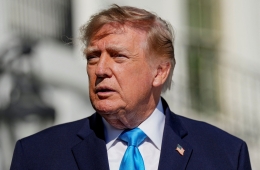
US President Donald Trump confirmed on August 2 (local time) that, considering relations with Japan, the US intervened in the yen-dollar market. Earlier, a notepad carried by Treasury Secretary Scott Bessent at the US federal cabinet meeting in Camp David, Maryland, on July 31 reportedly contained a “To Do” list mentioning “JPY 5 billion–10 billion dollars.” Japanese Finance Minister Satsuki Katayama also announced that on July 31, the US and Japanese governments jointly intervened to buy yen, stating the intervention was conducted in line with the US-Japan joint statement by finance ministers in September last year. Katayama further emphasized, “We will not hesitate to conduct additional joint interventions going forward.”
Market sources believe that the sharp drop in the KRW-USD rate below 1,420 won late on July 30 was also the result of market-stabilization measures by Korean foreign exchange authorities. Park Sanghyun, researcher at iM Securities, explained, “Relief following last week’s US Federal Open Market Committee (FOMC) meeting, coupled with strong foregin exchange intervention by US and Japanese authorities to support the yen, caused the yen to surge. This, in turn, accelerated the decline in the KRW-USD exchange rate.”
Attention on whether the rate will fall below 1,400 won amid August consolidation
Experts expect that the KRW-USD exchange rate is likely to take a breather and consolidate this month. There is potential for a reversal due to the more than 100-won fall last month, as well as inflows of bargain-hunting dollar demand. However, since the factors supporting the won’s strength are still intact, there is also a possibility of further declines. The economist added, “Weaker foreign investor selling during domestic equity rebalancing and expanded corporate foreign exchange transactions are maintaining an environment of dollar supply dominance. Continued depreciation of the yen and possible additional policy intervention will also support won strength in line with the yen.” As a result, it is expected that the KRW-USD exchange rate will continue to lower its floor with box-range fluctuations through the end of the third quarter.
Hot Picks Today
!["Didn't Want to Buy a Home"... Seoul Apartment Buyers Flocked to Mid- to Low-Priced Segment After Tax Reform Plan [Real Estate AtoZ]](https://cwcontent.asiae.co.kr/asiaresize/93/2026100516014950577_1791183709.jpg) "Didn't Want to Buy a Home"... Seoul Apartment Buyers Flocked to Mid- to Low-Priced Segment After Tax Reform Plan [Real Estate AtoZ]
"Didn't Want to Buy a Home"... Seoul Apartment Buyers Flocked to Mid- to Low-Priced Segment After Tax Reform Plan [Real Estate AtoZ]
- Flight Attendant Kneeled to Apologize... China Eastern Airlines Bans Passenger Who Continued to Complain
- An Apartment Once Worth 400 Million Won Nears 1 Billion... "Still Worth It" as 1990s-Born Pangyo Workers Flock to Gyeonggi Gwangju [Report]
- Aramco CEO: "It Could Take Up to Two Years to Replenish Global Oil Inventories"
- Musk's Partner Reveals Sudden Breakup Just a Week After Saying "I Love You"
In the short term, attention focused on whether the yen would strengthen even further. Researcher Park stated, “The ongoing impact of what is considered an unprecedented US-Japan foreign exchange intervention to defend the yen will determine the future movements not only of the yen but also of the dollar. The KRW-USD exchange rate is expected to fluctuate within the 1,400–1,450 won range in the near term.”
© The Asia Business Daily. All rights reserved. Unauthorized AI training and use prohibited.