[Retirement Age Extension, Legislative Insight] Is the Era of Retirement at 65 Approaching?... The National Assembly’s Challenge to Address Elderly Employment Solutions in the Second Half
Bridging the Pension Gap,
or Restructuring the Labor Market?
Full-Scale Debate on Raising the Retirement Age
The South Korean labor market stands at a major turning point amid dramatic demographic changes. Since the introduction of the mandatory retirement age of 60 in 2016, the country has entered a super-aged society, and the age at which people begin to receive National Pension benefits has been deferred. Nevertheless, the legal retirement age remains at 60. New challenges have emerged, including income gaps between retirement and the start of pension benefits, the labor market exit of older individuals, and corporate workforce management issues. Through a four-part series, The Asia Business Daily will analyze political developments regarding the proposal to raise the retirement age to 65 and examine directions for achieving a new social consensus required in a super-aged society.
The proposal to extend the current legal retirement age from 60 to 65 has emerged as a key issue for the National Assembly in the second half of this year. When it comes to the retirement age extension, the question for lawmakers is not limited to "Should people work until 65?" It is also about the challenge of ensuring corporate sustainability and reducing income gaps for older adults, while still guaranteeing opportunities for younger generations—in other words, how to design a new order for the labor market. Over the ten years since the implementation of the mandatory retirement at age 60, South Korea's demographic structure and labor market environment have changed dramatically.
![[Retirement Age Extension, Legislative Insight] Is the Era of Retirement at 65 Approaching?... The National Assembly’s Challenge to Address Elderly Employment Solutions in the Second Half](http://www.asiae.co.kr/news/img_view.htm?img=2026080311002367330_1785722423.jpg)
Legal Retirement Age: 60, Five Years of Income Gaps Before Pension
Currently, the statutory retirement age is 60. The obligation to set the retirement age at 60 was introduced through amendments to the Act on the Prohibition of Age Discrimination in Employment and Elderly Employment Promotion in 2013 and has been applied to all workplaces since 2016. At the time, the retirement age extension was intended to support employment stability and utilize the skills of older workers.
Since the implementation of this policy, circumstances have changed significantly. The National Pension has gradually raised the age at which one may begin receiving benefits.
For those born in 1969 and later, old-age pension payments will begin at 65. This means there can be an income gap of up to five years between when a person leaves the workforce and when they start receiving their pension benefits. This is why both political leaders and experts are calling for the legal retirement age of 60 and pension eligibility at 65 to be aligned.
![[Retirement Age Extension, Legislative Insight] Is the Era of Retirement at 65 Approaching?... The National Assembly’s Challenge to Address Elderly Employment Solutions in the Second Half](http://www.asiae.co.kr/news/img_view.htm?img=2026080315164867786_1785737808.png)
Entering a Super-Aged Society: Maximizing the Use of Skilled Workers
South Korea entered a super-aged society in 2025, with people aged 65 and older accounting for more than 20% of the total population.
In contrast, the working-age population (ages 15 to 64) continues to decline.
As the birth rate remains low and the supply of young labor shrinks, the issue of how to make the most of experienced workers has become a pressing concern for industry.
Employment among senior citizens is already expanding. According to data from the Ministry of Employment and Labor on the "Status of Employment of Older Workers," employment and labor force participation rates among those aged 55 to 64 have continued to climb, reaching roughly 70% in recent statistics. This underscores why 60 can no longer be seen as the threshold for leaving the labor market.

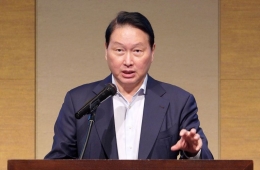
On June 23, at the National Assembly Members' Office Building, Lee Byung-hoon, Chairman of the Korea Industrial Human Resources Corporation, who chaired the 'National Assembly Forum on the Issues of Legal Retirement Age Extension to 65 and Directions for Legislative Amendment' hosted by Democratic Party members Hongbae Park and Yongwoo Lee, Progressive Party member Hyekyung Jung, and the two major labor unions, is giving the opening remarks. Photo by Yonhap News Agency
View original imageExtending Retirement Age: Principle Versus Reality
Political circles, especially the Democratic Party of Korea, are working to bridge the gap between the pension eligibility age and retirement age, seeking to secure stable incomes for older adults and utilize their labor.
However, real-world obstacles remain daunting. Lawmakers must contend with whether to change the legal retirement age or instead introduce alternative ways to extend employment—neither of which will be easy.
Hot Picks Today
 "They Play With These All Day"...Hazardous Substances Found in Popular Elementary School Toys
- "Could Something Really Terrible Happen Like This?"... 'Water Bomb' Hits Grand Canyon in the U.S., 15 Missing
- "Does Being a Natural Beauty Increase Your Worth?"... Why Last Year's Miss Korea Jin Reacted Strongly to Plastic Surgery Controversy
- "It Was Absolutely Disgusting While Eating"... Man Scatters 100 Cockroaches at Famous Taiwan Restaurant and Flees
- From 240,000 Won to 500 Million: The Incredible Twist of an Investment Rarer Than Winning the Lottery
Debate over the retirement age involves not only the question of statutory extension but also concerns about higher corporate costs, necessary reforms to wage structures, and employment opportunities for young people. Lawmakers from both sides of the aisle increasingly worry over how to ensure both income stability for older adults and the sustainability of the labor market.
© The Asia Business Daily. All rights reserved. Unauthorized AI training and use prohibited.