Foreign Media Highlights Retail Investors’ Outrage: "Blaming President Lee, Vowing Never to Buy Korean Stocks Again"
Bloomberg Analyzes the July "Roller-Coaster KOSPI"
Collapse in Investor Sentiment...Confidence May Take Years to Recover
Lee Administration Faces Criticism Over Launch of Leveraged ETFs

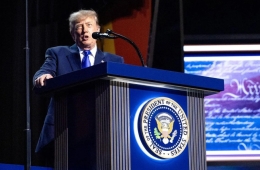
On May 29 last year, then Democratic Party presidential candidate Lee Jae-myung held an economic recovery performance by mentioning the "KOSPI 5000 era" during a campaign rally held in front of the Express Bus Terminal in Seocho-gu, Seoul, covering Seocho-gu and Gangnam-gu. Photo by Yonhap News Agency
View original imageIn July, the unprecedented volatility that swept the Korean stock market has severely dampened individual investors’ sentiment. Amid repeated crashes and surges in just a month, even Korean retail investors—once known for their aggressive investment style—are turning away from the market. Foreign media outlets are interpreting this not as a simple adjustment but as a sign of a "collapse of trust," warning that a recovery in investor sentiment may lag far behind any rebound in stock indices.
"A Casino, Not a Market" ... Signs of Retail Exodus
On August 2 (local time), Bloomberg published an article titled “Crushed by Kospi Rout, Angry Koreans Rip Lee and Vow Not to Buy,” focusing on the dramatic deterioration in sentiment among Korean retail investors.
In July, the KOSPI plunged by 22% over the course of the month, marking the steepest drop since the global financial crisis. Despite a technical rebound of 18% during one trading day at the end of the month, individual investors responded by making the largest-ever net sales, effectively exiting the market.
The outlet featured an interview with Kim Hankyung, a Seoul resident in his late thirties. He said he tried Korean equities for the first time in early May but has since resolved never to invest again. Kim recalled, “Back then, it was the era of the KOSPI craze—I was completely swept up in the excitement. Now, to be honest, I’m scared.” He added that he has burned two rules into his mind: first, never invest in Korean stocks; second, always follow the first rule.

Across the board, criticism is mounting that "the Korean stock market is no longer an investment venue but more like a casino." Kim Dongwoo, who has more than seven years of investment experience, also pointed out, "Volatility of this scale means the market is not functioning properly."
78 Trillion Won Inflow Followed by Crash ... Controversy Over Leveraged ETFs
According to Bloomberg, after the government allowed single-stock leveraged ETFs, approximately 78 trillion won (54.2 billion dollars) flowed into the KOSPI from May to June. However, as volatility surged, these products ended up accelerating the crash.
Lee Jeongmin, who invested by taking out a 50 million won loan against his apartment, said, "The government poured oil on the fire with leveraged ETFs," adding, "It turned the stock market into a casino."

Lale Akoner, global market analyst at eToro, said, “This is a textbook example of what happens when crowded trades meet leverage,” and predicted, “The deleveraging process won’t be over in just a few days, and there is a high likelihood that volatility in tech stocks and semiconductors will remain elevated going forward.”
Policy Response Criticized as 'Too Late' ... Political Risks Spreading
The government’s response has also become a major point of controversy. It was only in mid-July that financial regulators suspended new listings of single-stock leveraged ETFs and raised the minimum deposit requirement from 10 million won to 30 million won, tightening regulations. However, among individual investors, criticism that it was a classic case of "locking the stable door after the horse has bolted" continued to spread. More than 35,000 people participated in a public petition, and political circles raised questions over responsibility for the policies.
Bloomberg noted that the situation is "striking at the core of President Lee’s political brand," saying his "KOSPI 5000" policy and capital market reform agenda are now facing a major test. Policies aimed at enhancing shareholder value and modernizing the market now face criticism for creating a "speculative market."

On the 29th of last month, the KOSPI index was displayed in the dealing room of the Seoul Hana Bank headquarters. Photo by Yonhap News
View original imageBloomberg also reported that, while the AI boom continues and the KOSPI still boasts one of the highest returns among major global stock markets this year, restoring the trust of individual investors could take far longer than a simple rebound in stock prices. Jeong Eui-jeong, head of the Korea Stock Investors Association, told Bloomberg, "Individual investors are furious with the government," adding, "Their anger and criticism have reached a peak."
Hot Picks Today
!["Let's Hit It Big in Korea"... Foreigners Flock to 'This Place' [Weekend Money]](https://cwcontent.asiae.co.kr/asiaresize/93/2026101613053663640_1792123535.jpg) "Let's Hit It Big in Korea"... Foreigners Flock to 'This Place' [Weekend Money]
"Let's Hit It Big in Korea"... Foreigners Flock to 'This Place' [Weekend Money]
- “What Now for Samsung and SK hynix?” ... Could News from China Rattle the KOSPI? Shareholders Anxious
- "I Had Just Lain Down to Sleep..." Woman in Her 30s Sets Fire to Songpa Villa Parking Lot, Destroying 3 Cars
- South Korea's Potential Growth Rate to Rebound for 2nd Straight Year for First Time in 40 Years... IMF: "2.14% This Year, 2.20% Next Year"
- 'Little BoA,' They Said... Apology Over Unpaid Wages Fails to Quell Fury: "Do They Have Money to Debut Their Daughter?"
© The Asia Business Daily. All rights reserved. Unauthorized AI training and use prohibited.
!["Please, Just Take Them Off" - They Made It All the Way to Bed... Then Fecal Bacteria Struck [Deep Scroll]](https://cwcontent.asiae.co.kr/asiaresize/307/2026101610053063338_1792112730.png)