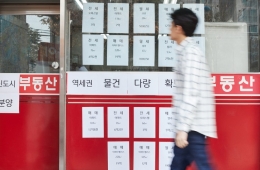
Registered Rental Apartments in Regulated Areas Must Be Sold Within One Year for Capital Gains Tax Benefits... Will 68,000 Homes Be Released in Seoul? [2026 Tax Reform]
Abolishing Heavy Tax Exemptions and Special Deductions Even After Rental Obligations End
Delaying Sale by 2 Years Raises Capital Gains Tax from 90 Million Won to 320 Million Won
More Listings, but Strict Lending Curbs... Higher Barrier for Buyer
Going forward, multi-homeowners who sell registered rental apartments in regulated areas to receive capital gains tax benefits must sell the property within one year after the mandatory rental period ends. Those who have already fulfilled the required period need to sell by the end of next year in order to retain the current benefits. By setting a deadline for the previously open-ended exemption from heavier capital gains taxation and the 50% special long-term holding deduction, the government aims to stimulate the supply of high-gain apartments in Seoul to the market.

One Year After Lease Ends... Tighter 'Sales Timer'
According to the tax reform plan for 2026 announced by the Ministry of Economy and Finance on August 3, the exemption from heavier capital gains tax and the 50% special long-term holding deduction (according to the revised version, the long-term residence income deduction) for purchased rental apartments in regulated areas will be phased out.
The government has established a 'two-track' deadline to prompt multi-homeowners to sell. First, regular business operators who can currently sell their homes must transfer ownership by December 31, 2027, to receive all existing tax benefits. If they sell in 2028, the benefits are halved (with double taxation rates cut in half, and the long-term special deduction reduced to 30%). From 2029, all the stricter tax rates will apply, and the special deduction for registered rental properties will be eliminated entirely. The reforms will take effect from October 1, 2026.
For those who are mandatory rental operators as of January 1, 2027, a separate deadline applies. If they sell within one year after the mandatory rental period ends, the exemption from heavier taxation and the 50% special deduction are maintained. If sold between 1 and 2 years after the rental period ends, only half the heavier tax rates and a 30% special deduction will be applied. After two years, all benefits disappear.
![Registered Rental Apartments in Regulated Areas Must Be Sold Within One Year for Capital Gains Tax Benefits... Will 68,000 Homes Be Released in Seoul? [2026 Tax Reform]](http://www.asiae.co.kr/news/img_view.htm?img=2026080314252367636_1785734723.png)
For example, if a multi-homeowner with four homes sells a registered rental apartment—purchased for 600 million won in 2018 in a regulated area—for 1.1 billion won after the mandatory rental period, the capital gain is 500 million won. If sold by the end of 2027, the entire set of current tax benefits can be received, resulting in a capital gains tax of 90 million won. Selling in 2028 increases the tax to 170 million won due to reduced benefits, while in 2029, all benefits disappear and the tax rises to 320 million won. This means that even if the house is sold at the same price, delaying the sale by two years results in an additional 230 million won in capital gains tax.
A purchased rental apartment is a property that individuals or corporations buy and register as rental housing. For long-term general private lease apartments registered before the system was abolished in 2020, owners typically maintained the property for rental use for eight years and limited annual rent increases to 5%, in return for tax benefits.
Once the mandatory rental period ended, the registration was automatically canceled. From this point, benefits such as reductions in property tax and exclusion from comprehensive real estate tax were no longer available. However, there was no separate deadline for receiving capital gains tax benefits when selling the rental property. Even if the landlord held onto an automatically deregistered apartment for several years before selling, they could still avoid heavier taxation and receive the 50% special long-term holding deduction on gains made during the rental period. Furthermore, even if landlords no longer limited annual rent increases to 5% after deregistration, they could still maintain the exemption from heavier taxes and the 50% deduction. As a result, for six years, tax benefits have continued without an obligation to maintain the rental arrangement.
Currently, those with two homes in regulated areas pay an additional 10 percentage points on the basic tax rate when selling, while owners of three or more homes pay an extra 15 percentage points. Registered rental properties were exempt from these additional tax rates. The 50% special long-term holding deduction excludes half of the capital gains accrued during the rental period from taxation. For apartments in Seoul, where values have surged, the removal of these tax benefits will significantly increase the tax burden, providing a strong incentive to sell earlier. The government estimates that approximately 68,000 homes in Seoul could be introduced into the sales market as a result.
![Registered Rental Apartments in Regulated Areas Must Be Sold Within One Year for Capital Gains Tax Benefits... Will 68,000 Homes Be Released in Seoul? [2026 Tax Reform]](http://www.asiae.co.kr/news/img_view.htm?img=2026080314255667638_1785734755.png)
The timeframe for selling a previous residence for “temporary two-homeowners” switching homes in regulated areas will also be shortened from three to two years. If someone with a home in a regulated area buys another home in the same kind of area, they must sell the original home within two years to retain single-home benefits for capital gains and comprehensive real estate tax.
Separately, a sales deadline will now apply to rental and unsold homes that previously had indefinite capital gains tax reductions. For apartments in the Seoul metropolitan area, properties must be disposed of by the end of 2029 to receive the tax exemption. In other regions, the deadline is the end of 2031.
68,000 Homes Expected in Seoul Supply... Will Only Cash-Rich Investors Benefit?
However, even if multi-homeowners put their properties on the market to avoid higher tax burdens, it is uncertain whether these homes will actually benefit non-homeowning ordinary people. Due to strict loan regulations, the pool of buyers able to purchase these homes will likely be limited to those with substantial cash holdings. Consequently, if the properties end up in transactions between wealthy investors rather than enabling non-homeowners to buy, concerns over wealth polarization may intensify.
Instability in the rental housing market is also likely. In the short term, the increased supply may dampen the upward trend in sale prices, but if rental properties are sold to occupants intending to live in them, it could reduce the number of units available for rent. Homes with existing tenants will remain under lease agreements even if sold, leaving a difference in the number of properties immediately available for people seeking a place to live.
Hot Picks Today
 "If You Don't Apply, My KRW 1.7 Million Will Be Gone"... Unclaimed National Pension Refunds Vanish After 'This Deadline'
- "I order out of habit, then regret it when I check my wallet"... Gen Z caught in 'delivery guilt'
- "When I get Home from Work, This Is All I Do, and It's Making Me Stupid"... Short-Form Craze Sparks 'Electronic Drug' Debate in China
- Lee Juwan, Who Forecast Samsung at 70,000 Won and SK hynix at 200,000 Won, Says They're "Still Overvalued"; Others Counter: "Fundamentals Are Solid, Correction Is Excessive"
- "Beef Is Too Expensive, Let's Eat Chicken"... Japan's Dining Habits Shift Amid High Prices and a Weak Yen
Backlash from rental business operators is also expected. Operators may argue that applying new standards retrospectively to homes where obligations have already been fulfilled undermines trust in policy. However, since the new rules apply only to sales made after the reform and include a grace period, it is difficult to conclude that the changes constitute retroactive legislation or an infringement of property rights prohibited under the constitution.
© The Asia Business Daily. All rights reserved. Unauthorized AI training and use prohibited.


!["Please Take Them Off!" They Made It All the Way to the Bed... Then "80% of Fecal Bacteria" Struck [Deep Scroll]](https://cwcontent.asiae.co.kr/asiaresize/307/2026101610053063338_1792112730.png)