South Korea Moves Opposite of Advanced Countries: Capital Region Population Concentration Highest Among OECD Members
No. 1 in Population Concentration Among OECD Countries
Capital Region Bias Persists Due to Job and Education Centralization
The concentration of population in South Korea's capital region has been found to be the most severe among Organisation for Economic Co-operation and Development (OECD) member countries. In contrast to major advanced economies, which are showing a trend toward easing capital region concentration, South Korea is witnessing a continued influx of population into Seoul and its metropolitan area, presenting a marked contrast.
On August 2, according to a report by Japan's Nihon Keizai Shimbun based on the United Nations’ “World Urbanization Prospects 2025” edition, an analysis of the capital region populations in 37 OECD member countries showed that, in 2023, South Korea had the highest proportion at 43.3%. This figure represents a 1.2 percentage point increase from 42.1% in 2010, indicating that capital region concentration in South Korea is intensifying over time.
The proportion of the population living in South Korea’s capital region is more than double the OECD average. The 37-country OECD average peaked at 16.9% in 2021 and has since been on a declining trend, falling further in 2023 compared to the previous year. In 24 countries—including Germany and Norway—capital region concentration has eased, with more than six out of ten member countries exhibiting a trend of population dispersal from the capital to regional areas.

The sharp rise in housing prices and changes in working styles are cited as the background for this change. According to the OECD, over the past decade, housing prices in metropolitan areas with populations of 1.5 million or more rose by approximately 68%, far outpacing the growth in smaller cities. With the increasing burden of high housing costs, more people are relocating to local and smaller cities where home prices are relatively more affordable.
The adoption of remote work, which became established after the COVID-19 pandemic, has also prompted people to leave the capital regions. With less need to commute to downtown offices every day, the incentive to live close to one’s workplace in the capital region has diminished. In fact, in Dublin, Ireland's capital, there was a net outflow of 4,780 people in 2022. The Irish Central Statistics Office has analyzed that the spread of telecommuting and other new work styles has influenced population movement.
By contrast, in South Korea, the core functions of employment, education, administration, as well as culture and healthcare, remain concentrated in Seoul and its metropolitan area even amid low birth rates and an aging population, continuing to attract young people. While this concentration serves as an economic growth engine for the nation, it is also seen as a structural problem that accelerates regional extinction and deepens disparity between regions.
Hot Picks Today
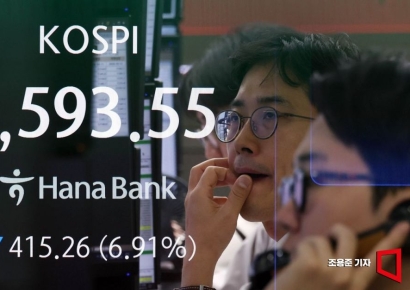 "I Invested KRW 10 Million, Only KRW 2 Million Is Left" ... 77% Plunge Sends Retail Investors Who Piled Into Samsung Electronics and SK hynix Leveraged ETFs Crying Out
- "There's a Drink Like This?"... Chinese Beverage With "Korean" in Its Name Rakes in 85 Million Won in Monthly Sales
- "No Need to Hire a Model"... The 25-Year-Old Woman Who Entered Social Media with a Face That Cost Just 1,500 Won [AI Content: The Bright and Dark Sides] 1
- "Samsung Electronics at 70,000 won, SK hynix at 200,000 won"... Why the gloomy outlook despite 'record-breaking earnings'?
- "The leggings are all see-through. It's so embarrassing to look at," complaints prompt Lululemon to fire development staff.
To address this, the government has been promoting balanced development policies, such as relocating public institutions to regional areas, establishing special opportunity zones for development, and expanding local investment. However, there remain fundamental limits to reversing the population flow toward the capital region, with many experts calling for more fundamental solutions.
© The Asia Business Daily. All rights reserved. Unauthorized AI training and use prohibited.