Nuriho's Fifth Launch Delayed to October as Cluster Satellites' Thrusters Are Replaced and Further Tests Added
Performance Shortfalls Confirmed in Space Environment...
Satellites No. 2-6 Equipped with Upgraded Thrusters
Final Launch Date to Be Set at the End of August
Schedule Adjusted to Ensure Reliability
The fifth launch of the Korean launch vehicle Nuriho has been postponed to October, as the main payload—miniature cluster satellites—required a replacement of their thrusters and an additional schedule for subsequent performance verification. It was confirmed that the performance of the thrusters did not meet expectations in the actual space environment, so upgraded thrusters will be applied to satellites No. 2 through No. 6. The Korea Aerospace Administration is expected to convene a Launch Management Committee at the end of August to finalize the launch date.
According to the Korea Aerospace Administration on August 2, the schedule for the fifth launch of Nuriho has been delayed compared to the original plan, due to the addition of thruster replacements and performance verification schedules for the main payload, which are the miniature cluster satellites No. 2 through No. 6.

The Korean launch vehicle Nuri is standing on the launch pad at Naro Space Center in Goheung, Jeollanam-do on the 25th, 2025. Provided by Korea Aerospace Research Institute.
View original imageThe fifth launch of Nuriho was originally scheduled for June this year, but was later rescheduled to August and then September. However, since additional performance tests were required after the thruster replacement, the launch date has been pushed back once again to October. Considering Chuseok holidays, it is very likely to occur after early October.
Thruster Variables Revealed in Space Environment
The thruster is a critical device that provides propulsion for a satellite to change or maintain its orbit. For miniature cluster satellites that perform formation flight while maintaining a precise interval, it is considered a key component that determines mission success.
The KAIST Satellite Research Center and Satrec Initiative applied thrusters from foreign suppliers, as there were no domestic commercial products that met the required performance. However, during the operation of prototype No. 1—which was launched in 2024—and its subsequent verification units, it was confirmed that the thrusters' performance in the actual space environment fell short of expectations.
An official from the Korea Aerospace Administration stated, "We identified shortcomings in the thruster's performance compared to initial expectations and have completed improvements to enhance their reliability."
The cluster satellites No. 2 through No. 6 being launched this time have been equipped with improved thrusters to address these issues. However, as further testing was required following the parts replacement, it was not feasible to maintain the original launch schedule.
In the New Space era, where the paradigm is shifting from small-scale government-led development to mass production led by private companies, such variables can occur frequently. For Nuriho, the focus is now less on the technical verification of the launch vehicle itself and more on the precise placement of payload satellites into their target orbits. It is interpreted that the launch schedule has been adjusted to ensure satellite reliability.
Hot Picks Today
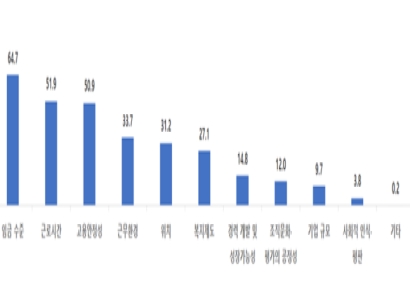 "Please Pay Me at Least 3 Million Won a Month": More Than Half of Young People Today Prioritize "Working Conditions" Over Company Size
- Selling Like Crazy Every Year... 30-Year-Old Hetbahn Takes on a New Challenge: Tastes Better Than "Mom's Home Cooking" [On-Site Report]
- "Americans Would Be Amazed If They Came": Wide-Eyed at a Sight They've Never Seen Before... Foreigners Also Fall for K-Baseball [K-Holic]
- "Hey, Lady, Teach Your Kids to Behave!" ... 300,000 Won in Cash and a Bodily Injury Claim Demanded Over Child's Door Ding
- Beachgoer Finds 'Plastic' That Turns Out to Be Perfume Ingredient Worth More Than Twice as Much as Gold
The satellite manufacturing is virtually complete, and a Pre-Shipment Review (PSR) is scheduled for mid-August before transport to the Naro Space Center in Goheung, Jeollanam-do. The Korea Aerospace Administration plans to hold a Launch Management Committee at the end of this month to finalize the launch date and the launch window.
© The Asia Business Daily. All rights reserved. Unauthorized AI training and use prohibited.