Ahn Cheol-soo: "Lee Administration's Exclusive AI Focus Is Misguided... Quantum and Energy Must Grow Together" [AI Rulemaker ①]
Interview with Ahn Cheol-soo of the People Power Party
"Instead of Focusing Solely on 'Sovereign AI', Korea Should Nurture Application-Specific AI Tailored to Its Strengths"
"Annual Review of the AI Fundamental Law Needed... Functions of the SIC
Ahn Cheol-soo, a member of the People Power Party, emphasized the need for a comprehensive national strategy that includes quantum computing and energy technology, warning that the government’s science and technology policy is excessively focused on AI. He suggested that, rather than directly competing with the United States and China in the field of general-purpose AI models, Korea should focus its resources on developing uniquely Korean applied AI by leveraging manufacturing and medical data, as well as cultural content.
As a former IT venture entrepreneur, Ahn has led domestic discussions on AI legislation by consecutively sponsoring AI-related bills since the 21st National Assembly. In an interview with The Asia Business Daily, he pointed out, "The three technologies that will impact society in the next five to 10 years are AI, quantum computing, and energy technologies," adding, "The current administration is overly focused on AI alone."
Ahn explained that AI, quantum computing, and energy technologies such as Small Modular Reactors (SMRs) are tightly interlinked. Stable power supply is essential for operating large-scale AI data centers, and advancements in quantum computing could also influence the future of the AI industry.

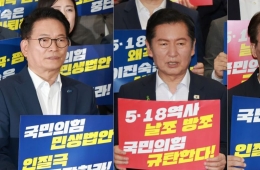
Ahn Cheol-soo, a member of the People Power Party, is being interviewed by The Asia Business Daily at the National Assembly. July 28, 2026. Photo by Hyunmin Kim
View original imageHe said, "It is also inappropriate to structure the Blue House with only a Chief of AI," and suggested, "There should be a chief overseeing science and technology as a whole, with key technology secretaries for AI, quantum computing, and SMRs under them."
On the 'Sovereign AI' strategy promoted by the government, he diagnosed that selection and concentration are needed. "Korea faces a significant gap compared to the United States and China in terms of talent and capital, so competing in the exact same field is realistically impossible," he explained. "We need to secure core AI capabilities, but simply fixating on competing to develop our own models isn't the answer."
Instead, he proposed actively utilizing open-source and overseas AI models to develop uniquely Korean applied services and content. He cited the strategy Korea used in the past—although it didn't develop its own operating systems, it created services like Hangul Word Processor, V3, Naver, and Daum based on DOS and Windows.
He also called for accelerating legislative speed to suit the AI era. "The pace of AI development is so fast that within even half a year, the rankings of technologies and companies can change," Ahn said. "To prevent the law from stifling innovation, the AI Act should be revised at least once a year."
He added, "Because the Science, ICT, Broadcasting, and Communications Committee has been focused on political disputes surrounding broadcasting and communications, there has been insufficient discussion on advancing the AI industry. We need to separate science and technology from broadcasting and telecommunications to accelerate legislation for the industries of the future."

Ahn Cheol-soo, a member of the People Power Party, is giving an interview to The Asia Business Daily at the National Assembly. July 28, 2026. Photo by Hyunmin Kim
View original imageThe following is a Q&A with Assemblyman Ahn.
-You spearheaded the enactment of the AI Act. What was the biggest regret during the legislative process?
▲I was the first to sponsor a comprehensive bill in the 21st National Assembly, and several AI bills, including mine, were jointly reviewed and ultimately led to the enactment of the Framework Act in the 22nd National Assembly. However, progress was delayed due to political disputes over broadcasting and communications in the Science, ICT, Broadcasting, and Communications Committee. Had we moved just a bit faster, Korea could have been the first in the world, ahead of the EU, to establish an AI Framework Act. That remains a regret.
-Should the AI Act prioritize industry promotion or regulation?
▲Regulations are necessary to address fundamental risks, but Korea significantly lags behind the United States and China in terms of talent and capital. Rather than seeking a mechanical balance between promotion and regulation, we should lean further toward innovation and industry promotion. If Korea, as a latecomer, applies the same strict regulations as leading countries, it will be difficult to compete.
-How does the legislative approach of the National Assembly need to change to keep up with the pace of AI technology advancement?
▲The pace of AI development is so rapid that rankings of technologies and companies can shift within just half a year. The AI Act must be reviewed and revised at least once a year, to ensure legislation does not slow down innovation. We need forward-looking legal systems that anticipate and proactively eliminate unnecessary regulations in line with technological and industrial changes. More scientists and entrepreneurs—those who understand and have first-hand experience in science, technology, and industry—need to be present in the National Assembly.
-Should the National Assembly itself change as well?
▲The Science, ICT, Broadcasting, and Communications Committee currently handles both science and technology as well as broadcasting and communications, but the latter often gets bogged down in partisan disputes, sidelining science and technology discussions. We need to separate these into individual standing committees, even if budget and personnel are kept the same.
-Are you preparing follow-up legislation related to the AI Act?
▲Recently, I proposed a bill distinguishing labeling obligations for AI-generated works according to the role of the business operator. Developers of AI must embed machine-readable metadata in their creations, and platform operators or other users must clearly label AI-generated works in ways that people can recognize. The intention is to make each party’s responsibilities clear and prevent shifting of the labeling obligation.
-The United States and China are well ahead in the AI race. What is Korea’s unique strategy?
▲The gap in talent and capital is too wide for Korea to realistically compete on the same field as the United States and China. While the government continues to emphasize Sovereign AI, we should not cling solely to developing general-purpose AI models ourselves. Korea’s pragmatic survival strategy is to leverage both existing and open-source models to create added value in our areas of strength.
-Are you critical of the government’s Sovereign AI strategy?
▲I agree that we need to maintain core AI technologies and knowledge, but we should not try to develop everything independently. In the past, we didn’t develop our own DOS or Windows systems, but we created Hangul Word Processor, V3, Naver, and Daum by leveraging these platforms. We should secure foundational capabilities, but must not concentrate all national resources solely on the competition to develop our own models.
-How do you evaluate the current administration’s AI policy?
▲The government’s science and technology policy is overly focused on AI. Over the next five to 10 years, the key technologies that will change society include not only AI but also quantum computing and energy technologies such as SMRs. Instead of appointing a Chief of AI alone, we need a system that comprehensively oversees all key fields under an overall science and technology chief. Massive electricity is required for data centers, and quantum computing is also connected to AI advancement; therefore, policies and budgets must be designed from an integrated science and technology perspective.
-Which areas of applied AI should Korea focus on?
▲We need to create specialized services in sectors where Korea already has a competitive edge, such as manufacturing, healthcare, and physical AI. We also need to digitize Korea’s unique historical and cultural resources and train AI with them. Translating the Annals of the Joseon Dynasty gave rise to Korean Wave content like "The King and the Clown" and "Dae Jang Geum." Likewise, if we train AI on local materials, we can create new added value. In the AI era, investing in the humanities will be directly linked to technological competitiveness.
Hot Picks Today
 "Shares Soar 600% on Debut as Retail Investors Flock to 'Robot Company'"
- "Persistent Musty Odor Despite Repeated Washing" ... Tackling the Source of Stubborn Sweat Smells in Workout Clothes Boosted Sales by 316% [Interview]
- "Is This Cheating?"... 4 Out of 10 See These Secret Actions as Infidelity
- "Turned 600 Million Won into 100-Fold Profit"…Chinese Actress Zhang Ziyi Scores 63.5 Billion Won Windfall from Investment, Not Acting
- "Ssangyong C&E to Leave Seoul Headquarters With 120 Staff and Move to Donghae City... First Major Gamble in 60 Years"
-What is the most urgent task for securing AI talent?
▲Korea used to attract talent who returned after studying abroad, but now it has become a country that loses talent. To make movement between academia and industry more flexible, we need to relax regulations so that university professors can also serve as executives at companies or start new ventures themselves. I recently heard the first case of a Seoul National University professor simultaneously serving as an executive at Samsung Electronics—a welcome development. Only then can we retain top professors and students domestically and foster industry-ready talent.
© The Asia Business Daily. All rights reserved. Unauthorized AI training and use prohibited.