Stepping Down After 22 Years at Woljeongsa, Venerable Jeongnyeom Sets Sights on Director-General Election
Resignation as Chief Abbot on July 31, Effectively Declaring Candidacy
"Stepping Down to Move Toward Broader Horizons"
Criticizes Sharp Decline in Monastic Ordinations, AI Response, and Concentration of Power in Administration Headquarters
Race Draws Attention as Jinwoo, Kyungwoo, and Jeongnyeom Emerge as Key Candidates
Venerable Jeongnyeom, who has led Woljeongsa Temple—the head temple of the 4th District of the Jogye Order of Korean Buddhism—for 22 years, has stepped down from his position as chief abbot. The move is widely interpreted as a de facto prelude to his candidacy for the upcoming 38th Jogye Order Director-General election, which will take place in September.

On July 31, Venerable Jeongnyeom submitted his resignation to the Jogye Order’s Administration Headquarters and announced his "Message Upon Stepping Down as Chief of Woljeongsa in the 4th District of the Jogye Order." He first took office as chief abbot of Woljeongsa in 2004 and served six consecutive terms, leading the district for a total of 22 years.
In his statement explaining his resignation, Venerable Jeongnyeom clarified that his decision was "not to step back, but to move toward broader horizons." He stated, "A practitioner must always step down to the marketplace and extend a hand first," adding, "With the roots I have laid in this mountain over many decades, I hope that more people will be able to encounter the teachings of Buddha in even broader places."
He also addressed the crisis now facing Korean Buddhism head-on. Venerable Jeongnyeom pointed out that the number of people entering monastic life has dropped to one-fourth of its level 20 years ago, and that young people have stopped visiting temples. He stressed, "The bigger problem is not the numbers, but the lack of direction." He further criticized the Buddhist community for being unable to provide answers in the age of artificial intelligence (AI), and for pouring huge budgets into the Seon meditation business while lacking philosophical and doctrinal clarity regarding Ganhwaseon.
He also took aim at the centralized administrative structure of the order. He noted that while authority is concentrated in the Administration Headquarters and temples nationwide struggle with financial burdens, the principle of "district-centered administration" remains merely declarative. He argued, "As a member and practitioner, it is no longer right to simply stand by and watch this happen." In effect, he explained his resignation not as a simple change of roles but as an effort to redirect the administration of the order itself.
Venerable Jeongnyeom has not yet formally announced his candidacy for Director-General, and candidate registration has not begun. However, given that he has relinquished his position as chief abbot just over a month before the election and outlined his vision for reform, many in the Buddhist community believe that his candidacy is all but certain. Candidate registration will take place from August 11 to 13.
Since this April, Venerable Jeongnyeom has repeatedly signaled his potential candidacy. At that time, he described the present era as "a period of great transformation with the tsunami of AI approaching," and asserted that the Buddhist community needs new leadership. At his book launch in June, he remarked, "If I am given a greater role, I will not refuse." He openly criticized the current administration for prioritizing performance over deep reflection on humanity and ethics, in reference to ceremonies involving conferring precepts and robes on AI robots.
He also stated his views on the election process. While leaving open the possibility of being recommended through broad consensus among order members, he opposed selection processes dominated by vested interests. He emphasized, "The recommendation process must also be extremely democratic," underscoring the importance of a healthy election and the consolidation of the collective will of order members.
The 38th Director-General election will be held on September 3 at the Korea Buddhist History and Culture Memorial Hall in Seoul. A total of 321 electors—including 81 members of the Central Council and 240 representatives elected from 24 district head temples across the nation—will select the Jogye Order’s next administrative leader. The Director-General is responsible for the overall administration and external affairs of the order for four years.
Within the Buddhist community, the current Director-General Venerable Jinwoo is viewed as the strongest candidate for re-election. He was nominated as the sole candidate in 2022 and elected without a vote. He has promoted efforts to popularize Buddhism, targeting younger generations and focusing on the Seon meditation business. Venerable Kyungwoo, abbot of Seonunsa, has also emerged as a potential candidate after resigning as leader of the Buddhist Square—the largest policy group within the Central Council. With Venerable Jeongnyeom’s resignation as chief abbot, the contest is expected to solidify as a three-way race among Jinwoo, Jeongnyeom, and Kyungwoo.
On the same day, it was reported that several deputy directors at the Jogye Order’s Administration Headquarters submitted their resignations en masse, while Venerable Kyungwoo also hinted at leaving his post as district chief. As a result, the pace of change within the order is accelerating in the run-up to the election. Unlike four years ago—when the Director-General was selected uncontested—observers now see a high likelihood of a competitive race between multiple candidates.
Hot Picks Today
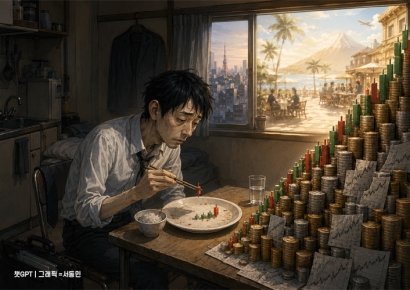 "Surviving on One Meal a Day to Invest 3.5 Million Won Monthly... 'FIRE' Craze Sparks 'NISA Poverty' in Japan"
- "Correction Over for Samsung and SK hynix" "670,000 for Samsung, 4.7 Million for SK hynix": Why Global IBs Remain Optimistic
- "Used for the Wedding" 300,000-Won Ring and Dress...Changing Wedding Trends
- Causing Trouble Without a Simple "Sorry"... The Reason Behind the 'Gen Z Stare' Revealed
- Nongshim Third-Generation Executive Sangyul Shin to Wed SKT Employee on the 13th
In his farewell message, Venerable Jeongnyeom said, "Practice itself is policy, and policy itself is practice; this is what I have experienced through my role as district chief." As he departs Odaesan after 22 years, his final words were, "Thank you. And farewell for now."
© The Asia Business Daily. All rights reserved. Unauthorized AI training and use prohibited.