Hanwha's Acquisition of KAI: Threat to Local Ecosystem? ... "Actually Beneficial for Industry Development"
As the labor union of Korea Aerospace Industries (KAI) has recently interpreted Hanwha Group's expansion of its stake as an "attempted acquisition" and voiced opposition, some analysts now see Hanwha's increased stake as likely to have a positive impact on the development of South Korea's aerospace industry.
On July 29, the KAI labor union and Sacheon Citizens' Solidarity held a press conference in the briefing room at Sacheon City Hall in Gyeongnam, stating, "We oppose Hanwha's attempt to acquire KAI," and arguing, "Because the aerospace industry is a national strategic industry responsible for national security, technological sovereignty, and future growth engines, it must be managed by the government."
They went on to say, "KAI is a core national aerospace company established in 1999 under government initiative through the merger of Samsung Aerospace, Hyundai Space and Aircraft, and the aerospace division of Daewoo Heavy Industries," adding, "Major countries like the United States, Europe, Japan, and Israel manage and support their aerospace industries at the government level."
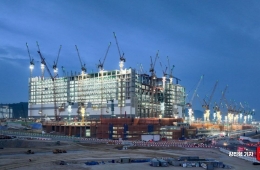
![Hanwha Building, Janggyo-dong, Jung-gu, Seoul. <br>[Photo by Hanwha Group]](http://www.asiae.co.kr/news/img_view.htm?img=2026070109205129585_1782865252.jpg)
They further asserted, "Recently, Hanwha Group has increased its stake in KAI through market purchases and changed the stated purpose of holding from simple investment to management participation," interpreting this as "a move to expand influence over KAI and potentially secure management rights in the future."
They also warned, "If the government does not clarify its position, this could effectively be interpreted as a signal of KAI’s privatization and an industry realignment centered around a single conglomerate, potentially having a negative impact on the long-term development of the national aerospace industry."
However, industry officials and experts have expressed the view that Hanwha's acquisition of a greater stake in KAI will likely have positive ripple effects on the future of South Korea's aerospace and defense industries.
![Hanwha Aerospace booth at the 'Next Rise 2026' exhibition. <br>[Photo by Hanwha Aerospace]](http://www.asiae.co.kr/news/img_view.htm?img=2026061811125814252_1781748777.jpg)
Hanwha Aerospace booth at the 'Next Rise 2026' exhibition.
[Photo by Hanwha Aerospace]
According to these officials and experts, the companies referenced by the union—Lockheed Martin, Boeing, Northrop Grumman, Airbus, Leonardo, and others—are publicly traded private enterprises. They only secure contracts with their respective ministries of defense or governments as “customer-supplier” partners; they do not hold shares nor intervene in management.
These companies are cited as prime examples of fiercely competitive firms in the private sector that have achieved scaling up and diversification through mergers and acquisitions. Among the world’s top 20 aerospace and defense firms, only a few Russian and Chinese companies operate as state-run entities.
Experts further pointed out, "Just as KAI was founded in 1999 to prevent excessive competition and redundant investment in the industry, now is the time to scale up and diversify in the aerospace sector for the leap forward of K-Defense."
The reasoning is that, given Hanwha currently ranks among the top 20 global defense firms and KAI is ranked around 70th, it is difficult for each entity to compete with global players solely on their own capabilities.
On the contrary, experts suggest that building a Korean-style aerospace and defense platform should focus on establishing mid- to long-term strategies, large-scale investment, synergy creation, and joint marketing leveraging overseas networks, thereby strengthening global competitiveness and driving exports.
They also noted, "For revitalizing the regional economy in Gyeongnam—including Sacheon—for symbiotic growth with partner companies and creating regional jobs, attracting large-scale private capital through privatization could be far more essential than state-ownership, which carries uncertain investment prospects."
In early July, Hanwha announced at the "Yeongnam Region Advanced Industry Development National Briefing" held in Jinju, Gyeongnam that it would invest a total of 55 trillion won in the aerospace and AI industries—with a focus on the Gyeongnam region—by 2040 to build an ecosystem for Korea’s aerospace industry and contribute to regional balanced development.
Most of these investments are related to the aerospace and defense AI industries and are expected to make substantial contributions to the regional economy and job creation in areas such as Sacheon, Jinju, and Changwon, drawing criticism of "ecosystem destruction" into question.
Efforts to foster local talent, enhance the technological competitiveness of partner companies, and promote collaborative growth with startups and research institutes—by establishing specialized departments and graduate-level partnerships with Pusan National University, Changwon National University, Gyeongsang National University, and others—have also reportedly been welcomed by the regional business community.
![Korea Aerospace Industries (KAI). [Photo by Korea Aerospace Industries (KAI)]](http://www.asiae.co.kr/news/img_view.htm?img=2026050716212253919_1778138482.jpg)
Previously, KAI held a "KF-21/IF-X System Development Completion Ceremony" at its headquarters in Sacheon, Gyeongnam, marking the conclusion of the domestic supersonic fighter development project and announcing the transition to mass production.
For the second quarter, operating profit stood at 48.4 billion won, a year-on-year decrease of 43.1%, significantly below the market estimate of 88.9 billion won. Revenue reached 1.1679 trillion won, a 41.0% increase, but still failed to meet the market projection of 1.2028 trillion won.
As a result, industry analysts have argued that KAI must seek new growth engines such as privatization in order to improve its performance and competitiveness.
Hanwha Systems, a subsidiary of Hanwha Aerospace, acquired a total of 1,010,830 shares of KAI (1.03%) through open market purchases between July 20 and 24. Including this, Hanwha Group's total stake in KAI now stands at 14.64%.
Hot Picks Today
 "I Went for the Cheap Coffee, but Now I Feel Uneasy"... Major Coffee Franchises Cited for Violations One After Another
- "My Vicarious Satisfaction Every Night Gone: Sudden Deletion of Past Videos... Mukbang YouTubers Hit by Crackdown"
- "When Was the Last Time I Went?" With Fewer Visitors, 80% of Japan’s Neighborhood Bathhouses Disappear in 50 Years
- After a 30% Plunge This Year... "No Longer a Blue Chip": Humiliation for Europe’s Largest Automaker
- "After Spending 170,000 Won on Hanwoo, This Is What I Got": Why Webtoon Artist Kim Gyusam Decided to Give Cash Instead
A Hanwha official explained, "We have secured about 15% of the shares in Hanwha Systems and Korea Aerospace Industries," adding, "This investment aims to build a cooperative framework in key areas of defense and aerospace."
© The Asia Business Daily. All rights reserved. Unauthorized AI training and use prohibited.