"Is This a Stock Market or a Casino? Predictions Meaningless"...After Repeated Crashes, KOSPI Surges 18% at the Last Minute
KOSPI Closes with Largest Single-Day Gain Ever
Extreme Volatility Leaves Individual Investors Confused
Government to Introduce Measures for Single-Stock Leveraged ETFs
After three consecutive days of sharp decline, the KOSPI staged a dramatic rebound on July 31. The monthly decline rate, which had approached 40%, was reduced to around 22%. Some large-cap stocks, including SK hynix, hit their price ceiling one after another. Individual investors, who had endured intense volatility, saw mixed results.
On the 31st, the KOSPI closed at 6,595.45, up 1,001 points (17.91%) from the previous day. This marks the largest daily gain both in terms of percentage and points in history. The second-largest single-day gain was 11.95%, recorded during the financial crisis on October 30, 2008.
From the beginning of the session, consecutive buy-side circuit breakers were triggered on both KOSDAQ and KOSPI. SK hynix soared to its daily upper limit (29.99%) during trading, while Samsung Electronics finished the session with a 26.81% increase, coming close to its ceiling.

On the 31st, the stock index is displayed in the dealing room of Hana Bank headquarters in Seoul. Photo by Yonhap News
View original imageThe previous day, semiconductor companies in the New York stock market also staged a rapid rebound, leading to simultaneous gains across all three major U.S. indices: the S&P 500, Dow Jones Industrial Average, and Nasdaq.
The artificial intelligence (AI) business segment of Microsoft, which reported results that exceeded expectations, appears to have partially alleviated concerns about a stock price bubble. Boosted by robust earnings, foreign investors purchased 7.2 trillion won worth of shares on the KOSPI, while individuals sold 8.284 trillion won.
Amid the recent extreme volatility of the KOSPI, this sharp rally led to mixed outcomes for individual investors. Reactions reflected confusion and anxiety in the face of drastic market swings, with comments such as, "I barely managed to break even and got out," "Is this a market where results come just from picking randomly?" "Predictions are meaningless," and "I fear there will be a crash next time."
Sangwook Kim, Mayor of Ulsan, also addressed the situation in a livestream on his YouTube channel 'Sangwook Kim TV' the previous day, saying, "Today's newspaper articles express great concern about the KOSPI's plunge. I have also suffered severe losses from the crash while holding funds. It feels like 30% of my total assets have vanished, and it hurts," adding, "A healthy capital market is vital for the recovery of the economy. Do not buy stocks with borrowed money."

He further stated, "Investor protection can only be realized if we stop market-distorting activities," and added, "I believe leveraged exchange-traded funds (ETFs) played the role of catalyst in this recent market distortion. Proper management of such products is necessary going forward."
Meanwhile, the government has begun to prepare countermeasures for single-stock leveraged ETFs, which have been identified as a key factor in amplifying volatility in the domestic securities market.
Hot Picks Today
 "Two Spend 500,000 Won in a Flash, Yet Wait Two Hours?" ... 'Dreamland' Shunned by Kids and Foreign Tourists
- The Era of Getting 200 Million Won After 30 Years Is Over... A Japanese Bank's "Perpetual Department Head" Who Just Clocked In Cries Out
- Spain Hit by Its Worst Tragedy... Lee Kangin, Moreno and Real Madrid Join Soccer World in Mourning
- They Said, “Make It Your Home for Life” - Then Suddenly Kicked 200 Passengers Off... What Happened to the Around-the-World Cruise?
- "130 Rice Bowls Sold Out in a Day"... 'Unfiltered Face' Adds 8 Million Won to Night Market Sales: China's Bungeunwoo
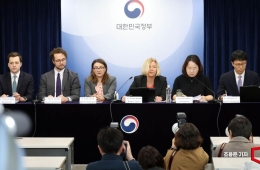
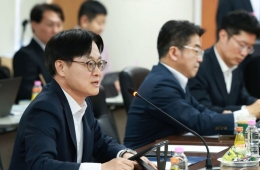
The previous day, the government announced at an emergency market monitoring meeting (F4) that it would implement a second set of supplementary measures for single-stock leveraged ETFs. Fourteen days after the first proposal on July 16, measures suggested include restricting individual investment to 20% of total capital, increasing transaction costs (by applying excess quotation charges in the futures market), introducing simulated trading, and establishing a legal basis for the variable leverage ratios used in Hong Kong.
© The Asia Business Daily. All rights reserved. Unauthorized AI training and use prohibited.