"Next Week Will Be Even Worse"... Hottest Heat Wave in 53 Years, and It's Not Over Yet
Most Regions Soar to 32-37 Degrees... Gyeongnam Hits 41 Degrees
Severe Heatwave Expected in Seoul and Western Regions in the First Week of Next Month
On July 31, most regions across the country experienced record-breaking heat, with daytime temperatures rising to between 32 and 39 degrees Celsius. In some areas, temperatures exceeded 41 degrees Celsius, setting new all-time highs in meteorological observation history.
On this day, the Korea Meteorological Administration warned, "Due to the influence of pressure systems, temperatures will remain higher than average for the time being," and urged people to pay close attention to their health. According to the agency, the day’s highs were 34 degrees in Seoul, 32 in Incheon, 33 in Suwon, 32 in Chuncheon, 37 in Gangneung, 35 in Cheongju, 34 in Daejeon, 34 in Jeonju, 35 in Gwangju, 36 in Daegu, 37 in Busan, 39 in Changwon, and 33 in Jeju, with most regions nationwide seeing temperatures about 32 to 37 degrees Celsius.

On the afternoon of the 31st, when the temperature in the Yangsan area of Gyeongnam rose to 41.4 degrees Celsius, citizens were playing in the water at the fountain of Yangsan Water Park in Mulgeum-eup, Yangsan City. Photo by Yonhap News Agency
View original imageMeanwhile, daytime highs in the Gyeongnam region surpassed 41 degrees, breaking the highest temperature ever recorded since meteorological observations began in Korea in 1973. In Yangsan, Gyeongnam, the temperature reached 41.4 degrees Celsius as of 2:20 p.m. This is the highest temperature ever recorded by the Automatic Synoptic Observation System (ASOS), which has been used for climate observation data since 1973.
The previous highest record was 41.0 degrees, observed in Hongcheon, Gangwon Province, on August 1, 2018. Yangsan also reached 40.3 degrees on the previous day, July 30, marking the fifth highest temperature on record. The Korea Meteorological Administration added that there was a possibility that the temperature in Yangsan would rise further in the afternoon. An "extreme heat emergency warning" was issued for the area, which is announced when the maximum apparent temperature reaches 38 degrees or above, or when the temperature exceeds 39 degrees—conditions severe enough to pose a threat to life.
Experts have attributed this record-breaking heat in Gyeongnam to a combination of the region’s basin topography, the foehn effect, and the simultaneous influence of the Tibetan High and North Pacific High pressure systems.
The Daegu Regional Meteorological Office explained to Yonhap News Agency, "Due to the basin topography of the region, hot air cannot easily escape. When the foehn effect is combined with high humidity, it leads to a significant increase in apparent temperature." Additionally, two high-pressure systems were affecting the upper atmosphere simultaneously, causing hot air to accumulate in thick layers above the region.
Meanwhile, the Korea Meteorological Administration forecasts that most parts of the country will continue to experience intense heat, with maximum apparent temperatures hovering around 35 degrees for the time being. Clear skies are expected to persist next week, and this time, due to the influence of easterly winds, temperatures in the western regions including Seoul are likely to rise even higher.
Hot Picks Today
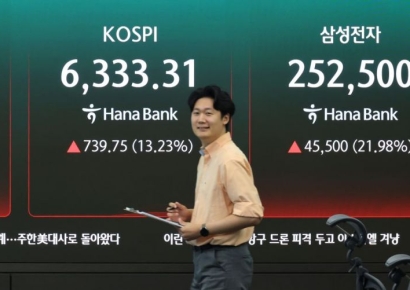 "Is This a Stock Market or a Casino? Predictions Meaningless"...After Repeated Crashes, KOSPI Surges 18% at the Last Minute
- "Sons Are Ultimately Strangers, Daughters Are the Best Nowadays"... Both Grandfathers and Grandmothers Prefer Daughters More
- "Next Week Will Be Even Worse"... Hottest Heat Wave in 53 Years, and It's Not Over Yet
- "30,000 Won Per Night, Is This for Real?"... What Is the Korean Experience Drawing Foreigners?
- "You Said It Would Rise If Left Alone" Chairman Chey Tae-won Bets 4.9 Billion Won... Earns 1.3 Billion in a Day
From August 3 to 9, morning lows are expected to range from 24 to 27 degrees and daytime highs from 33 to 39 degrees nationwide, which is higher than usual. In Seoul, the daytime high is expected to remain at 34 degrees until August 2, then rise to 35 degrees on August 3, 36 degrees on August 4, and reach a peak of 37 degrees on August 5.
© The Asia Business Daily. All rights reserved. Unauthorized AI training and use prohibited.