Will the Era Without Insurance Planners Arrive? ... "Those Who Use AI Will Come Before AI Itself"
Insurance Planners Surpass 700,000
Rising Expectations for 'Planner-Free Insurance'
"An Era Without Planners Will Be Preceded by the Era Without Planners Who Can't Use AI"
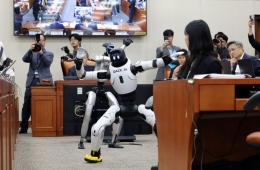
As the insurance industry expands its use of artificial intelligence (AI) for tasks such as consultations and product comparisons, there are growing predictions that the "era without insurance agents" will eventually arrive as AI continues to advance. However, given the nature of insurance sales—where it is crucial to alert customers to potential risks and build trust to secure final contracts—the role of agents is unlikely to disappear any time soon. For the time being, rather than fully replacing agents, AI is expected to complement their work, leading to widening competitiveness gaps among agents depending on their ability to utilize AI.

According to the insurance industry as of the end of last year, the number of insurance agents reached 712,426, surpassing 700,000 for the first time. This increase is attributed to a rise in the number of agents affiliated with general agencies (GA), which offer relatively high commissions and sales autonomy, as well as expansion by insurance companies in recruiting both exclusive agents and part-time "N-job agents."
Nevertheless, despite the record-high number of agents, not all insurance products rely on face-to-face sales. In particular, for products where consumers are already aware of the necessity of coverage and product comparisons are straightforward, the method of signing up without an agent has rapidly become established.
Automobile insurance and travel insurance are prime examples. Automobile insurance is mandatory and coverage structures are largely standardized across companies. Travel insurance is also relatively simple, allowing consumers to easily compare options based on price or special discount offers.
Additionally, last month, Kyobo Lifeplanet Life Insurance launched a personalized insurance curation service called "Insurance Secretary" to address consultation gaps that may arise when insurance is purchased without an agent, leveraging digital technology. Insurance Secretary analyzes the customer's occupation and lifestyle, identifying current coverage gaps and the reasons why additional coverage may be needed. Kyobo Lifeplanet Life Insurance plans to integrate AI into Insurance Secretary to incorporate not only the customer’s behavioral patterns but also changes throughout their life stages.
Some industry watchers predict that if AI is fully applied to insurance sales, the range of products that can be purchased without an agent will expand rapidly. They argue that customers will be able to use AI to analyze insurance contracts, health, and financial information, identify gaps in coverage, and quickly compare premiums across multiple products. In such cases, customers will be able to ask questions about the core content of the contract and receive explanations tailored to their individual understanding, regardless of time or place.
'AI Utilization Gap' Likely to Precede Agent-Free Era

On paper, the technological potential of AI makes it appear that a large portion of an agent's work may soon be replaced. In reality, however, the areas that can be fully automated may be much more limited. According to an analysis by the Korea Development Institute (KDI), if we assume that AI technology is fully implemented, the proportion of the work of financial and insurance salespeople—including insurance agents—for which automation would be economically viable from a cost perspective is 54%. However, when factors such as the need for human judgment and the actual possibility of automation are taken into account, that proportion drops sharply to 8%. This shows that there is a significant gap between what AI appears capable of doing and what can be automated in reality when it comes to insurance agent work.
The nature of insurance sales also makes it difficult to fully replace agents with AI. Agents need to reach out to customers, make them aware of potential risks that have not yet occurred, and explain suitable coverage. The process is not just about delivering information, but also about conveying the necessity of coverage and persuading customers to sign a contract, which plays a significant role in sales. An industry insider said, "It is difficult for AI to find new customers through a network or carry out final negotiations. The recent increase in AI use in agent work is mainly due to its application in preparing consultations and materials for explanations."
Within the industry, there is a view that a "era without agents" will become prevalent first for specific products and specific work units, rather than across the entire insurance market. For small-coverage insurance and simple renewable products, for example, consumers may increasingly compare and join directly with the help of AI. However, for products such as whole life, health, and annuity insurance that are complex and require long-term maintenance, it is expected that AI and agents will work together in joint consultations.
Hot Picks Today
 "Expensive, Smelly and Scary"... What's Happened to the "Honeymooners' Paradise" Tourists Have Abandoned?
- Women Who Say "A Husband's Annual Salary of 100 Million Won Is a Given"... Matchmaking CEO: "They Talk About It Like It's Nothing"
- "I Want to Eat Like Koreans..." Foreigners Who Once Opened Ramen Packs Now Keep Gochujang in Their Pantries
- Samsung Electronics and SK hynix 'Plunge' 7% and 10%... KOSPI Barely Holds 6,000
- "They Said Today Was the Cheapest..." "Let's Get Wedding Jewelry!" Why Did the Luxury Brand Crowds Flocked To Cut Prices by 1.08 Million Won?
A financial industry official said, "Insurance agents are sometimes mentioned as jobs that could be replaced by AI, but for now, it is much more likely that AI will serve as a complementary tool rather than a replacement. Before we see a true era without agents, we are likely to see a widening competitiveness gap between agents who utilize AI and those who do not."
© The Asia Business Daily. All rights reserved. Unauthorized AI training and use prohibited.