Morse Tan Loses Lawsuit to Lift Departure Ban Over 'Lee Defamation' Case... "Will Appeal"
Court: “Disadvantage to Plaintiff Not Greater Than Public Interest”
Mos Tan, a Korean-American and former professor at Liberty University in the United States, lost his administrative lawsuit seeking to overturn the extension of his travel ban from South Korea.

On July 31, Chief Judge Kim Taehwan of the Seoul Administrative Court’s Administrative Division 3 ruled against Tan in the suit he filed against the Ministry of Justice challenging the extension of his travel ban.
The court rejected both Tan’s third request to cancel the travel ban and his application to suspend its execution. The court explained its decision by stating that the disadvantages Tan would suffer were not excessively greater than the public interest pursued by the ban. Therefore, the Ministry of Justice did not exceed or abuse its discretionary powers. As for Tan’s request to cancel the second travel ban, the court dismissed it on grounds that it had already lost its effect, so there was no benefit to be gained from its cancellation.
The court stated, “Given various circumstances, including the plaintiff’s risk of fleeing overseas, the disadvantages suffered by the plaintiff are not more significant than the public interest in securing the nation’s authority to punish crimes and uncover the substantive truth.”
After the ruling, Tan’s legal team told reporters, “We will appeal as soon as possible, but we do not have high hopes.” The representative added, “We believe the judiciary has completely neglected its duty; with this ruling, it has demonstrated the collapse of the separation of powers, constitutional order, and the rule of law. As a Korean national and a legal professional, I am devastated that such an event has occurred in a state governed by law.”
Tan previously served as the U.S. Ambassador-at-Large for Global Criminal Justice during the first term of the Trump Administration. He became a subject of criminal investigation in South Korea for allegedly making false statements at a press conference in the United States last year, claiming that President Lee had been involved in a murder case as a teenager and had served time in a juvenile detention center.
On May 28, during a visit to South Korea, he failed to respond to a police summons and was issued the first travel ban. On July 1, the police referred him to prosecutors without detention on suspicion of defamation under the Information and Communications Network Act, among other charges. The prosecution then lifted the first travel ban and imposed a second travel ban.
Tan had also filed lawsuits and applications seeking suspension and cancellation of the first travel ban. His application for suspension was dismissed, and his immediate appeal was also rejected on July 28.
Hot Picks Today
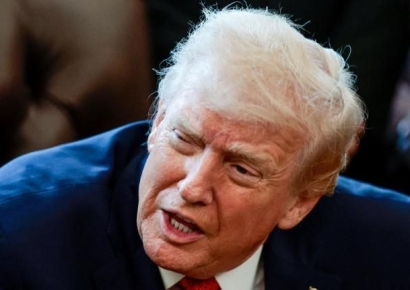 Trump Made 1,000 Stock Trades in a Month... Here Are the Stocks He Bought and Sold
- "I Thought I Could Receive Both"... Over 90% Choose This: Old-Age Pension or Survivor's Pension?
- "Is This Even Possible for One Car?... GV90 Inspected with Six Times Human Vision and Exposed to 160km Wind"
- "E-Land Secures Hoka Amid 'Second Round' Heat in Running Shoes: 'Raised New Balance to 1 Trillion, But Now What?... This Is What Today's Runners Wear'"
- "Why Were They So Fresh for So Long?"... Shock Over Liquid Soaked on Cabbage
The first hearing for Tan’s defamation case is scheduled to take place on September 11.
© The Asia Business Daily. All rights reserved. Unauthorized AI training and use prohibited.






!["August Rate Hike or Hold? Unprecedented Split in Forecasts, Experts Evenly Divided [MPC Poll]①"](https://cwcontent.asiae.co.kr/asiaresize/307/2026071609371448140_1784162234.jpg)
![Apartment Prices Jump... Seoul's Top Villa Transaction District Faces 'Listing Drought' [Real Estate AtoZ]](https://cwcontent.asiae.co.kr/asiaresize/307/2026082309403689173_1787445636.png)