Rescue Craft Spins Like a Top... NASA Space Telescope Recovery Mission in Jeopardy
Swift's Orbit Decays, Raising Risk of Disintegration
NASA Sends Rescue Spacecraft 'Link,' Now Facing Mission Failure
NASA: "It Is Not Easy, but Certainly Worth Attempting"
A spacecraft dispatched to rescue a falling NASA space telescope has now found itself unable to maintain its own stability.

The structural spacecraft 'Link' created by the space startup 'Catalyst Space' is set to be loaded onto a rocket at NASA's Wallops Flight Facility in Virginia, USA, this past June. Photo by Reuters Yonhap News
View original imageOn July 30 (local time), Yonhap News, citing The New York Times (NYT), reported that "Link," the spacecraft launched to rescue the "Neil Gehrels Swift Observatory (Swift)" space telescope, is now at risk of mission failure due to successive malfunctions. Link, a small spacecraft about the size of a refrigerator, was developed and built in just nine months to save Swift. In September of last year, NASA signed a contract worth 30 million dollars (about 42 billion won) with the startup Catalyst Space Technologies, based in Flagstaff, Arizona, entrusting them with its production.
Link was launched on July 3, but recently lost contact with ground control for an entire day. It was later confirmed that the spacecraft was spinning like a top, completing one rotation every 40 seconds. Two out of the three reaction wheels that control its orientation had stopped, and the gas thrusters responsible for fine attitude adjustments also malfunctioned. On July 28, NASA officially confirmed these issues, explaining, "Link began spinning after experiencing problems with attitude control, which caused communications to repeatedly disconnect and reconnect." However, NASA added that power supply remains normal and the other key systems are still functional.
Gonhee Lee, CEO of Catalyst Space Technologies, stated that the communication equipment, all three robotic arms, and the main propulsion system were operating normally. However, he acknowledged, "It was an extremely serious situation."
The manufacturer first plans to stop the rotation using the electric propulsion system. If stable orientation is achieved, the software will be modified so that Link can maneuver even without the faulty components. Then, together with NASA, the team will assess whether it is safe to proceed with the mission to approach and capture Swift. The rendezvous, when Link is scheduled to approach Swift, has been delayed by about two weeks from the original plan and is now set for the end of next month.

The Swift Space Telescope preparing for launch on July 31, 2004, at the hangar of Cape Canaveral Air Force Station, Kennedy Space Center, Florida, USA. Photo by AFP Yonhap News Agency
View original imageSwift is a telescope launched in 2004 that has been observing gamma-ray bursts from an altitude of 595 km above Earth. Gamma-ray bursts are considered the most intense explosions in the universe. Over its nearly 22 years of operation, Swift's orbit has decayed and now sits at just 338 km. Unless action is taken, the telescope is expected to re-enter Earth's atmosphere and disintegrate sometime between the end of this year and early next year.
The mission for Link is to capture Swift, which orbits at 7.7 kilometers per second, and over the span of two months gradually raise its orbit before releasing it. If successful, Swift will be able to continue operations for another 10 years. However, this mission holds further significance. If the technique to capture and elevate a satellite's orbit using robotic arms in space is proven, the same approach could be applied to the Hubble Space Telescope. Launched in 1990, Hubble was serviced five times by astronauts aboard the Space Shuttle, but since the shuttle's retirement, there has been no viable method for further maintenance.
Hot Picks Today
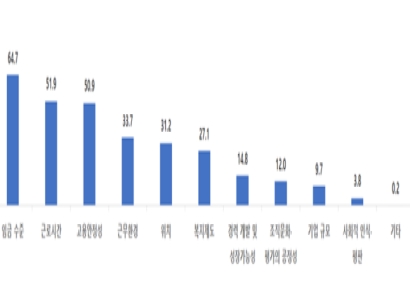 "Please Pay Me at Least 3 Million Won a Month": More Than Half of Young People Today Prioritize "Working Conditions" Over Company Size
- Selling Like Crazy Every Year... 30-Year-Old Hetbahn Takes on a New Challenge: Tastes Better Than "Mom's Home Cooking" [On-Site Report]
- "Americans Would Be Amazed If They Came": Wide-Eyed at a Sight They've Never Seen Before... Foreigners Also Fall for K-Baseball [K-Holic]
- "Hey, Lady, Teach Your Kids to Behave!" ... 300,000 Won in Cash and a Bodily Injury Claim Demanded Over Child's Door Ding
- Beachgoer Finds 'Plastic' That Turns Out to Be Perfume Ingredient Worth More Than Twice as Much as Gold
Sean Domagal-Goldman, NASA's Chief Astrophysics Officer, acknowledged that attempting such an orbital-raising mission in such a short period is no easy feat. Nevertheless, he emphasized, "It is certainly worth attempting."
© The Asia Business Daily. All rights reserved. Unauthorized AI training and use prohibited.