Nationwide Fire Safety Inspection of 190,000 Factories Begins... 4.5 Trillion Won Financial, Tax, and Fiscal Package to Eradicate Factory Fires
Three-Stage Joint Public-Private Safety Inspections
Advanced Fire-Resistance and Firefighting Rules Significantly Enhanced for New Buildings
4.5 Trillion Won Package of Fiscal, Financial, and Tax Incentives
The government is launching the largest-ever nationwide fire safety inspection across all government agencies. For newly constructed factories and hazardous material facilities, the use of non-combustible exterior materials and the installation of intelligent fire detectors and sprinklers will become mandatory, introducing advanced fire resistance and firefighting regulations that are on par with those in developed countries. In addition, the government aims to encourage voluntary facility improvements in existing sites by offering a "carrot" package worth 4.45 trillion won, which includes policy financing as well as fiscal and tax support measures.
Comprehensive Inspection of 190,000 Sites—Mobilizing Private Experts and Youth Interns

On the 28th of last month, a joint on-site investigation by related agencies was conducted at the Coupang Logistics Center 32 fire site in Seongnam-dong, Seohae-gu, Incheon. Photo by Yonhap News.
View original imageOn July 31, at an emergency economic headquarters meeting and a meeting of the ministers responsible for the economy, presided over by Deputy Prime Minister and Minister of Strategy and Finance Koo Yoon-cheol, the government jointly announced these "Measures to Strengthen Factory Fire Safety." This comprehensive plan comes in response to a series of factory fire incidents this year, such as the fire at the Safety Industry Daejeon Plant, which resulted in 74 casualties, and another fire at Hanwha Aerospace’s Daejeon factory that left seven people dead or injured.
For the first time, a sweeping inspection will be carried out on over 190,000 factories and warehouses nationwide with a total floor area of 500 square meters or more, or those classified as high-risk, out of the country’s 740,000 such buildings. In comparison to the limited annual inspections of only 5–10% (about 7% this year) of all designated fire safety sites (approximately 2.6 million locations) conducted by the National Fire Agency, this is a large-scale crackdown—essentially amounting to a near-complete survey of factories and warehouses.
The inspection will be implemented systematically in three stages: beginning in the second half of this year with approximately 40,000 ultra-high-risk facilities that house hazardous materials; followed by about 40,000 business sites at risk of industrial accidents in the first half of next year; and concluding with an additional 110,000 factories in the latter half of next year. On-site inspection teams will consist not only of officials from the relevant fire stations, regional employment and labor offices, and local governments, but also of private sector experts such as architects and fire safety engineers, as well as youth interns with relevant certifications.
If the inspection uncovers illegal extensions or violations, immediate corrective action will be taken. In addition, after-use approval inspections (a “post-inspection” system to verify the legality after a building is approved for use) and mandatory repeated imposition of enforcement fines will greatly strengthen post-management procedures.
Significantly Strengthening Fire-Resistance and Firefighting Standards for New Factories... Incentive-Based Improvements for Existing Facilities

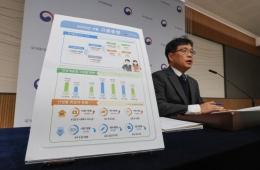
Key Points of Strengthening Factory Fire Safety Measures. Ministry of Strategy and Finance.
View original imageSafety standards are also being upgraded across the board to meet international best practices. For facilities that store or handle hazardous materials, the use of non-combustible cladding will be mandatory instead of the previous semi-noncombustible materials, and the scope of fire-resistant structural requirements will be expanded to factories across all industries. The installation of intelligent fire detectors—which have fewer malfunctions—will be required, along with sprinklers on every floor of factories with a floor area of 5,000 square meters or more. To prevent inadequate safety inspections, a new “specialized inspection business” system for hazardous material facilities, requiring professional technology and equipment, will be introduced by 2028. However, these new regulations will apply only to newly licensed buildings and factories, and will not be applied retroactively to existing factories.
For existing factories, rather than imposing new regulations, the government plans to support voluntary upgrades by offering a package of fiscal, financial, and tax incentives. Over the next five years, a fire prevention subsidy program worth 200 billion won, and a loan program amounting to 1.25 trillion won will be established. In addition, 3 trillion won in policy loans will be swiftly provided via Korea Development Bank, Industrial Bank of Korea, and Korea Credit Guarantee Fund. For approximately 20,000 current high-risk businesses without sprinklers, “automatic spreading extinguishers” for initial fire suppression will be distributed in phases.
Moreover, when investing in advanced safety technologies such as artificial intelligence (AI) and robotics, businesses will benefit from increased tax credit rates as part of a new “new growth and core technology” scheme, and small-business investments in safety equipment will be eligible for accelerated depreciation (cutting the standard useful life by 50%). Workplaces equipped with fire safety devices will be eligible for insurance discounts or premium refunds; the reward for whistleblowers reporting fire hazards through the safety hotline will be increased substantially, up to a maximum of 2 million won (or up to 30% of fines or penalties in internal reporting cases).
Hot Picks Today
 "Samsung Electronics, Please Fall to 100,000 Won"... Investors Fume Over Anonymous Post Welcoming Stock Decline
- "Female Teachers Must Wear Skirts in Class"... Outrage Erupts Over Principal's Demand: What's Happening in North Korea?
- "Makeup and Housework Keep Me Busier": Takaichi's "3-4 Hours" Remark Stirs Japanese Politics
- "I Put in 10 Million Won, but Only 2 Million Won Is Left" ... 77% Plunge Leaves Retail Investors in Samsung Electronics and SK hynix Leveraged ETFs Crying Out
- "The leggings are all see-through. It's so embarrassing to look at," complaints prompt Lululemon to fire development staff.
A government official stated, “This is a comprehensive policy aimed at eradicating the structural risks of factory fires that have accumulated during Korea’s period of rapid growth. We will apply strict safety standards to new facilities, while providing groundbreaking incentives to existing sites in order to fundamentally improve safety throughout the manufacturing sector.”
© The Asia Business Daily. All rights reserved. Unauthorized AI training and use prohibited.