Jeonnam Gwangju Special City and Local Lawmakers Form 'One Team'... All-Out Effort to Secure 2027 Government Funding
First Budget Policy Council Held Since Integration
Joint Response on 30 Projects Including Semiconductor Cluster
For the first time since the administrative merger, Jeonnam Gwangju Integrated Special City has held a budget policy council with local lawmakers, embarking on a joint response to secure government funding for the 2027 budget. By bringing together the budget strategies previously pursued separately by Gwangju and Jeonnam, the city has officially launched a 'one team' system.
On the 30th, Jeonnam Gwangju Integrated Special City, together with the Jeonnam Gwangju Integrated Special City Party of the Democratic Party, held its first budget policy council in Seminar Room 1 at the National Assembly Members’ Office Building.

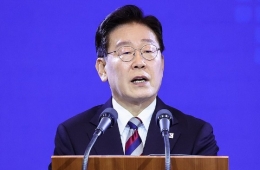
Min Hyungbae, Mayor of Jeonnam Gwangju Integrated Metropolitan City, attended the "Democratic Party Integrated Metropolitan City Party - Integrated Metropolitan City Budget Policy Council" held at the National Assembly Members' Hall in Seoul on the morning of the 30th, and is taking a commemorative photo with local lawmakers. Photo by Jeonnam Gwangju Integrated Metropolitan City.
View original imageMayor Min Hyung-bae, Party Chairman Yang Bu-nam, 13 local lawmakers, and city officials attended the council. On this day, the city presented one policy project, three legislative proposals, and 30 government-funded projects for 2027, including support for the establishment of a semiconductor cluster in the Honam region, and requested government budget allocation and active support from the National Assembly.
As a key agenda, the city shared plans for building a Honam semiconductor cluster by linking AI, renewable energy, future mobility, materials, and components industries, and proposed receiving national-level support.
In the legal sector, requests were made for the enactment of a special law to create a self-reliant city for renewable energy, amendments to laws for the relocation of public institutions such as the National Agricultural Cooperative Federation and National Federation of Fisheries Cooperatives, and revisions to the Local Tax Act to preserve funding for the Balanced National Development Special Account conversion projects.
In particular, as the annual fiscal reduction is expected to reach about 443 billion won if the period for preserving funds for local project conversions ends, Mayor Min stressed the need to extend the preservation period to ensure that projects directly affecting residents’ lives, such as rural infrastructure improvement, water supply expansion, and support for local ports, can continue without interruption.
The 2027 government-funding proposals include six AI-related projects, seven strategic industry projects, five SOC projects, five culture and tourism projects, four agriculture and fisheries projects, and three other projects, totaling 30 projects.
In the AI sector, core projects include the establishment of a National NPU Computing Center in Gwangju, construction of infrastructure for a mega-project AI Data Center, revitalization of the National AI Convergence Complex, and support for an AI Data Center testbed.
In the strategic industry sector, proposals include creating a joint campus among research institutes, industries, academia, and research centers for space launch vehicles; building a dedicated testbed for autonomous vehicles; establishing a demonstration and evaluation platform for high-power semiconductor modules; and facilitating the transition of manufacturing industries to humanoid-based operations.
For SOC, the city requested the inclusion of the Yeongam–Gwangju Expressway, the Gunsan–Mokpo section of the West Coast Railway, the Gwangju new industry line, the Gwangju–Naju metropolitan railway, and the Gwangju–Hwasun metropolitan railway in the National Plan and their selection as candidates for preliminary feasibility studies.
In culture and tourism, main projects include building a K-culture content tech town and an AI content convergence support center. In agriculture and fisheries, establishing a dried seaweed cluster and constructing a water supply system for the Goheung Smart Farm Innovation Valley were presented as key projects.
Mayor Min Hyung-bae stated, “This is the first occasion where Jeonnam Gwangju Integrated Special City and local lawmakers are working together as one team and one voice to secure government funding. By organically linking AI, semiconductors, energy, future mobility, cultural contents, and the agriculture and fisheries industries, we aim to deliver tangible results of integration that citizens can feel.”
Hot Picks Today
!["Please Teach Us the Technology"—Korea Once Sought Help from Japan... Now Threatens the Origin Country After 65 Years [Advance of K-Ramen]①](https://cwcontent.asiae.co.kr/asiaresize/93/2024110818333992902_1731058419.jpg) "Please Teach Us the Technology"—Korea Once Sought Help from Japan... Now Threatens the Origin Country After 65 Years [Advance of K-Ramen]①
"Please Teach Us the Technology"—Korea Once Sought Help from Japan... Now Threatens the Origin Country After 65 Years [Advance of K-Ramen]①
- "Samsung Electronics and SK hynix Are Not Top Earners... Which Company Pays 184 Million Won in Six Months?"
- Jokuk Criticizes 'U-Turn' on Jongbu Tax: "Democratic Party and Government Back Down in Face of Top 1% Opposition"
- "This Is Hell": Greece Resorts to Emergency Measures as Beaches Are Overrun with Tourists
- "Just a Month After Joining, I Feel Older... My Company Won't Safeguard My Looks" Office Workers' Survival Tactics Go Viral in China
Party Chairman Yang Bu-nam also said, “Now that Jeonnam and Gwangju are united, local lawmakers, as one team, will actively strive to ensure that core projects are reflected in the government’s budget plan and that relevant legislation is quickly processed.”
© The Asia Business Daily. All rights reserved. Unauthorized AI training and use prohibited.