"The 'Father of ETFs' Issues Another Warning: Single-Stock Leveraged Products Should Be Allowed to Expire Naturally"
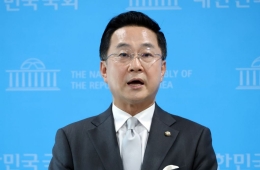
Bae Jaekyu, CEO of Korea Investment Management, known as the "Father of ETFs," has once again criticized single-stock leveraged products. This time, he pointed out that these single-stock leveraged products should be allowed to expire naturally, rather than being delisted.

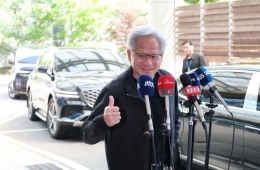
Jaekyu Bae, CEO of Korea Investment Management, is being interviewed by The Asia Business Daily on the 21st at Korea Investment Management in Yeouido, Seoul. Photo by Jin-Hyung Kang
View original imageOn the 30th, CEO Bae posted on Facebook regarding single-stock leveraged products, stating, "Investors should avoid these investments, and rather than opting for delisting, it seems best to gradually reduce them with the help of management companies, liquidity providers (LP), and some institutional support."
Previously, on the 20th, CEO Bae had posted a comment about single-stock leveraged products, saying, "I hope you stop investing even now," but the post was soon deleted. Regarding this, CEO Bae explained, "I posted and then deleted comments about double-leverage and double-inverse single-stock products recently because I received far more responses than I expected." He continued, "I understand very well how leverage and double-inverse products work. It is not enough to just get the direction right. When volatility increases and markets fluctuate, the value of such products can rapidly deteriorate due to daily rebalancing and compounding effects."
He added, "Many people tend to think this way: 'Prices have fallen a lot, so they should go up now,' or 'I'll just jump in for a minute and get out quickly.' But how many times have we actually gotten such timing exactly right?" He emphasized, "You might make a profit once or twice that way, but it's difficult to consistently build wealth with this approach."
He also analyzed the current market situation. CEO Bae said, "Separate from the problems of leveraged products, recent market movements have dealt a major shock to many investors." He continued, "With programs aimed at boosting value as a starting point, changes to regulations—such as expanding directors' fiduciary duties, the separation of taxation on dividend income, and the cancellation of treasury shares—have served as momentum for the market's upward move. Added to this, the memory semiconductor momentum, which began with a shortage of supply, translated into results beyond imagination, propelling the market from its previous 5,000 target to an unprecedented level above 9,000." He further noted, "However, the euphoria did not last long. The market fell by almost 40% from the peak. This is, quite literally, 'Dynamic Korea.' From an investor's perspective, this situation is understandably bewildering."
Even in such a market environment, he emphasized that direction and time are still valid. CEO Bae stated, "At times like these, I am reminded of the two keys to successful investing that I've always mentioned: direction and time. Are these still valid in this market? I still believe that they are," adding, "If our investments align with the long-term trends of the world, we sometimes just need to endure such rough volatility."
Hot Picks Today
 Trump Made 1,000 Stock Trades in a Month... Here Are the Stocks He Bought and Sold
- "I Thought I Could Receive Both"... Over 90% Choose This: Old-Age Pension or Survivor's Pension?
- "Is This Even Possible for One Car?... GV90 Inspected with Six Times Human Vision and Exposed to 160km Wind"
- "E-Land Secures Hoka Amid 'Second Round' Heat in Running Shoes: 'Raised New Balance to 1 Trillion, But Now What?... This Is What Today's Runners Wear'"
- "Why Were They So Fresh for So Long?"... Shock Over Liquid Soaked on Cabbage
CEO Bae also advised against concentrating solely on memory semiconductors and recommended investing in the entire semiconductor ecosystem. He said, "In the age of artificial intelligence (AI), semiconductors are essential and cannot be easily replaced. However, if you invest only in memory semiconductors, there is one thing you must always remember: memory remains a cyclical industry." He continued, "Samsung Electronics, SK hynix, and Micron are announcing massive investments. This means they intend to increase production capacity and expand the supply of memory semiconductors. Moreover, companies such as China's CXMT and YMTC are also rapidly emerging. While oversupply might not occur immediately, in the end, expanding supply is only a matter of time." He further stated, "Investment should be spread across design, memory, foundry, and equipment. That's because even if one part of the industry wavers, you can participate in the overall growth of the ecosystem."
© The Asia Business Daily. All rights reserved. Unauthorized AI training and use prohibited.