Yen at 40-Year Low, but BOJ Likely to Hold Rates Steady
BOJ Expected to Hold Interest Rates Steady at July 30-31 Meeting
"Hawkish Signals Likely to Continue"
Amid the Japanese yen recently dropping to its lowest level in 40 years, it is expected that the Bank of Japan (BOJ) will keep its benchmark interest rate unchanged at the Monetary Policy Meeting held on July 30–31.

Kazuo Ueda, Governor of the Bank of Japan (BOJ), is holding a press conference in Tokyo, Japan, on April 28. Photo by Reuters Yonhap News
View original imageAccording to Japan’s NHK, there is a high possibility that the BOJ will maintain its current key interest rate at the meeting on July 31. Experts cited by the outlet believe that the BOJ is likely to leave rates unchanged as it monitors how the previous rate hike is affecting households and businesses. Last month, the BOJ raised its policy rate by 0.25 percentage points, bringing it to around the 1% level.
However, the BOJ is expected to continue sending hawkish signals. This is due to several independent factors: rising energy prices resulting from the Middle East conflict, the yen’s depreciation, and increased demand for artificial intelligence (AI), all of which are fueling inflationary pressures. Notably, the yen’s weakness has become particularly pronounced. The dollar-yen exchange rate surpassed 163 yen this month, its highest level since 1986. Even the government’s interventions in the foreign exchange market during April and May failed to halt the yen’s decline. The yield on 10-year government bonds has also neared a record high, approaching the 3% mark.
Laura Cooper, Head of Macro Credit at Nuveen, a global asset management firm, told the UK’s Financial Times (FT), “The BOJ has already fallen behind in responding to inflation and is losing some credibility.” She argued that verbal intervention alone from the BOJ will not have a lasting effect, and an actual rate increase is necessary.
Nevertheless, the conditions are not favorable for the BOJ to carry out an additional rate hike. Japanese Prime Minister Sanae Takaichi’s government recently cut this year’s economic growth forecast from 1.3% to 0.9%, citing that elevated international oil prices could weaken domestic demand. An increase in rates would inevitably drive up borrowing costs for households and businesses. The Takaichi administration has also called on the BOJ to align its policy with the government’s and is pushing for large-scale fiscal spending to stimulate the economy this year.

According to the FT, there are three main points to watch in the market: whether BOJ Governor Kazuo Ueda will state in the press conference that there’s no need to wait for a set period before the next rate hike; whether there will be a dissenting vote in favor of raising rates; and whether forecasts for growth or inflation will be revised upward.
The derivatives market is pricing in a single additional 0.25 percentage point rate hike by January next year. Currently, the market sees about a 70% probability of another rate hike in October. Citigroup commented that if Governor Ueda signals an October rate hike path, it would be perceived as hawkish, but rising market uncertainty may make it difficult to present a concrete roadmap.
Hot Picks Today
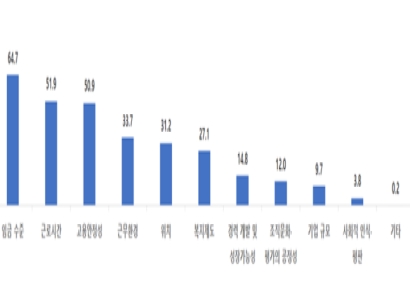 "Please Pay Me at Least 3 Million Won a Month": More Than Half of Young People Today Prioritize "Working Conditions" Over Company Size
- Selling Like Crazy Every Year... 30-Year-Old Hetbahn Takes on a New Challenge: Tastes Better Than "Mom's Home Cooking" [On-Site Report]
- Ran 18 km With 9-Year-Old Tied to Him at the Waist... "Man Banned From Competing for 3 Years"
- "Hey, Lady, Teach Your Kids to Behave!" ... 300,000 Won in Cash and a Bodily Injury Claim Demanded Over Child's Door Ding
- Beachgoer Finds 'Plastic' That Turns Out to Be Perfume Ingredient Worth More Than Twice as Much as Gold
Meanwhile, the Policy Board members will also release their latest economic and price projections at this meeting. Some BOJ officials indicated that Japan’s economic growth rate for fiscal year 2026 is likely to be higher than previously forecast. While concerns over disruptions to corporate activity due to the Middle East have eased thanks to diversified crude oil sourcing and AI-related demand, the recent resumption of hostilities and the yen’s continued weakness remain factors that could drive inflation higher.
© The Asia Business Daily. All rights reserved. Unauthorized AI training and use prohibited.





![[Market ING] KOSPI Seeks Rebound in Superweek Packed with Corporate Earnings and FOMC](https://cwcontent.asiae.co.kr/asiaresize/307/2026102514484873155_1792907327.jpg)