"Blatant Technical Limitations"... Controversy Over AI Dramas Taking Over China's Living Rooms
Controversy Over Viewer Dissatisfaction
Flaws Unveiled That Were Not Apparent on Mobile Devices
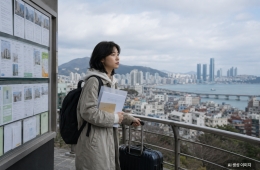
The drama "Dohwadamgi," produced using artificial intelligence (AI), was aired on Anhui TV in China, sparking controversy. This 20-episode series, with each episode running approximately 10 minutes, prominently displays the phrase "AI Production" at the bottom of the screen.
On July 30, Guangming Daily reported, "Although AI dramas have taken over the living room, viewers have expressed dissatisfaction as technical flaws—such as screen discontinuities and awkward expressions reminiscent of copy-and-paste—are fully exposed."

The AI-generated drama 'Dohwadamgi' aired on Anhui TV in China, sparking controversy. Screenshot from 'Dohwadamgi'
View original imageAssessment: Failure to Overcome Technical Hurdles
The outlet evaluated that the production quality of the drama is by no means low. Many veteran staff members participated in both the opening and ending credits, an unusual scale for an AI drama. Historical drama and blockbuster planners were in charge of production, and the directing team has also been recognized for their contributions to various works. It is known that the production team put considerable effort into realism, conducting on-site investigations and interviewing masters of intangible cultural heritage to accurately portray scenes such as papermaking and drying within the drama.
However, despite these efforts, the work is being assessed as having failed to overcome technical barriers. When it first premiered online on the China Central Television (CCTV) platform on July 4, it did not gain much attention, but as the first AI-based Chinese drama to be broadcast on a satellite TV channel, it has since become controversial.
Flaws that were not noticeable on small mobile screens became glaringly obvious on large TV screens. Internet users on social networking services (SNS) pointed out technical issues such as mismatched faces among characters and awkward facial expressions. In particular, the uniformly flat expressions of the AI-generated actors, reminiscent of copy-and-paste, were widely criticized for disrupting viewers' immersion in the story.
"AI Dramas Must Be Produced to Strict Standards"

A drama titled 'Dohwadamgi,' produced using artificial intelligence (AI), was broadcast on Anhui TV in China, sparking controversy. 'Dohwadamgi' captured
View original imageAI dramas have recently gained popularity in China due to benefits like cost reduction and increased efficiency. The production costs for AI short-form (mini-drama) content are reported to be just one-fifth to one-fourth those of live-action short dramas. Additionally, production periods are cut in half compared to live-action projects.
Hot Picks Today
 "2x ETFs Not the Cause of KOSPI Crash"...The Real Culprit Shaking the Market Revealed
- "This Is Not the Time to Sell in Fear"... Securities Firms Urge to Buy SK hynix Despite Sharp Target Price Cut Amid Plunging Market [Click e-Stock]
- [Breaking] JCS: Unidentified Flying Object in Northern Gyeonggi Confirmed as US Drone
- "My Money Is Melting Away... Government Blamed for Turning Stock Market Into a Playground for Foreign Investors Amid Market Crash"
- "Driver, I'll Take the Wheel": Passenger Saves Life in China by Driving Seriously Ill Driver to Hospital
Guangming Daily commented, "The emergence of AI dramas is having a significant impact on the entire industry ecosystem," and pointed out, "For broadcasters, airing AI dramas is a strategic move to secure technological superiority." The article also stressed, "AI drama production companies must adhere to stricter standards to prevent their works from becoming synonymous with low-quality content."
© The Asia Business Daily. All rights reserved. Unauthorized AI training and use prohibited.