"Invest 100 Million, Pay 17.04 Million in Fees"... FSS to Overhaul Bank ETF Trust Fee Structure
FSS Issues Consumer Alert: "Caution"
Upfront Fees Persist Despite Short-Term Trading... Seven Times Higher Than Optimal Charges
The Financial Supervisory Service (FSS) has concluded that the fee structure for exchange-traded fund (ETF) trusts offered by banks does not align with the interests of financial consumers, and is moving to restructure the system. The FSS determined that, despite a high proportion of short-term trading, consumers are primarily subject to upfront (front-end) fees, resulting in unnecessary fee burdens.

On July 30, the FSS issued a "caution" consumer alert regarding ETF trust transactions by banks and announced plans to form a task force with industry representatives and associations to discuss the structure and adequacy of the fee regime for these trusts.
According to the FSS, the total ETF trust sales of the five major commercial banks and Standard Chartered Bank Korea between January 2023 and May 2024 reached 64 trillion won (1.03 million transactions). Notably, sales in May 2024 surged to 10.8 trillion won—an 8.8-fold increase from December 2023's 1.2 trillion won.
The problem lies in excessive short-term trading behavior and a heavy fee burden. Analysis of ETF transactions showed the average holding period was only 42 days, and the average number of cumulative contracts per individual was 5.5. Although 94.6% of all transactions were short-term, with holding periods of less than six months, 91.7% of the products sold charged an upfront fee—around 1%—at the time of subscription.
In contrast, back-end (deferred) fees are about 1% per annum and are calculated pro rata for the holding period when liquidating the position, making them more advantageous for consumers with shorter investment periods. Analysis found that only when the investment period exceeds one year is the upfront fee structure more beneficial.
Another factor that increased the fee burden was the setting of low target return rates. Accounts with target returns set at 5% or lower accounted for 58.1% of the total, which led to frequent trading. For consumers who selected the upfront fee option, paying fees in advance meant also losing out on potential investment opportunities.
The FSS analysis found that if consumers had selected the optimal fee structure for their investment period, the banks would have collected around 54.5 billion won in trust fees. In reality, however, banks collected a total of 394.8 billion won—7.2 times the optimal amount.
An FSS official commented, "The shorter the ETF holding period, the more advantageous the back-end fee structure becomes," adding, "Bank ETF trusts are not suitable for short-term trading." The official further cautioned, "Setting low target returns can lead to frequent trades and higher fee burdens. Consumers should also be aware that ETF trusts offered by banks do not guarantee principal, and ETFs through trusts cannot be traded in real time."
Hot Picks Today
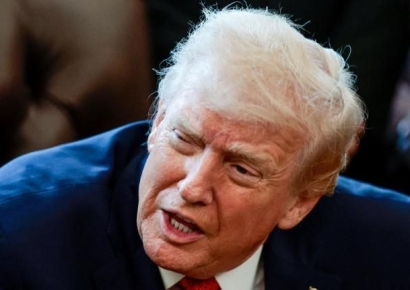 Trump Made 1,000 Stock Trades in a Month... Here Are the Stocks He Bought and Sold
- "I Thought I Could Receive Both"... Over 90% Choose This: Old-Age Pension or Survivor's Pension?
- "Is This Even Possible for One Car?... GV90 Inspected with Six Times Human Vision and Exposed to 160km Wind"
- "E-Land Secures Hoka Amid 'Second Round' Heat in Running Shoes: 'Raised New Balance to 1 Trillion, But Now What?... This Is What Today's Runners Wear'"
- "Why Were They So Fresh for So Long?"... Shock Over Liquid Soaked on Cabbage
The FSS announced plans to form a task force with the financial sector to review the overall fee structure for trusts, including those with ETFs, from scratch. The review will cover the appropriateness of all aspects of the fee system, including front- and back-end fees, early termination fees, and trading fees, and will also examine the calculation formula and weighting for the 'customer investment return rate' included in banks' key performance indicators (KPIs). In addition, improvement of ETF trust sales procedures will also be discussed.
© The Asia Business Daily. All rights reserved. Unauthorized AI training and use prohibited.