[Namsan Stroll] Let's Create 'Super IP' from Artists
![[Namsan Stroll] Let's Create 'Super IP' from Artists](http://www.asiae.co.kr/news/img_view.htm?img=2026042617215440650_1777191715.jpg)
On July 2, I co-curated the special exhibition "CONTINUUM: Songs of the Four Seasons" with SMI Entertainment, commemorating the 40th anniversary of Sumi Jo’s international debut. This exhibition went beyond merely honoring the achievements of a single vocalist. It was inspired by the question: "How can the forty years left behind by the greatest voice become the culture of the next generation?" Sumi Jo’s artistic journey was structured to follow the flow of spring, summer, autumn, and winter, blending stage costumes, medals, photos, and posters from her archive with contemporary Korean art, media videos, and AI technology. In this way, visitors could see, walk through, and remember the life and time of one artist. Now, the lives and works of artists can be combined with K-pop, dramas, webtoons, films, games, fashion, tourism, and education, and reborn as new stories and experiences through AI. We have entered an era where the lives, philosophies, and creative worlds of artists become the core intellectual property from which diverse content is generated.
In 2024, the Korean content industry has grown to reach 157 trillion won in sales and 14.1 billion dollars in exports. The government is also promoting AI-driven content production and supporting the growth of "super IP" for content companies. However, such support should not be limited to genres with high potential for popular success; artists who represent Korea and cultural art archives must also be regarded as key resources within the creative industry. Abroad, there are numerous examples of artists being developed into super IP. The life and art of Maria Callas are reinterpreted through film, exhibitions, fashion, and publishing, while the legacy of Luciano Pavarotti continues in foundations, museums, and documentaries. The works and personal histories of Edvard Munch and Mark Rothko have also expanded into diverse cultural content, becoming major cultural IPs.
Korea, too, has many artists with the potential to stand alongside these figures. The lives and works of Sumi Jo, painter Kim Whanki, Cheon Kyungja, and other Korean artists have accumulated unique narratives and aesthetics with which people around the world can resonate. Now, instead of simply commemorating them as great artists of the past, we must transform them into 'Korean-style super IP' that can be continuously experienced and reinterpreted globally.

Exhibition view of soprano Sumi Jo's 40th anniversary exhibition. The lives and works of Korean artists such as Sumi Jo, painter Kim Whanki, and Cheon Kyungja embody unique narratives and aesthetics that resonate with people worldwide. We should no longer merely commemorate them as great artists of the past, but develop them into a 'Korean-style Super Intellectual Property' that people around the world can continuously experience and reinterpret. SMI Entertainment
View original imageFor this, it is necessary to launch a national "Korean Representative Artist IP Project." Artists should be selected based on artistic accomplishment and the potential for global resonance in their stories. Their scattered biographical data, artwork information, photos, videos, and interviews should be collected, restored, and digitized. Copyright, portrait rights, and archive usage rights must be systematically arranged, and a cultural IP platform should be established for shared use by artists, families, museums, content companies, and technology enterprises. For each artist, a "story bible" should be prepared outlining their life, philosophy, historical context, key events, and the meaning of their works; using this as a foundation, films, dramas, documentaries, webtoons, and games should be developed. The private sector can create pilot content, while support must be extended to distribution networks that link to international platforms, museums, and performance venues. Preservation of the arts and industrialization of content must be connected in a single value chain.
The advancement of AI and various media now provides an environment where such efforts can progress at speed. Dispersed records can be connected and translated into multiple languages, and new generations can experience the world of artists through immersive exhibitions, interactive content, virtual spaces, and educational programs. However, more important than technology is deciding which artists to focus on, and the objectives and direction for such expansion. We must not repeatedly consume only the artist’s image and fame; rather, the essence of their work and the human stories must take root deeply within the hearts of people worldwide.
Selecting even one or two artists to become a national representative IP will not be easy. There may be disagreements over selection criteria and support methods. However, if fear of controversy prevents us from starting, we will lose the chance to elevate our invaluable cultural resources to global significance. While securing fairness and transparency, we must begin by choosing just one and building a successful case.
This is an era where global interest in Korean culture and arts is higher than ever. To sustain this interest as a viable creative industry, we need to discover our great artists and expand their stories and content to resonate with the world. The exhibition that realized Sumi Jo’s forty years through a convergence of music, visual art, archives, and AI is a step in this direction. Moving beyond merely commemorating an artist's achievements, transforming their life and art into a super IP that audiences everywhere can experience together — this is what Korea must do now to move beyond being a cultural powerhouse and become a true global creator nation.
Hot Picks Today
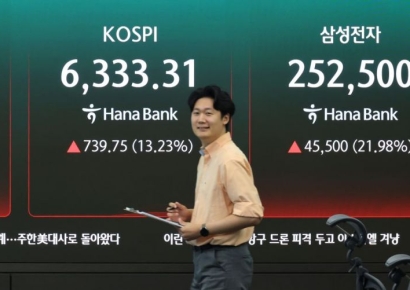 "Is This a Stock Market or a Casino? Predictions Meaningless"...After Repeated Crashes, KOSPI Surges 18% at the Last Minute
- "Sons Are Ultimately Strangers, Daughters Are the Best Nowadays"... Both Grandfathers and Grandmothers Prefer Daughters More
- "Next Week Will Be Even Worse"... Hottest Heat Wave in 53 Years, and It's Not Over Yet
- "30,000 Won Per Night, Is This for Real?"... What Is the Korean Experience Drawing Foreigners?
- "You Said It Would Rise If Left Alone" Chairman Chey Tae-won Bets 4.9 Billion Won... Earns 1.3 Billion in a Day
Hong Jisook, CEO of ArtToken and Convergence Content Planner
© The Asia Business Daily. All rights reserved. Unauthorized AI training and use prohibited.