"Iran and Oil Prices Now Have More Impact on Financial Markets Than the Unclear Fed" [Weekend Money]
30-Year U.S. Treasury Yield Hits Highest Level Since 2007
"Fed Adding to Market Uncertainty"
Analysis suggests that under the leadership of Chairman Kevin Warsh, the United States Federal Reserve System (Fed) is failing to provide clear direction, thereby increasing uncertainty in financial markets.

According to iM Securities on August 1, the July Federal Open Market Committee (FOMC) statement showed little difference from the previous month. However, three members voted for a rate hike, breaking the unanimity for a hold seen in the previous meeting and raising concerns about a possible rate increase within the year. Despite this, Chairman Warsh maintained an ambiguous stance. Referring to rising U.S. Treasury yields, he stated, "As financial conditions have tightened on their own in the market, there is less need for direct intervention from the Fed."
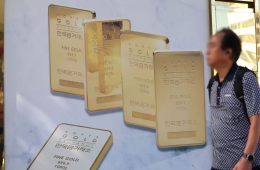
The Fed’s unclear policy direction has led to increased uncertainty and risk in financial markets. The yield on the two-year U.S. Treasury note, which is sensitive to monetary policy, fell slightly, while yields on the 10-year and 30-year Treasuries rose sharply. Notably, the 30-year Treasury yield surpassed 5.2%, reaching its highest level since 2007. Meanwhile, the U.S. dollar weakened and the price of gold climbed by nearly 1%.
Practically speaking, if a rate hike does not take place in September, it will be difficult to raise rates at the FOMC meeting on October 27-28, which occurs right before the U.S. midterm elections. Consequently, barring significant volatility in inflation, the actual timing for an increase could be delayed until at least December or later.
iM Securities assessed that compared to the previous era under Chair Jerome Powell, Kevin Warsh’s influence on financial markets will be relatively limited. The explanation is that, as a result of Warsh’s ambivalent stance, market focus is shifting away from the Fed and toward external geopolitical risks.
In particular, the core variable cited is that volatility in oil prices is increasing further due to the unpredictable Iran policy of U.S. President Donald Trump. Instability in oil prices can stoke inflation uncertainty and translate directly into additional upward pressure on U.S. Treasury yields.
Hot Picks Today
!["Don't Use Chinese-Made Products": One U.S. Warning Triggers a 5 Trillion Won Jackpot for Korean Batteries [Weekend Money]](https://cwcontent.asiae.co.kr/asiaresize/93/2025121709393659037_1765931975.jpg) "Don't Use Chinese-Made Products": One U.S. Warning Triggers a 5 Trillion Won Jackpot for Korean Batteries [Weekend Money]
"Don't Use Chinese-Made Products": One U.S. Warning Triggers a 5 Trillion Won Jackpot for Korean Batteries [Weekend Money]
- "Dividend Payouts of 40 Million Won Before Their First Birthday"...'Baby Shareholders' Put Ordinary Workers at a Disadvantage
- Mixing Leftover Hemp from Hemp Cloth into Film... Biodegradable Plastic's Remarkable Strength Boost [Reading Science]
- "Planning a Trip to Japan?"... Accelerating Yen Strength [Weekend Money]
- "Wasn't It a Huge Trend Among Millennials and Gen Z Just Recently?"... '12 Billion Bottles Inventory Bomb' Enough to Last the World for Three Years
Researcher Park stated, "Going forward, the financial markets, including Treasury yields, will likely focus less on Chairman Warsh and more on Iran-related risks and oil prices."
© The Asia Business Daily. All rights reserved. Unauthorized AI training and use prohibited.