Mayor Heo Taejeong of Daejeon: "This Year's Budget Shortfall Exceeds 540 Billion Won"
Promoting Fiscal Innovation by Eliminating Redundant Projects and Over-Investment
Administrative Integration Between Daejeon and Chungnam to Be Discussed Within the "Chungcheong Metropolitan Union" Framework

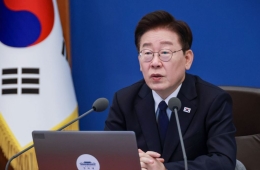
Mayor Heo Taejeong of Daejeon stated, "This year, the budget shortfall has exceeded 540 billion won," adding, "We are initiating strong financial innovation measures in order to overcome this fiscal crisis."
On the morning of July 30, during a press conference held in the city hall briefing room, Mayor Heo explained, "By the end of 2025, local government bonds will have increased by 580 billion won compared to 2022," and diagnosed, "Especially after 2027, the annual average shortfall is expected to reach around 700 billion won, meaning fiscal pressures are mounting."
He continued, "The fundamental direction for financial management in the 9th popularly elected administration is 'a transition to future investment through fiscal innovation,'" emphasizing, "In the short term, we will secure resources for key projects through selection and concentration, and in the medium to long term, we will establish a sustainable fiscal management system."
As the first step of financial innovation, Daejeon City drastically reviewed projects with a total project cost of over 10 billion won that are deemed unnecessary, low in effectiveness, at risk of over-investment, or are similar or redundant. These projects were re-examined from scratch according to four categories: project closure, long-term re-evaluation, schedule adjustment, and scope adjustment.
First, eight large-scale projects totaling 525.9 billion won, such as the Nara Sarang Park, Bomunsan Observatory Tower, and Hanbat Arboretum Wooden Bridge, which were considered to have low urgency, uncertain citizen impact and outcome, or potential for reckless development, will be terminated.
Next, twenty-nine projects—including the construction of the Second Municipal Art Museum, the Daejeon exclusive music performance hall, and three-section articulated buses (which are special-case projects lacking an institutional foundation)—were classified as subject to long-term re-evaluation to enhance fiscal efficiency and reset project priorities.
The financial resources secured through project termination and long-term re-assessment total 178.2 billion won. If in the future the feasibility of such projects is sufficiently secured and fiscal conditions improve, the possibility of relaunching will be carefully reviewed.
Marriage incentives for young couples will be reduced from the current 5 million won per household to 3 million won, and support for free public transportation for senior citizens will be adjusted to a flat 30,000 won per month starting next year. The resources secured through these adjustments will be preferentially allocated to youth policies with high tangible impact and to critical welfare sectors. For five projects, including the Bomunsan Pureuna Nature Recreation Forest, project scales will be rationally adjusted to save an additional 15.6 billion won in the budget.
For 29 projects—including the construction of Urban Railway Line 2, Phase 1 of the Chungcheong Metropolitan Railway, and relocation of the access railway for Daejeon Railway Vehicle Maintenance Depot—the resource allocation plan will be operated flexibly based on each stage's progress. Accordingly, an adjustment in this year's budget of 249.8 billion won will be made.
Before adjusting citizen benefits, public officials, starting with the mayor and executive officials, will take the initiative in reducing expenditures. Business promotion expenses for the mayor and senior officials will be reduced by at least 20% annually, and overtime allowances will be lowered by improving work methods. By converting outsourced tasks to in-house execution and enhancing overall fiscal efficiency, the city aims to save more than 10 billion won annually.
Mayor Heo stated, "The fiscal crisis cannot be resolved by reductions alone," adding, "The basic policy must be to increase tax revenue and expand finances, and for that, corporate attraction and job creation are fundamental tasks."
He further revealed, "A meeting with the Prime Minister is also scheduled today," and continued, "At this event, I will communicate Daejeon's earnest position on attracting companies and institutions."
He emphasized, "We will make every effort to bring institutions and businesses to Daejeon and promote youth startups to ensure new industries can grow here."
Regarding administrative integration between Daejeon and Chungnam, he said, "I have already discussed with other city and provincial governors to conduct integration talks within the framework of the 'Chungcheong Metropolitan Union,'" adding, "We will proceed with the required procedures."
Mayor Heo stated, "Daejeon City's finances are in a very challenging state due to ongoing tax revenue decrease and growing local government debt," stressing, "This fiscal innovation is an essential choice to firmly establish the foundation of the 9th administration and secure a sustainable future for Daejeon."
Hot Picks Today
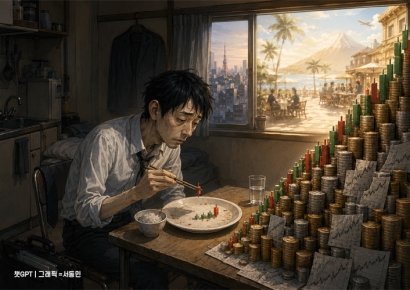 "Surviving on One Meal a Day to Invest 3.5 Million Won Monthly... 'FIRE' Craze Sparks 'NISA Poverty' in Japan"
- "Correction Over for Samsung and SK hynix" "670,000 for Samsung, 4.7 Million for SK hynix": Why Global IBs Remain Optimistic
- "Used for the Wedding" 300,000-Won Ring and Dress...Changing Wedding Trends
- Causing Trouble Without a Simple "Sorry"... The Reason Behind the 'Gen Z Stare' Revealed
- Nongshim Third-Generation Executive Sangyul Shin to Wed SKT Employee on the 13th
He concluded, "From now on, citizens will be at the center of all municipal administration, and we will continue to implement sound and responsible fiscal management."
© The Asia Business Daily. All rights reserved. Unauthorized AI training and use prohibited.