"Personal Information Leaked and Financial Losses Incurred"...How KT Ended Up with a 54 Billion Won Fine
Relatively Few Data Records Confirmed Leaked
Differences in Relevant Revenue Figures Used for Fine Calculation
"Actual Financial Damages Occurred... Case Considered Highly Serious"
The 53.979 billion won fine imposed on KT by the Personal Information Protection Commission (PIPC) is relatively small compared to major previous breaches, such as SK Telecom (134.8 billion won) and Coupang (624.6 billion won). Although KT’s poor management of femtocells (small base stations) led to a data breach and actual financial losses, the number of personal information records confirmed to be leaked in the PIPC’s investigation was approximately 16,000, which is relatively low. Furthermore, differences in the sales figures that serve as the basis for calculating fines appear to have influenced the outcome.
On July 30, the PIPC announced that personal information belonging to 16,647 KT mobile service customers had been leaked. This is equivalent to about 0.08% of KT’s 20.41 million subscribers as of March. Previously, a joint investigation team from the Ministry of Science and ICT and the private sector had announced that 22,227 records had been leaked through illegal femtocells. However, the PIPC calculated the size of the breach based on the actual number of users, excluding corporate accounts and multiple lines.

According to the Personal Information Protection Act, a fine of up to 3% of sales may be imposed for violations of obligations to take safety measures. The relevant sales figure is the average sales from the most recent three fiscal years before the incident occurred. Based on the average sales of approximately 6.4463 trillion won from 2022 to 2024 for KT’s standalone wireless business segment, a maximum fine of 193 billion won could have been imposed. However, the 53.979 billion won fine currently imposed amounts to 0.84% of KT’s sales. Previously, the PIPC had imposed fines roughly equal to 1% of SKT’s mobile network operator sales and 1.8% of Coupang’s e-commerce sales.
The actual amount of the fine is determined after aggravating or mitigating factors such as the seriousness of the violation, the extent and impact of the harm, and the degree of cooperation and remediation are considered. According to the PIPC investigation, 38 of KT’s internal servers were infected with multiple forms of malware, such as BPFdoor, resulting in the leakage of personal information belonging to employees and partner company personnel. However, since KT independently managed the servers, network log records from the time of the incident were not preserved, so it could not be confirmed whether there were additional user data leaks. As a result, the final number of records leaked (16,647) was also lower than Coupang (roughly 37.5 million people) and SKT (about 23.24 million).

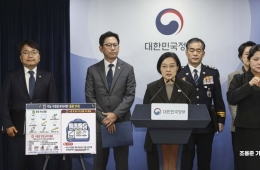
Nevertheless, the reason KT was fined more than 50 billion won is the seriousness of the matter, including the occurrence of actual financial harm. The PIPC explained, “As a key telecommunications operator providing essential mobile services, KT failed to adequately control access to its internal network, allowing the attacker’s illegal intrusions to go unchecked. KT also failed to detect abnormal behavior despite persistent attempts, which led to actual financial losses. We therefore deemed this a serious violation, given the significant level of personal information infringement.”
KT’s compensation of customer financial losses and the operation of a company-wide compensation program were partially reflected as mitigating factors. KT fully reimbursed all customers who suffered losses from unauthorized micro-payment transactions and conducted free USIM card replacements for all customers. In addition, KT temporarily waived early termination fees for customers who wished to cancel their subscriptions. All customers received 100 gigabytes (GB) of additional monthly data, as well as vouchers for over-the-top (OTT) video services and membership benefits.
Hot Picks Today
 "Two Spend 500,000 Won in a Flash, Yet Wait Two Hours?" ... 'Dreamland' Shunned by Kids and Foreign Tourists
- The Era of Getting 200 Million Won After 30 Years Is Over... A Japanese Bank's "Perpetual Department Head" Who Just Clocked In Cries Out
- Spain Hit by Its Worst Tragedy... Lee Kangin, Moreno and Real Madrid Join Soccer World in Mourning
- They Said, “Make It Your Home for Life” - Then Suddenly Kicked 200 Passengers Off... What Happened to the Around-the-World Cruise?
- "130 Rice Bowls Sold Out in a Day"... 'Unfiltered Face' Adds 8 Million Won to Night Market Sales: China's Bungeunwoo
Meanwhile, the PIPC plans to improve systems to prevent the obstruction of investigations by destroying evidence of personal data leaks, as seen in the KT and LG Uplus incidents. The commission aims to introduce criminal penalties for hiding or destroying evidence before an investigation begins, and to impose fines of up to 3% of total sales. The commission also plans to amend relevant laws to impose daily surcharges equivalent to 0.3% of daily sales for failing to cooperate or comply with corrective orders, and to establish a whistleblower reward system.
© The Asia Business Daily. All rights reserved. Unauthorized AI training and use prohibited.