Bio Companies Mount 'Last Stand' with Treasury Stock Purchases Amid Market Crash Fears
KOSDAQ Sees Largest Drop Since the Dot-Com Bubble
Wave of Treasury Stock Purchases by Owners and Executives
Limited Impact... Core Business Value Is Key
As the KOSDAQ index plunged to the 600-point level for the first time in 15 months, sparking widespread panic across the market, executives at bio companies—whose share prices had already tumbled due to individual negative factors—are ramping up their purchases of treasury stocks in an effort to build defensive positions. This trend has continued since the beginning of this month, when the market first began to cool down.

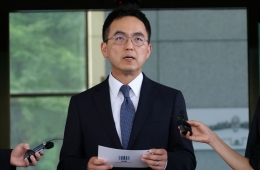
According to the bio industry on July 30, Kolon TissueGene saw both the owner family and professional management participate in treasury stock purchases on July 27. Kyuho Lee, Vice Chairman of Kolon Group, purchased 13,158 Korean Depositary Receipts (KDRs), valued at approximately 200 million won. Kolon TissueGene CEO Seungho Jeon and CFO Jungin Kim also bought treasury shares worth 50.13 million won and 11.4 million won, respectively. The total purchase amount for the three executives was 261.5 million won. This move came immediately after the company’s cell and gene therapy for knee osteoarthritis, TG-C, failed to meet joint primary endpoints in the U.S. Phase 3 clinical trial, causing the share price to plummet. In a subsequent press briefing, CEO Jeon explained that the issue was not a lack of drug efficacy but rather a placebo response, and the direct financial investment by the owner and management appears to reinforce this explanation's credibility.
Peptron and Algenomics responded to contract uncertainties and prolonged downward trends, respectively, with their founders personally initiating share purchases. Hoil Choi, CEO of Peptron, increased his stake to 7.19% by acquiring 10,000 treasury shares (worth about 1.0595 billion won) on July 14, following concerns about Peptron’s collaborative research with Eli Lilly which caused price fluctuations. Algenomics CEO Sungwook Lee also purchased 1,000 shares (around 32 million won) on July 10, appealing for market trust. Meanwhile, ToolGen CEO Jungsang Yoo responded to shareholder backlash over a sharp drop in share price after a rights offering by, for the first time since taking office, buying 250 treasury shares (worth about 9 million won) on July 8.
The problem, however, is that the overall trading foundation and liquidity in the KOSDAQ market are collapsing to such an extent that efforts by individual companies to defend their share prices have become inconsequential. After peaking at 1,226 points in April, the KOSDAQ index halved in just three months, marking the largest annual drop since the bursting of the dot-com bubble in 2000. During trading sessions, both the sell-sidecar and circuit breaker mechanisms were triggered simultaneously for two consecutive days, showing a decline comparable to the global financial crisis in 2008.
Hot Picks Today
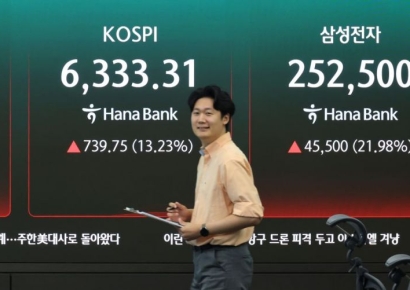 "Is This a Stock Market or a Casino? Predictions Meaningless"...After Repeated Crashes, KOSPI Surges 18% at the Last Minute
- "Sons Are Ultimately Strangers, Daughters Are the Best Nowadays"... Both Grandfathers and Grandmothers Prefer Daughters More
- "Next Week Will Be Even Worse"... Hottest Heat Wave in 53 Years, and It's Not Over Yet
- "30,000 Won Per Night, Is This for Real?"... What Is the Korean Experience Drawing Foreigners?
- "You Said It Would Rise If Left Alone" Chairman Chey Tae-won Bets 4.9 Billion Won... Earns 1.3 Billion in a Day
As these executive purchasing efforts clash with the far greater shock of an index crash, market opinion on the effectiveness of such moves remains divided. An industry source remarked, "In a market-wide crash where the index collapses, executives buying treasury stocks offer only temporary relief or may be limited to easing very specific uncertainties, such as contract delays. Especially for companies where core business value was damaged—such as those suffering from failed clinical trials—it's unlikely that treasury stock buying alone will restore investor sentiment in the face of intensified market panic."
© The Asia Business Daily. All rights reserved. Unauthorized AI training and use prohibited.