30-Year Yield Hits 5.21% Despite Fed Rate Hold, Highest in 19 Years
Reflecting Concerns Over Prolonged High Inflation and Interest Rates
Warsh: "We Will Not Hesitate to Act When Necessary"
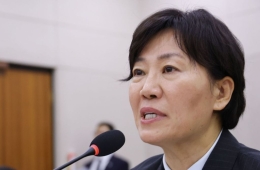
The U.S. Federal Reserve (Fed) has kept its benchmark interest rate unchanged, yet yields on long-term U.S. Treasury bonds have surged. This appears to reflect the market's simultaneous concerns over prolonged inflation and the possibility of further policy tightening, especially since Fed Chair Kevin Warsh did not provide concrete signals regarding the future path of interest rates.

According to the electronic trading platform Tradeweb on the 29th (local time), as of 3:34 p.m. Eastern Time, the yield on the 30-year U.S. Treasury bond stood at 5.21%, up 0.10 percentage points from the previous session. This is the highest level since July 2007, prior to the global financial crisis, marking a 19-year high.
The yield on the 10-year U.S. Treasury bond also rose more than 0.07 percentage points from the previous session, reaching the 4.67% range. In contrast, the yield on the 2-year Treasury note—which is sensitive to changes in monetary policy—fell by 0.04 percentage points to 4.24%.
The Fed held its regular Federal Open Market Committee (FOMC) meeting on this day and kept the federal funds target rate steady at 3.50–3.75% per annum. This decision was in line with market expectations; however, three members—Beth Hammack, President of the Cleveland Federal Reserve Bank; Neel Kashkari, President of the Minneapolis Fed; and Lorie Logan, President of the Dallas Fed—voted against, calling for a 0.25 percentage point increase.
This is the first time since September 2016 that three members have opposed a policy decision in the same direction. It is being interpreted as growing voices within the Fed advocating for higher rates to counter inflation that remains above target levels.
At a press conference following the meeting, Chair Warsh stated that the Fed will not provide advance signals regarding the future path of interest rates, but will take whatever actions are necessary to ensure price stability.
He said, "I understand that there is a demand for the Committee to continuously provide forecasts and commentary," but added, "We need to observe how the market responds directly and unfiltered to changes in economic conditions." He continued, "I want to emphasize how important the Committee's decisions are," and "We will not hesitate to act when needed and appropriate."
The surge in long-term Treasury yields shows that the market did not interpret the decision to hold rates as solely a dovish signal. Although the Fed did not hike rates immediately, expectations persist that a rate increase remains possible at the September meeting should inflation strengthen again.
Recent inflation indicators provided some reassurance. The U.S. Consumer Price Index (CPI) last month fell by 0.4% from the previous month, mainly due to declining gasoline prices. However, with renewed instability in the Middle East, gasoline and energy prices have rebounded in recent weeks, rekindling uncertainty over the inflation outlook.
The contrasting movements between long- and short-term yields also stand out. The decline in 2-year yields reflects the Fed's decision not to raise rates at this meeting, while the rise in 10-year and 30-year yields signals concerns that inflation and high interest rates may persist longer than previously expected.
Jerry Templeman, Vice President of Economic and Fixed Income Research at Mutual of America Capital Management, commented, "There will be some interesting economic indicators released between now and the September meeting," and added, "I do not necessarily expect the Fed to maintain the same stance by September."
Hot Picks Today
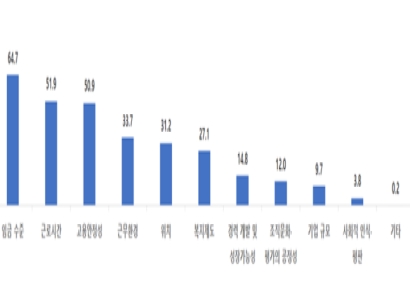 "Please Pay Me at Least 3 Million Won a Month": More Than Half of Young People Today Prioritize "Working Conditions" Over Company Size
- Selling Like Crazy Every Year... 30-Year-Old Hetbahn Takes on a New Challenge: Tastes Better Than "Mom's Home Cooking" [On-Site Report]
- "It's so popular you can't get it": 'Legendary liquor' returns after 11 years, causing a stir... 'Newtro' craze takes over convenience stores [How We Shop Today]
- "Hey, Lady, Teach Your Kids to Behave!" ... 300,000 Won in Cash and a Bodily Injury Claim Demanded Over Child's Door Ding
- "Don't Trust This Woman": Documentary on 'Investment Scammer' Earns KRW 22 Billion in One Week
The next FOMC meeting is scheduled for September 15–16. Inflation and employment indicators released before then are expected to be the key variables determining whether the Fed will move forward with a rate hike.
© The Asia Business Daily. All rights reserved. Unauthorized AI training and use prohibited.




![[Market ING] KOSPI Seeks Rebound in Superweek Packed with Corporate Earnings and FOMC](https://cwcontent.asiae.co.kr/asiaresize/307/2026102514484873155_1792907327.jpg)