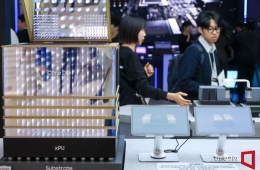
Gwangju Military Airport Site Designated as 2.5 Million Pyeong Semiconductor National Industrial Complex Candidate... 'Further Expansion' Planned
Ministry Holds Industrial Location Policy Committee Meeting on July 29
Toward a Corporate Advanced City with Partnership Ecosystem and Residential Functions
The Ministry of Land, Infrastructure and Transport announced on July 29 that it held an Industrial Location Policy Committee meeting and preliminarily designated approximately 2.5 million pyeong (about 8.26 million square meters) in and around the Gwangju military airport site as the preferred candidate for the "Advanced National Industrial Complex for Semiconductors in the Honam Region."
This designation follows a request from the Ministry of Trade, Industry and Energy to designate the area as a national industrial complex, citing investment demand from Samsung Electronics and SK hynix. Article 6, Paragraph 2 of the Act on Industrial Location and Development stipulates that the head of a central administrative agency can designate a target area and request its recognition as a national industrial complex from the Minister of Land, Infrastructure and Transport. The Industrial Location Policy Committee, which is in charge of the deliberations, is chaired by the First Vice Minister of Land, Infrastructure and Transport and consists of officials from relevant ministries and private sector experts.

The site of the military airport in Gwangju, Jeonnam. Photo by the Blue House Press Corps
View original imageThe selection of a candidate site is the first step in establishing a national industrial complex. This is the official government procedure for confirming the project site, after which compensation and construction can only begin once the industrial complex plan is drawn up and the designation and notification as a national industrial complex have been completed.
The Ministry explained that the 2.5 million pyeong reflects the area prioritized for designation based on the projected demand from Samsung Electronics and SK hynix.
The background for considering expansion includes both the industrial ecosystem and residential functions. The Ministry stated, "Advanced industrial complexes need to provide not only space for anchor companies’ production facilities, but also create an environment where partner companies and research institutions can cluster and grow together." It added, "We will build an advanced corporate city by integrating functions such as residential, educational, cultural, and transportation infrastructure."
The Ministry of Land, Infrastructure and Transport plans to prepare the subsequent procedures, including industrial complex planning, to provide land in line with the investment timelines of Samsung Electronics and SK hynix. The specific area and scope of additional land will be finalized through consultations with the companies and relevant agencies.
Lee Tak Kim, First Vice Minister of Land, Infrastructure and Transport, stated, "The designation of the 2.5 million pyeong candidate site marks the first and important starting point for creating the Advanced National Industrial Complex for Semiconductors in the Honam region. We plan to build not only actual demand sites for anchor companies but also an industrial ecosystem and comprehensive functions such as residential and cultural infrastructure, so that partner companies can grow together."
He continued, "We will closely cooperate with companies, related ministries, and local governments to prepare additional expansion as soon as possible. Our aim is to develop the national industrial complex in the Honam region into a globally competitive advanced corporate city for the semiconductor industry."
Hot Picks Today
!["Even One Deal Is Hard for South Korea"... Everyone's Buying Chinese Tech: The Secret Behind $41.5 Billion in Deals [China Shock, K-Industry on the Brink | Biotech] ②](https://cwcontent.asiae.co.kr/asiaresize/93/2026101908155964935_1792365360.jpg) "Even One Deal Is Hard for South Korea"... Everyone's Buying Chinese Tech: The Secret Behind $41.5 Billion in Deals [China Shock, K-Industry on the Brink | Biotech] ②
"Even One Deal Is Hard for South Korea"... Everyone's Buying Chinese Tech: The Secret Behind $41.5 Billion in Deals [China Shock, K-Industry on the Brink | Biotech] ②
- “What Now for Samsung and SK hynix?” ... Could News from China Rattle the KOSPI? Shareholders Anxious
- "Let's Hit It Big in Korea"... Foreigners Flock to 'This Place' [Weekend Money]
- "I Had Just Lain Down to Sleep..." Woman in Her 30s Sets Fire to Songpa Villa Parking Lot, Destroying 3 Cars
- "Jealous of Koreans" - Now a Must-Do on Every Trip... The Place Where Foreigners Spent KRW 229.8 Billion
Previously, the Ministry of Land, Infrastructure and Transport, after a review by the Central Urban Planning Committee on July 9, designated the Gwangju military airport site and the surrounding 364.19 km² as a land transaction approval zone. This designation is effective for two years from July 14, 2026 until July 13, 2028, and includes eight cities, districts, and counties, such as 124.98 km² in Gwangsan-gu and 97.93 km² in Naju. Within this zone, transactions involving land exceeding a certain size require approval from the head of the relevant local government, and acquired land must be used for the approved purpose for up to five years.
© The Asia Business Daily. All rights reserved. Unauthorized AI training and use prohibited.

!["Please, Just Take Them Off" - They Made It All the Way to Bed... Then Fecal Bacteria Struck [Deep Scroll]](https://cwcontent.asiae.co.kr/asiaresize/307/2026101610053063338_1792112730.png)



![[Good Morning Market] U.S. Stocks Close Lower, Led by AI Shares... Korean Market Seen Volatile This Week](https://cwcontent.asiae.co.kr/asiaresize/307/2026101616513464040_1792137094.jpg)