'Samsung Electronics and SK Hynix on a Roller Coaster... Will Volatility Ease from Tomorrow? [Investment Barometer]'
Single-Stock Leveraged Product Deposit Raised from 10 Million to 30 Million Won
Cash Holdings Only—No Substitute Securities Accepted
Restrictions Expected on Same-Day Repeated Trading and Switching Between Stocks
Number of Trading Accounts
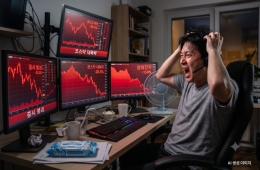
Starting from July 31, the minimum cash deposit required to trade single-stock leveraged products will be raised to 30 million won, and both securities to be used as collateral and same-day proceeds from sales will no longer be accepted as deposit. As single-stock leveraged products have recently been identified as a major cause of extreme volatility in the domestic stock market, attention is focused on whether this measure will help ease volatility and restore stability to the market.
!['Samsung Electronics and SK Hynix on a Roller Coaster... Will Volatility Ease from Tomorrow? [Investment Barometer]'](http://www.asiae.co.kr/news/img_view.htm?img=2026072914181862703_1785302298.png)
Previously, the financial authorities proposed several supplementary measures for single-stock leveraged products: ▲Temporary suspension of new listings and advertising ▲Raising the minimum cash deposit to 30 million won ▲Expanding the minimum trading unit to 20 shares ▲Strengthening assessment criteria for the required prior education and adding one more hour to the curriculum ▲Reinforced management of price deviation rates, among others. Among these, the increase of the minimum deposit was originally planned for August, but implementation was moved up to July 31. The suspension of new listings and advertising is already in effect, while the benchmark for managing price deviation rates (dislocation) will be toughened from the current 3% to 2% starting August 19. The education requirement will be extended from 2 hours to 3 hours, also due to be enacted within August. The expansion of the minimum trading unit, originally slated for November, is now highly likely to be implemented sooner.
Among these revisions, the immediate change that will affect investors’ trading is the increase in the deposit requirement, effective July 31. Market experts are closely watching to see whether this will help reduce volatility caused by single-stock leveraged trading. Securities industry officials expect the new measures to have an impact by reducing turnover rates.
Lee Sanghyun, a researcher at Meritz Securities, commented, "The increase in the deposit requirement scheduled for July 31 and the exclusion of securities as collateral will significantly decrease turnover rates. This is because, even if an investor buys and sells shares or exchange-traded funds (ETFs) worth 30 million won in cash on the same day, they cannot repurchase single-stock leveraged products until the settlement date (T+2) unless they deposit additional cash."
!['Samsung Electronics and SK Hynix on a Roller Coaster... Will Volatility Ease from Tomorrow? [Investment Barometer]'](http://www.asiae.co.kr/news/img_view.htm?img=2026073008190963457_1785367148.png)
Previously, not only cash but also substitute securities in the account (such as stocks, ETFs, and bonds, at 70% of market value) were accepted as part of the minimum deposit, and sale proceeds could be used immediately for repurchases. However, from July 31, only cash is recognized as eligible deposit, and sale proceeds cannot be reused until actual cash is delivered on the settlement date, effectively blocking intraday trading and high-frequency speculative trades.
In particular, the application of the T+2 settlement period is seen as a powerful brake on the short-term turnover rate in the market. Lee Jaewon, a researcher at Yuanta Securities, pointed out, "The essence of the new single-stock leveraged product cash deposit requirement being implemented on the 31st is not just the 30 million won entry barrier, but rather the slowdown of fund turnover due to sale proceeds only being recognized as available cash two days after the transaction date."
He explained, "While purchase costs are deducted immediately, sale proceeds can only be reused two days later. This will structurally limit intraday round-trip trading and reallocating funds between different stocks on the same day. As a result, we expect to see a sharp decrease in both the number of trades and turnover rates, and if net asset value also declines, end-of-day rebalancing and synchronized buying/selling activity could weaken further."
The political sector also expects that raising the minimum deposit will substantially temper volatility in the single-stock leveraged market. According to analysis by the Democratic Party’s Special Committee on K-Capital Markets, over 90% of single-stock leveraged product users have deposits less than 30 million won, accounting for 60% of total trading volume.
Kim Namkeun, committee secretary, stated, "If the minimum deposit is raised to 30 million won in cash, the number of active trading accounts, which currently exceeds 100,000, is expected to drop to around 10,000, and daily trading volume is likely to decrease to about 40% of current levels. We believe this measure alone will ensure considerable market stability."
Although the 30 million won deposit requirement has not yet come into effect, anxiety has escalated after the KOSPI index triggered circuit breakers for two consecutive days for the first time ever and sank to the 5,000-point range. In response, the government hastily announced additional measures. The previous day, at an emergency market inspection meeting, the government decided to immediately implement additional measures, including: ▲Establishing per-investor investment limits ▲Increasing transaction-related costs ▲Introducing simulated trading measures ▲Establishing a legal basis for market stabilization actions in emergencies.
Hot Picks Today
 "This Is the First Time in 38 Years"... Real-Time Situation Unfolds at U.S. Airports
- "Monthly Salary Exceeds 10 Million Won"... The Top Job in Japan Even Doctors Envy
- Just When It Seemed Like the Bottom, KOSPI Keeps Falling... How Low Can It Go?
- [Breaking] Personal Information Commission Refers LG Uplus to Law Enforcement Over Server Disposal and Evidence Destruction Allegations
- "Bring a Friend and Get 1.18 Million Won"... Dubai Starts Offering Cash Incentives Amid Tourism Slump
Accordingly, the share of single-stock leveraged products in an investor’s total investment in financial products will be capped at 20%. The aim is to control both the entry threshold (30 million won deposit) and the maximum ceiling (20% cap) simultaneously. Additionally, a surcharge for excessive quoting, currently enforced in derivatives markets, will be applied to increase related transaction costs, and simulated trading will also be introduced.
© The Asia Business Daily. All rights reserved. Unauthorized AI training and use prohibited.