Agreement Fails Before Summer Vacation... Hyundai Motor Union Warns "Will Escalate If Management Doesn’t Change"
Three-Day Partial Strike Begins at Domestic Plants
Union Claims "Company Has Sufficient Capacity for Wage Increases and Retirement Age Extension"
Summer Break from August 3 to 7 Raises Concerns Over Production Disruptions
As the Hyundai Motor labor union launches an additional strike ahead of the summer vacation, negotiations over wage increases are expected to remain deadlocked.

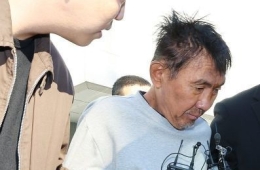
On the 29th, morning shift workers at Hyundai Motor Ulsan Plant's Myeongchon main gate in Buk-gu, Ulsan, are leaving work early due to a partial strike. The Hyundai Motor Union will strike for 4 hours every day for three days from this day until the 31st. Yonhap News
View original imageThe Hyundai Motor branch of the Korean Metal Workers' Union announced that it would stage a partial strike from July 29 to 31. Both the morning and afternoon shifts will hold four-hour strikes each day.
The union began its first strike on July 13, holding two-hour partial strikes for each shift over three days until July 15. From July 20 to 22, the union escalated its action with four-hour strikes per shift.
In a statement, the union’s strike committee said, "Although Hyundai Motor's sales in the second quarter increased, its operating margin decreased compared to the same period last year. However, given the drop in global sales due to tariff issues and the war in the Middle East, the performance indicators are not bad." The committee added, "The company has sufficient capacity to meet demands for wage increases including performance bonuses, a 50% increase in bonuses, and an extension of the retirement age."
The strike committee argued that the gap between Hyundai Motor's operating profit and employees’ wages continues to widen. According to the committee, setting 2020 as 100, the company's operating profit index grew to 520 last year, but executive compensation stood at 220, and the average salary per employee was only 140.
Regarding Hyundai Motor's stance that the company wants to focus solely on wage negotiations this year and postpone issues such as bonus increases, the extension of the retirement age, and the reinstatement of dismissed workers, the committee stated, "'Just this once' has been said for years, and management has always taken this approach." It emphasized, "We believe it is time to put an end to this. If the company glosses over the core demands from the field again this time, we believe the imbalance in labor-management relations will only accelerate."
The committee also responded to union members’ questions. To the question "Why are strikes only being held three days a week?" the committee answered, "From a long-term perspective, this is a warming-up process. Normal working days serve as a way to prompt management to come to the table for negotiations. If management's attitude remains unchanged after the vacation, we plan to gradually increase both the duration and frequency of strikes."
Hyundai Motor's domestic production plants will be on summer vacation from August 3 to 7. Reaching an agreement before the vacation has become virtually impossible, so the union plans to revisit the intensity of strike actions after the break.
Hot Picks Today
!["Your House Is a Mess": Cleaning All Night Before Friends Come Over? Why Home Gatherings Are Disappearing [The World Is Z Now]](https://cwcontent.asiae.co.kr/asiaresize/93/2026102409244072721_1792801480.png) "Your House Is a Mess": Cleaning All Night Before Friends Come Over? Why Home Gatherings Are Disappearing [The World Is Z Now]
"Your House Is a Mess": Cleaning All Night Before Friends Come Over? Why Home Gatherings Are Disappearing [The World Is Z Now]
- "Was He Looking Because She Was Prettier Than Me?"... Tracking Her Boyfriend's Gaze Reveals a Twist [Experiment Notes]
- "Tired of Seeing My Account in the Red"... 'This' Must Be Tamed for Korean Stocks to Take Off, They Say [Weekend Money]
- 'Big Spenders' Lose Interest: Even Hermes Shares Fall 40%... The 'Tables Have Turned' for Once-Untouchable Luxury Brands
- "Shares Hit Daily Limit on 56 Billion Won News"... Marubeni Launches Tender Offer for K-Beauty Firm of 'Chae Sira's Husband' Kim Taewook
Production has already been disrupted due to partial strikes and the refusal to work overtime. If the strikes become prolonged and more intense after the vacation, the burden on management is expected to increase even further.
© The Asia Business Daily. All rights reserved. Unauthorized AI training and use prohibited.