[Interview] Chair Paek Jonghan: "Implementing Field-Oriented Legislation and Building a Trusted Council"
10th Seogu Council Outlines Strategies in Jeonnam-Gwangju Special Integrated Metropolitan City
Emphasizing Downtown Revitalization and Gwangcheon Area Development for Local Business Recovery
Expanding AI-Based Resident Participation and Advancing People-Centered Digital Administration
Building a Comprehensive Care System in Response to Aging and Increasing Single-Person Households
With the inauguration of the Jeonnam-Gwangju Special Integrated Metropolitan City, the 10th Western District (Seogu) Council stands at a new starting line. Following the integration, local district councils now face the challenge of presenting development strategies connected not only to daily administrative work, but also to regional growth within the framework of large-scale metropolitan administration.
Paek Jonghan, Chair of the Western District Council, defined Seogu as "the central living zone and economic hub of the Special Integrated Metropolitan City," highlighting the revitalization of the original downtown, development of the Gwangcheon area, the expansion of AI-based resident participation, and the establishment of a comprehensive welfare system as the council's key legislative priorities for the first half of the term.

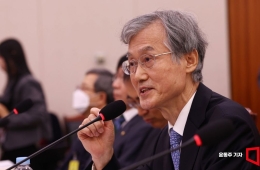
Paek Jonghan, chairman of the Western District Council, is giving an interview with a reporter from The Asia Business Daily Honam Headquarters, explaining local issues. Courtesy of Jeonnam Gwangju Western District Council
View original imageChair Paek emphasized, "We will become a field-oriented council that produces changes residents can truly feel," and added, "Our goal is to build a council that earns trust through action, not just through words."
The following is a Q&A with Chair Paek Jonghan.
-The launch of the Jeonnam-Gwangju Special Integrated Metropolitan City has significantly changed the administrative landscape. What do you believe is Seogu’s role in this new era?
▲The establishment of the Special Integrated Metropolitan City represents not just the unification of administrative districts, but the beginning of a new era in which Gwangju and Jeonnam jointly advance as a single living and economic bloc.
Seogu is the core living area of the integrated city, where administrative, financial, and commercial functions are concentrated, and which is fully equipped with the Gwangcheon area transportation network, urban railway, as well as cultural and medical infrastructure. It possesses ample competitiveness to grow as the city that both people and businesses think of first.
In particular, with large-scale projects such as the Gwangcheon Terminal Complex Development and Subway Line 2 underway, I expect Seogu to become a central pillar driving the economic dynamism of the Special Integrated Metropolitan City.
The council will do its utmost to establish institutional frameworks so that these changes translate into improved quality of life for residents and economic revitalization of the region.
-What kinds of support policies are needed to revitalize the original downtown areas, such as Yangdong Market, Nongseong-dong, and the Gwangcheon district?
▲The original downtown is not just an old space; it is a precious asset where Seogu’s history, culture, and community continue to thrive. Simple facility improvements are not enough. It is crucial to transform these spaces into places people want to revisit, spend time in, and consume.
Since Yangdong Market, Nongseong-dong, and the Gwangcheon area each have their own unique characteristics, tailored revitalization strategies are required for each district. In particular, it is important to implement policies that connect transportation, tourism, and consumer pathways so that the effects of Gwangcheon area development naturally extend to Yangdong Market and the surrounding small business district.

Paek Jonghan, Chairperson of the Western District Council, is expressing opinions on the pressing issues in the region, including the Gwangcheon Terminal Complex Development. Provided by the Western District Council of the Jeonnam Gwangju Integrated Special City.
View original imageEfforts must also be made to support youth entrepreneurship, utilize vacant storefronts, assist small business owners, and promote local commercial districts by integrating cultural content. The council will scrutinize whether the voices of residents and merchants are appropriately reflected in budgets and policies.
-Residents are experiencing more inconvenience due to the large-scale Gwangcheon Terminal Complex Development and Subway Line 2 construction projects.
▲Large-scale development projects are investments for the future of Seogu. However, minimizing resident inconvenience must take precedence over everything else. As both the Gwangcheon Terminal project and subway construction take place simultaneously, concerns about traffic congestion and damage to commercial districts have emerged.
The council will continuously monitor whether appropriate traffic measures are being implemented during construction and whether pedestrian safety and detour routes are properly managed. Most importantly, we will visit sites in person, listen to residents and merchants, and actively call on the government and relevant agencies to make improvements so no one is left out during the development process.
-Seogu is expanding digital administration, such as with the AI Residents’ Assembly.
▲AI and digital technologies are extremely important tools for expanding the scope of resident participation. Creating an environment where residents can propose policies and voice opinions regardless of time or place will become a key competitive advantage for local administration moving forward.
However, technology itself must not become the goal. It is even more important to build participation systems where residents’ opinions are actually reflected in policy and where results can be checked. In addition, digital education and offline participation channels must also be expanded to ensure that seniors and information-vulnerable groups are not excluded. The council, for its part, will rigorously review institutional safeguards for privacy protection and data security to ensure digital administration remains people-centered.
-With a rapidly aging population and more single-person households, demand for welfare is rising.
▲Caregiving will be the single most important task facing local governments in the coming years. Seniors living alone and single-person households must be considered not only in terms of economic hardship, but also the risks of social isolation and solitary death.
We need to strengthen a regionally centered care system in which community centers, welfare organizations, medical institutions, and local communities are closely connected, while shifting toward preventative, outreach-focused welfare that proactively finds those who need help. The council will scrutinize whether welfare budgets are actually delivering results on the ground and focus its efforts on creating welfare and care policies that residents can truly feel in their daily lives.
-What kind of council do you hope to build in the 10th Western District Council?
▲As the first council formed following the inauguration of the Special Integrated Metropolitan City, we must be a council that responds flexibly to change.
I want to build a field-oriented council that finds answers close to the residents, and a council that not only holds the administration accountable, but also works in cooperation when necessary.
We will focus the council’s capabilities on producing tangible achievements in downtown revitalization, regional economic recovery, AI-driven administrative innovation, welfare and care, and creating a safe city—goals that residents can truly experience.
Hot Picks Today
 "Wow, Have Middle-Aged Men Had This All to Themselves?"... Women in Their 20s and 30s Find Comfort in a Standing Drink
- "Koreans Spend 1 Million Won Each and Come Back"... 'They Said They Were Going for Value for Money,' but Open Their Wallets Wide in Japan
- They Earn “430 Million Won a Year” Yet Receive Government Aid... AI Hub Declares Emergency Over “8.8 Million Won Monthly Rent”
- "Naked Again?" Controversial Actress Crosses a Line... Slammed for Sexualizing 'Child Characters'
- "They Get a Good Night's Sleep and Earn Twice My Salary... Honestly, I'm So Jealous I Could Die": Civil Servant's Post Targeting Firefighters Sparks Outrage
We will do our utmost to build a council that finds solutions on the ground by listening to even the smallest voices of our residents, establishes trust through action over words, and diligently prepares for the future of Seogu.
© The Asia Business Daily. All rights reserved. Unauthorized AI training and use prohibited.