After Rate Hike, National Assembly Reconvenes; Shin Hyun Song Says "Necessary to Maintain Rate Hike Stance Going Forward"
Bank of Korea Policy Briefing to National Assembly's Planning and Finance Committee on the 29th
Key Variables for Additional Rate Hikes: Inflation, Economic Performance, and Financial Stability
"Inflation and Increasing Demand-Side Pressure from
"I believe that it is necessary to maintain the current stance of raising interest rates going forward."

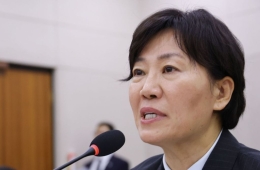
Shin Hyun Song, Governor of the Bank of Korea, stated this during a policy briefing to the National Assembly's Planning and Finance Committee on the 29th, saying, "We will decide the timing and pace of additional rate hikes while reviewing the degree of inflationary pressure, the trend of economic improvement, and the state of financial stability." This policy briefing was the first one since the formation of the 22nd National Assembly in the second half of the year. Previously, after Governor Shin mentioned the need for further rate hikes during a policy report on the 9th, the Bank of Korea's Monetary Policy Board raised the base rate from 2.5% to 2.75% per annum.
The key variables are inflation, economic performance, and financial stability. Governor Shin projected that inflation will remain above the target level of 2.0% for a considerable period. He noted that this outlook is due to continued uncertainty over global oil prices stemming from the situation in the Middle East and ongoing effects from elevated costs and currency rates. He particularly emphasized, "Demand-side pressures due to income gains are also gradually increasing."
The Bank of Korea is focusing on the recent acceleration in core inflation, which rose to 2.5% in June, and the notable jump in living cost inflation, which surged to 3.4% in June after the outbreak of war in the Middle East. In its operational report that day, the Bank noted, "Going forward, the inflation rate for consumer prices will face upward pressure from improving consumption and investment, and from the spillover effects of cost shocks." It indicated that improved income conditions and increased investment as a result of a recovery in the semiconductor sector could increasingly fuel demand-side inflation. The Bank also assessed that the ongoing steep won-dollar exchange rate, surging import prices, and the sharp increase in memory chip prices are further incentivizing companies to raise their prices. It pointed out that, in addition to global oil prices, risk factors for the future inflation trajectory include exchange rates, summer weather conditions, and the potential reinforcement of government measures to stabilize prices.
Solid economic momentum through the first half of this year has been confirmed. Real gross domestic product (GDP) grew by 3.8% year-on-year in the first half. Governor Shin said, "Our economy has achieved stronger growth as exports and investment—particularly in the semiconductor sector—have continued to demonstrate robust growth due to the global proliferation of artificial intelligence (AI), and consumption has also remained solid." He forecast, "This robust growth trend is expected to continue, with the semiconductor boom spreading its positive impact to other sectors."
Hot Picks Today
 "Please Pay Me at Least 3 Million Won a Month": More Than Half of Young People Today Prioritize "Working Conditions" Over Company Size
- Selling Like Crazy Every Year... 30-Year-Old Hetbahn Takes on a New Challenge: Tastes Better Than "Mom's Home Cooking" [On-Site Report]
- "It's so popular you can't get it": 'Legendary liquor' returns after 11 years, causing a stir... 'Newtro' craze takes over convenience stores [How We Shop Today]
- "Hey, Lady, Teach Your Kids to Behave!" ... 300,000 Won in Cash and a Bodily Injury Claim Demanded Over Child's Door Ding
- "Don't Trust This Woman": Documentary on 'Investment Scammer' Earns KRW 22 Billion in One Week
Concerns over volatility in financial and foreign exchange markets persist as well. Although the won-dollar exchange rate fell into the mid-to-high 1,400-won range after July as foreign exchange inflows improved, stock prices experienced significant corrections and volatility due to heightened concerns over AI-related investment, large-scale net selling of stocks by foreign investors, and an increase in leveraged investments.
© The Asia Business Daily. All rights reserved. Unauthorized AI training and use prohibited.





![[Market ING] KOSPI Seeks Rebound in Superweek Packed with Corporate Earnings and FOMC](https://cwcontent.asiae.co.kr/asiaresize/307/2026102514484873155_1792907327.jpg)