Selection of "Medical-Centered Long-term Care Hospitals" Next Year for Gradual Implementation of Nursing Care Benefits
Ministry of Health and Welfare Hosts Public Forum; Launching Full-scale Discussion on Institutionalizing Caregiving in Long-term Care Hospitals
Korea Leads OECD in Long-term Care Beds; Monthly Nursing Care Costs Reach 3.7 Million Won
Gradual
The government is pushing to apply national health insurance coverage for care service fees, starting with "medical-focused nursing hospitals" that directly employ caregivers and have more than 100 beds. The aim is to reduce the portion of care costs borne by patients from the current 100% to around 30% and to reorganize nursing hospitals toward a treatment-centric model.

At the 'Direction for Promoting Medical Innovation and Institutionalization of Care Services in Nursing Hospitals' discussion held on the 28th at the Royal Hotel Seoul in Jung-gu, Seoul, participants are speaking. Ministry of Health and Welfare
View original imageOn the 28th, the Ministry of Health and Welfare held a public forum on "Direction for Promoting Medical Innovation and Institutionalization of Care Services in Nursing Hospitals" at the Royal Hotel Seoul in Jung-gu, Seoul, sharing findings from a survey on nursing hospitals and details of the government's implementation plan.
According to Professor Jang Seokyong of Yonsei University's Graduate School of Public Health, who gave the main presentation, South Korea has the highest number of long-term care beds among Organization for Economic Cooperation and Development (OECD) member countries, with 32.3 beds per 1,000 people aged 65 or older, compared to about 8.0 beds in countries like Japan. In contrast, between 2022 and 2025, the number of nursing hospitals is set to decrease, while the number of long-term care facilities for the elderly continues to rise, resulting in overlapping functions between hospitals and facilities.
Among inpatients at nursing hospitals, a relatively mild "mild/selective admission group" accounts for 32%, indicating that a significant proportion of patients are admitted due to social reasons rather than medical necessity. The percentage of patients remaining in nursing hospitals three months after discharge from acute care hospitals (14%) is higher than that of tertiary or general hospitals, and 22% of those discharged from nursing hospitals return within three months, indicating a structure in which repeated readmissions are more common than rehabilitative treatment.
As of 2022, the private care service market was estimated at 10 trillion KRW, with out-of-pocket monthly care fees for shared care ranging from 600,000 to 900,000 KRW, and an average of 3.7 million KRW per month for one-on-one care. In a 2024 Korea Nursing Hospital Association survey, 90% of respondents said "care costs are a burden," while 92% felt care benefits are necessary. Not only have people experienced job loss, failed job searches, and debt due to care responsibilities, but there were also 228 reported care-related murders between 2007 and 2023 and 60 cases of caregiver suicides since 2006, highlighting instances where the burden of care has led to extreme outcomes.
The lack of a proper caregiver management system was also flagged. In a survey covering 227 nursing hospitals and 7,167 caregivers, 66% of caregivers were employed under dispatch contracts, while only 10% were directly hired by hospitals. Additionally, more than half (52%) of caregivers were foreigners, with the majority (47%) being Chinese nationals, and 48% lacked relevant qualifications such as a care worker certificate. Two out of three caregivers worked 24-hour shifts, while 61% of hospitals conducted no monitoring or evaluation of caregiver activities. Furthermore, 62% of caregivers did not receive social insurance coverage under the four main national programs.
The Ministry of Health and Welfare plans to confirm institutionalization measures at the Health Insurance Policy Review Committee within 2026 and, starting from the first half of next year, implement care benefits at about 500 medical-focused nursing hospitals nationwide, lowering the patient out-of-pocket rate from the current 100% to about 30%. Covered patients will include those classified under the highest and high-need categories within the nursing hospital patient classification system: severe, rare, intractable disease, dementia, or Parkinson's patients. This will be applied sequentially starting in 2027, expanding up to a maximum of 85,000 people by 2030. To be designated as a medical-focused nursing hospital, institutions must have medical institution accreditation, receive grade 1 or 2 in the adequacy evaluation of inpatient benefits at nursing hospitals, and have more than 100 beds, according to detailed standards.
Regarding care workforce, the government plans to make direct hospital employment the principle, applying the Labor Standards Act, and transition to a four-person room, three-shift system. In addition, standard caregiver training courses will be introduced, and allowing qualified care workers or certain foreigners to provide care will also be considered. Kong In-sik, head of the Ministry of Health and Welfare's Health Insurance Payment Innovation Task Force, stated, "To reduce unnecessary mild admissions, we will reinforce the perceived cost of hospitalization at nursing hospitals, increase out-of-pocket costs for mild cases, and promote community connections for discharged patients."

Nursing Home Industry Pushes Back, Calling It "De Facto Restructuring"
Within the healthcare sector, concerns have been raised that this approach—designating only a subset of nursing hospitals as eligible for support—could effectively lead to a restructuring of the industry. Institutions excluded from designation may see their operations shrink, and strengthening the out-of-pocket burden based on the duration of hospitalization and patient severity may only decrease patients' access to care.
Ahn Byungtae, Senior Vice President of the Korea Nursing Hospital Association, said, "The government proposal uses the introduction of care benefits as a pretext, but essentially functions as a restructuring policy for nursing hospitals. If a significant number of nursing hospitals are closed or reduced without adequate alternatives, this could lead to a shortage of beds in acute hospitals, overcrowded emergency rooms, increased burden on families for care, and so-called 'ping-pong admissions,' with patients shuttling between care homes and hospitals."
Lee Eun-young, director of the Korea Alliance of Patients Organization, remarked, "From the patient's perspective, what matters is how much their actual monthly care costs decrease and whether they receive safer services. We need to ensure that local hospitals and beds are evenly distributed, so no patient is excluded from care benefits because of where they live or which hospital they are admitted to."
Hot Picks Today
 "Only 3 Passengers on a 180-Seat Flight"... The Shocking State of the 'Honeymoon Hotspot'
- "Work That Took a Month Now Done in Just 8 Hours"…Samsung and LG Turn to AI to Counter China's Pursuit
- "Why Does Atlas Have Only Four Fingers?"...Effortlessly Drilling Wood and Tightening Nuts
- KOSPI Slightly Weak Around 6,900 in Early Trading... KOSDAQ Recovers to 900 Level
- "Part-Time Experience Now Reflected in Starting Salary, Monthly Pay Reaches 4.2 Million Won... 85.6% of Japanese University Students Secure Jobs Before Graduation"
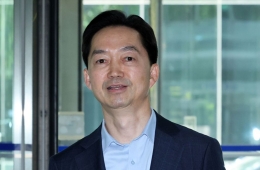
Lee Hyung-hoon, Second Vice Minister of Health and Welfare, said, "Through this forum, we will thoroughly gather opinions from healthcare professionals, experts, and the public to create nursing hospitals where seriously ill seniors can receive care with peace of mind, and families and guardians can trust. We will formulate and implement on-the-ground policies without delay."
© The Asia Business Daily. All rights reserved. Unauthorized AI training and use prohibited.