"Obesity Is a Disease"...Professor Oh Sangwoo Says, "Those Who Truly Need Treatment Can't Get It"
The Era of Chronic Disease Treatment Beyond "Weight Loss" With the Advent of GLP-1 Therapies
Kim Yoohyun: "Signals From the Body to Regain Weight... It's Not a Matter of Willpower"
Obesity is no longer merely an issue of personal willpower or lifestyle choices. Although it is a chronic disease accompanied by various complications such as cardiovascular disease, diabetes, fatty liver, and sleep apnea, there are concerns that the very patients who need treatment the most are unable to access care due to high medication costs and social stigma.
Recently, with the advent of GLP-1 (Glucagon-Like Peptide-1) class obesity treatments such as Wegovy and Zepbound, the paradigm of obesity treatment has rapidly shifted from simple weight loss to health recovery. However, the medical community has emphasized that, as important as the treatment efficacy is, it is even more urgent to create an environment where patients who need treatment can receive care in a timely manner.

Professor Sangwoo Oh, Head of the Obesity Metabolism Nutrition Center and Professor of Family Medicine at Dongguk University Ilsan Hospital, is presenting on 'The Boom of Obesity Treatments and the Importance of Medical Communication.' The Korea Science Journalists Association
View original imageAt Session 2, “Obesity Treatments, Bio-Innovation, and the Role of the Media,” held at the Korea Science and Technology Center in Seoul on July 28, Professor Oh Sangwoo, Head of the Obesity Metabolism and Nutrition Center at Dongguk University Ilsan Hospital's Department of Family Medicine, stated, “Obesity is not just a health risk factor but a disease that requires treatment.” He added, “Societal perception that sees obesity as a result of personal weakness must change first.”
GLP-1 Has Changed the Paradigm of Obesity Treatment: "Focus on Health Over Weight"
Professor Oh explained that today's GLP-1 class obesity medications are fundamentally different from anti-obesity drugs of the past. Whereas earlier obesity drugs were repeatedly withdrawn from the market due to side effect concerns surpassing their benefits, recent treatments are changing the very concept of obesity care by providing evidence not only for weight reduction but also for lowering the risks of complications such as cardiovascular disease, chronic kidney disease, fatty liver, and sleep apnea.
He also warned against excessive concern over recent controversies regarding muscle loss. “What matters is not the quantity of muscle but its quality and function,” he explained. “Some studies suggest that in obese patients, a reduction in fat within muscle tissue leads to improved muscle function.” However, he added, “More cautious treatment is needed for older adults or patients who originally have lower muscle mass.”
Professor Oh also called for caution in media coverage. If the effects of treatment are portrayed simply as a ‘percentage of weight loss’ or if side effects are excessively highlighted, patients might receive misinformation. He stressed that when interpreting clinical results, dropout rates and differences among study subjects should be considered together, and side effects must be conveyed in a balanced way based on scientific evidence.

Choi Inyoung, Vice President and Head of Future Growth Division at Hanmi Pharmaceutical, is giving a presentation titled "What Is the Direction for New Drug Development for Obesity Treatment?" Photo by The Korea Science Journalists Association
View original image"The Next Competition Is Not About How Much You Lose, But How You Lose It"
The industry has also observed that the benchmarks for competition in the obesity treatment market are changing.
Choi Inyoung, Vice President and Head of Future Growth Division at Hanmi Pharmaceutical, explained that the global market for obesity treatments is shifting rapidly from a simple weight-loss competition to a “healthy weight loss” competition, where medications are expected to selectively reduce fat while maintaining muscle, and to concurrently manage comorbidities such as cardiovascular disease.
She identified the following as future competitive advantages: maintaining muscle mass, selective reduction of fat, long-acting formulations, oral medications, and personalized treatments. She noted that the era of treating every patient with a single therapy is over, and a new platform competition has begun to provide diverse treatment options tailored to the patient’s condition and illness.
However, Professor Oh pointed out that no matter how good new treatments may be, there is no meaning if the patients who need them are unable to access them. “Low-income groups, people with disabilities, and patients with mental illnesses—those who suffer the most serious health consequences of obesity—are often forced to give up treatment due to financial reasons,” he said. “The perception that obese patients are simply people with a lack of willpower only delays treatment and fosters distrust toward healthcare professionals.”

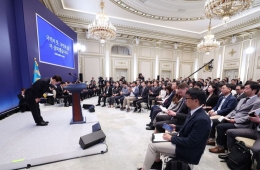
A panel discussion on Session 2, 'Obesity Drugs, Bioinnovation and the Role of the Media,' is underway. Provided by the Korea Science Journalists Association
View original imageDuring the subsequent panel discussion, Kim Yoohyun, a family medicine specialist and Chairman of the Gachi Health Social Cooperative, who is receiving obesity treatment herself, stressed the need to shift the perception of obesity by considering the patient experience.
Hot Picks Today
![[Exclusive] "Nvidia Researchers to Work in Yangjae"... LG Electronics to Establish 'Joint Robotics Development Base'](https://cwcontent.asiae.co.kr/asiaresize/93/2026092110452736212_1789955126.jpg) [Exclusive] "Nvidia Researchers to Work in Yangjae"... LG Electronics to Establish 'Joint Robotics Development Base'
[Exclusive] "Nvidia Researchers to Work in Yangjae"... LG Electronics to Establish 'Joint Robotics Development Base'
- "I’ll Take This, Please"... Buying the Last Lottery Ticket Brings a Jackpot
- "Can't Afford a House Anyway"... Gen Z Cuts Dining and Salon Costs to Splurge on Airfare
- "Contributing 9 Million Won Annually…430,000 Won per Month Steadily from Age 65" …The Power of the “Three-Tier Pension”
- "They Might Start Pitching Tents and Grilling Meat"... The 'Hammock Villain' Appears at Cheonggyecheon
She said, “The more weight I lost, the more food occupied my mind—not because I reverted to former unhealthy habits, but because my body signaled it wanted to regain weight.” She continued, “Obesity medications are not simply drugs for losing weight, but medicines that help regulate these physiological signals so that ongoing treatment is possible.” She emphasized that “Obesity is not a matter of willpower; it is a chronic disease that requires long-term treatment and management.”
© The Asia Business Daily. All rights reserved. Unauthorized AI training and use prohibited.