"Chaos in Japan Blamed on Korea"... Is Samsung and SK Hynix Behind the Turmoil?
Nikkei: “Japanese Market Feels the Impact of Korea’s Synchronized Trading Hours”
Japanese Memory Firm Kioxia Also Adds to Volatility
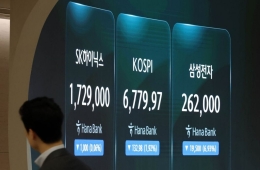
With the recent extreme volatility in the Japanese stock market, local media outlets have drawn attention by citing the "Korean stock market" as the cause. They argue that the high volatility of leading Korean stocks—such as Samsung Electronics and SK hynix—has also influenced Japan's capital markets.
On July 28 (local time), the Nihon Keizai Shimbun (Nikkei) published an article titled "Daily Swings Exceed 2 Percent: Korean Stock Market Dictates Semiconductor Stocks." The outlet reported, "Because there is no time difference and the trading hours are the same, the Japanese stock market is significantly affected by the Korean market."

Amid extreme volatility in the Japanese stock market recently, local media have drawn attention by attributing the cause to the Korean stock market. Photo by Getty Images
View original imageThe Nikkei 225 Average—the representative stock index bringing together Japan's leading companies—plunged during the session to around 63,000 yen, down about 2,500 yen compared to the previous trading day. At the same time, the KOSPI had also dropped by about 8% during intraday trading. The Nikkei interpreted this as "a sharp drop in prices in the Korean stock market led to a retreat in investor sentiment in the Tokyo stock market as well."
The volatility continued even on days when the index rose. The previous day, the Nikkei had jumped over 600 yen at one point during intraday trading, then fell more than 400 yen, ultimately finishing the session up 320 yen at 64,931 yen. While the closing price was not much different from the previous day's, the index nonetheless exhibited significant intraday volatility. As a result, the "candlestick chart" commonly used to illustrate price movements showed noticeably long wicks at both ends, indicating high price swings.

The "intraday volatility rate"—which divides the range between the day's highest and lowest price by the previous day's closing price—averaged 2.5% this month. This is similar to last month’s rate of 2.6%. The Nikkei's intraday volatility rate has now exceeded 2% for three consecutive months, the first time this has happened since the 2008 global financial crisis. The outlet noted, "Volatility has become a defining characteristic of the Japanese stock market. What stands out is that high volatility has persisted for an extended period even though there have been no particularly shocking events in the financial markets."
Overseas stocks related to artificial intelligence (AI) also appear to have affected the high volatility seen in the Japanese market. The media specifically pointed to leveraged exchange-traded funds (ETFs) tied to individual stocks like Samsung Electronics and SK hynix as one reason. In addition, the media cited active short-term trading by retail investors as another factor contributing to the volatility. Margin trading, in which investors borrow money from brokerages, is also a concern. The outstanding amount of margin trading in Japan has surpassed 6 trillion yen, reaching an all-time high.
Hot Picks Today
 "30,000 Won in Korea, 70,000 Won in Japan"—Koreans Fill Suitcases as Illegal Direct Purchases Soar
- "SK hynix Is Our Target"... Japanese Firm Bets 7 Trillion Won as Germany Competes for Investment [AIDC Era of Coexistence] ⑪
- Body Presumed to Be Jang Miran, Linked to 'False Missing Person Case Closure,' Found in Jeju
- "Is This Really Pyongyang?"... North Korea’s Economy Hit by a Windfall, What’s Happening
- "Monster That Eats Gold" Turns Out to Be Real: Uproar in China as 5-Year-Old Swallows $7,500 Gold Bar, Sparking Questions About Family's Wealth
Meanwhile, just as Samsung Electronics and SK hynix have driven volatility amid the memory semiconductor boom, Japanese memory semiconductor company Kioxia is also exhibiting extreme volatility. Shota Yamafuji, an analyst at Tokai Tokyo Intelligence Lab, explained to the media, "Trading in Kioxia, which commands high per-share unit prices, has become more active, leading to the high volatility seen in the Nikkei index."
© The Asia Business Daily. All rights reserved. Unauthorized AI training and use prohibited.