Don't Be Misled by the 'Distribution Rate' of Covered Call ETFs... Key Volatility Market Precautions [Real Investment Techniques]
Weaknesses in Sharp Rallies and Steep Declines
Understand Unique Structures Like Capital Return
Assess Total Investment Return, Not Just Monthly Distribution Rate
Mr. A heard that covered call Exchange-Traded Funds (ETF) were a trending investment and bought a product with an annual distribution rate of 10% for 10 million won. Over the following year, he received 1 million won in distributions. However, because of the covered call ETF's inherent trait of upside limitation during a rebound after a decline in the underlying asset, the principal was not fully recovered and the ETF price dropped to 8.5 million won. So, what was Mr. A's final account performance? Adding the current price of 8.5 million won to the 1 million won in distributions, the total equals 9.5 million won. While 1 million won was deposited in his bank account, his total account saw a loss of 500,000 won (-5%).
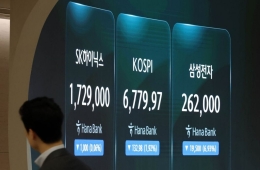
As volatility in the domestic stock market increases, covered call ETFs—which can offer both stable cash flow and downside protection—are emerging as alternatives for dividend-focused investors. However, experts emphasize that investors should thoroughly understand covered call ETFs' unique structure, which differs from standard ETFs, and should not invest solely based on the distribution rate, especially as there is a risk of principal loss.
![Don't Be Misled by the 'Distribution Rate' of Covered Call ETFs... Key Volatility Market Precautions [Real Investment Techniques]](http://www.asiae.co.kr/news/img_view.htm?img=2026072812115360959_1785208313.jpg)
Covered call ETFs' profits and losses are determined by changes in the underlying asset. These ETFs hold a stock portfolio and sell call options (the right to buy at a predetermined price) to collect option premiums (i.e., proceeds from option sales). For example, if the fund is based on an index like KOSPI or KOSPI200, then if the index moves sideways or declines slowly, the options premium received helps cushion losses and ensures relatively stable monthly distributions.
However, there are drawbacks during sharp rallies or drastic declines. If the underlying asset's price surges above the option's strike price, the structure of selling call options limits participation in further gains. In contrast, the downside is not capped, so if the decline in the underlying asset's price exceeds the amount gained from option premiums, the ETF's principal also falls steeply. For instance, a covered call ETF based on the KOSDAQ150 has higher volatility than those linked to the KOSPI or the U.S. S&P 500. Due to options' characteristics, higher volatility leads to greater premiums, which can make the indicated distribution rate seem attractive. However, in a market crash, the downside is wide open and the principal may be eroded; during a sharp rebound, the upside cap can block opportunities for principal recovery.
The monthly distributions of a covered call ETF may include not just option premiums or dividends, but also trading gains and capital return (principal repayment) components. A capital return refers to a situation where, if the ETF's actual net operating gains from option-selling premiums, etc., fall short of the target distribution rate, a portion of the principal (NAV) invested by shareholders is paid out as distributions. Therefore, it can be difficult to judge the actual investment outcome based solely on the displayed distribution rate. In the case of daily-target covered call ETFs, which use daily call options, if the underlying asset is the U.S. Nasdaq index and the index fluctuates violently before stabilizing, the ETF's NAV shrinks and capital returns may accumulate as the principal is reduced for payouts to meet the target distribution rate.
Hot Picks Today
 "30,000 Won in Korea, 70,000 Won in Japan"—Koreans Fill Suitcases as Illegal Direct Purchases Soar
- "SK hynix Is Our Target"... Japanese Firm Bets 7 Trillion Won as Germany Competes for Investment [AIDC Era of Coexistence] ⑪
- Body Presumed to Be Jang Miran, Linked to 'False Missing Person Case Closure,' Found in Jeju
- "Is This Really Pyongyang?"... North Korea’s Economy Hit by a Windfall, What’s Happening
- "Monster That Eats Gold" Turns Out to Be Real: Uproar in China as 5-Year-Old Swallows $7,500 Gold Bar, Sparking Questions About Family's Wealth
![Don't Be Misled by the 'Distribution Rate' of Covered Call ETFs... Key Volatility Market Precautions [Real Investment Techniques]](http://www.asiae.co.kr/news/img_view.htm?img=2026072910175262257_1785287872.png)
Therefore, investors should look at the total investment return including changes in the base price to assess actual performance. It is also important to check the distribution formula and sources. Suyeon Sim, senior researcher at the Korea Capital Market Institute, explained that distribution rate calculations may differ across domestic covered call ETF products. She stated, "From an investor's perspective, it is necessary to compare the underlying asset, option management method, distribution sources, total investment return, expenses, and after-tax performance, rather than only looking at a product's name or monthly distribution rate."
© The Asia Business Daily. All rights reserved. Unauthorized AI training and use prohibited.