Gyeongbuk Office of Education to Establish "Dedicated Education Activity Protection Units" at 22 Education Support Offices to Address Infringements on Teachers' Authority
On July 28, the Gyeongbuk Office of Education unveiled a blueprint to establish "Dedicated Education Activity Protection Units" at all 22 education support offices. This initiative aims to support schools struggling to maintain stable educational activities due to infringements on teachers' authority, persistent malicious complaints, and students requiring individualized support.
The Gyeongbuk Office of Education stated, "By expanding and reorganizing the existing School Support Centers, we will maintain their role in reducing school work burdens, while integrating functions for classroom and lesson stabilization, protection of educational activities, conflict resolution, and legal assistance for students in crisis. This is the main objective of the initiative." The office added, "Following the 50% reduction in policy projects, the human-centered AI transformation, and the Ultra-Connected School program, this marks the fourth phase of the 'Gyeongbuk Education 2030 Transformation.'"

The Gyeongbuk Education 2030 Transformation Task Force developed a field support model that balances the rights of students, parents, and teachers, ensuring that "educational activities must be protected under any circumstances." This model was created based on the results of two education community surveys and the consultation of the Planning Committee held on June 15, which examined the difficulties faced by schools and the necessary support measures.
The Dedicated Education Activity Protection Units will perform five key functions: △"Relieving work burdens" by recruiting personnel and providing tailored field support to schools; △"Protecting lessons" by stabilizing classroom teaching and safeguarding educational activities; △"Resolving conflicts" by assisting in conflict resolution and relationship restoration among students, parents, and teachers; △"Looking after students" by delivering support to students in crisis and implementing preventive education; and △"Listening to concerns" by offering legal, psychological, administrative counseling, and expert assistance.
When a school requests support, the education support office will receive the case, conduct an initial assessment, and then connect the school with the appropriate expert. This process ensures an integrated flow from field support and relationship restoration to post-management, thereby reducing the school's burden of reaching out to multiple agencies and departments.
It is expected that, through this initiative, teachers will have less to deal with in terms of conflict and complaint response, allowing them to focus on teaching; students will be able to learn in a stable environment; and parents will be able to participate in school education within a trustworthy communication and adjustment system.
Hot Picks Today
 "I Don't Want to Marry a Salaried Man"... Women Flock to 'This Place' to Find Husbands Amid the AI Boom
- "I thought getting into a big company was the goal"... The 'position' only 1 in 121 employees reaches
- "Jealous of Koreans" - Now a Must-Do on Every Trip... The Place Where Foreigners Spent KRW 229.8 Billion
- "'No! Dad, Run!'... Father Moved by 5-Year-Old Son Who Shielded Him from Ghost at Korean Folk Village"
- "Please Let Me Go Home"... Customers Trapped in Department Store Parking Lot for 5 Hours Vent Their Anger
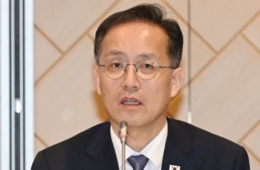
Lim Jong-sik, Superintendent of the Gyeongbuk Office of Education, stated, "Protecting educational activities is the most fundamental duty of schools, and it is the responsibility of the Office of Education to see this through to the end," adding, "By bringing together the support capabilities of all 22 education support offices, we will create schools where teachers can focus on teaching and students on learning."
© The Asia Business Daily. All rights reserved. Unauthorized AI training and use prohibited.



!["Please, Just Take Them Off" - They Made It All the Way to Bed... Then Fecal Bacteria Struck [Deep Scroll]](https://cwcontent.asiae.co.kr/asiaresize/307/2026101610053063338_1792112730.png)