[Editorial] "Supply-Only" Approach Is Just a Half Measure; Stay Firm on Tax System Normalization
The Normalization of the Tax System
Correcting Excessive Benefits Concentrated on High-Value Assets
Supply Is Needed for Price Stability,
But Cannot Justify Defending Unfair Policies
The real estate issue is not merely about the fluctuation of housing prices; it is a structural challenge involving asset inequality, household debt, and the locking up of capital that should flow into productive sectors. This is why expanding housing supply, supporting genuine demand-side buyers, and overhauling the tax system to be fair and rational must go hand in hand. The current administration's direction—to utilize a comprehensive array of policy tools rather than framing the debate as a choice between "supply or taxes"—is valid.
After news broke of the government’s proposed tax reform, some conservative media outlets criticized it as a "punitive tax that ignores supply." While it is true that expanding supply is an important solution for stabilizing housing prices, the real estate market is affected not only by supply, but also by finance, taxation, transaction costs, and market expectations. The fact that supply is insufficient cannot serve as a shield for leaving an unreasonable tax system untouched.
The core of this reform discussion is adjusting tax benefits, which have been designed mainly around whether an owner holds a single property, in accordance with asset value, actual residency, and the ability to pay. While the burden on standard owner-occupiers with a single home would remain the same or be eased, there is discussion of raising the comprehensive real estate tax on ultra-high-value and non-owner-occupied homes, and imposing a cap on the long-term holding special deduction (Jangteuk Deduction) for ultra-high-value properties. Rather than a tax increase targeting all single-home owners, this should be seen as an effort to normalize the tax system by correcting benefits that are disproportionately skewed toward expensive assets.
The system that has sought to curb multiple home ownership by focusing on the number of properties owned has, in practice, made concentrating wealth in a single expensive home—so-called "one smart property"—relatively advantageous. This has indeed fueled price increases in the greater Seoul area, so it is rational to revise the framework that equally favors ultra-high-value assets based solely on the appearance of being a single property holder.
The Jangteuk Deduction is a necessary measure to reduce the capital gains tax burden for long-term ownership and actual residence. However, without a cap on the deduction amount, the higher the home price and capital gains, the larger the tax break, indefinitely. There is a difference between protecting the housing stability of owner-occupants and unconditionally granting significant tax advantages for enormous capital gains from luxury properties. If the tax benefit has been excessively concentrated on high-value assets beyond its original purpose, readjusting it better aligns with the principles of taxation.
Therefore, this reform should be seen not just as an effort to immediately lower housing prices, but as a matter of tax justice. It is necessary to question whether it is fair to provide unlimited benefits to all single-home owners despite clear differences in economic capacity. Taxes are not a tool to punish certain classes, but that does not mean the protection of property rights guarantees all existing tax breaks in perpetuity. Tax burden in proportion to asset size and economic capacity is consistent with the principles of tax justice.
However, the concern that a sudden increase in capital gains tax could result in properties being withheld from the market is valid, so precise safeguards are essential. Measures must be established to prevent long-term owner-occupants and low-income senior single-home owners from facing a sudden spike in tax burden. Ensuring that the holding-stage tax aligns with asset value while lowering the threshold at the transaction stage may provide a solution to address the withholding of properties. Normalizing the tax system for ultra-high-value properties and vitalizing market transactions are not contradictory goals, but objectives that should be achieved simultaneously.
Naturally, it is also essential to accelerate housing supply and provide financial support to genuine buyers. Supply improves the structural balance between medium- and long-term demand and supply, finance adjusts liquidity and accessibility, while the tax system alters incentives for holding and transactions. Only by designing these policies as a set—each serving a different function—can market stabilization and tax equity be achieved together. Asserting any one policy as an absolute solution only serves to oversimplify a complex reality.
Hot Picks Today
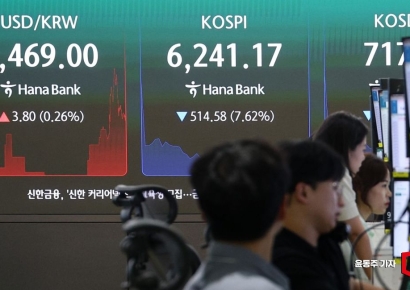 "KOSPI Plunges 8% as Samsung and SK hynix Reel from 'Unexpected' Chinese Memory Onslaught"
- "Let’s Give Korea a Spending Spree": Over 10 Million Foreign Tourists Flock In, Credit Card Spending Exceeds 10 Trillion Won
- "Transaction Tax Exemption for Stock Losses"...Ahn Cheolsoo Proposes Amendment to Special Taxation Act
- Is the Stock Market Decline Just Beginning? "An Even Bigger Crisis Is Coming," Warns Rich Dad Author
- "Prettier Than Idols?" "Tight Outfits Stir Debate"... Why the Virtual Female Weathercaster Is Causing a Stir
The government must not allow such one-sided criticism to push it into retreating from the principle of tax normalization. However, it is essential to disclose transparently the criteria for ultra-high-value property, the scale of those affected, and the possible impacts on tax burden and market transactions—while presenting thorough supplementary measures. The direction must unflinchingly uphold tax justice, while the tools must be delicately refined to minimize side effects in the market. That is how real estate policy can stand upon both tax justice and practical effectiveness.
© The Asia Business Daily. All rights reserved. Unauthorized AI training and use prohibited.