Caregiving Services at Long-term Care Hospitals to Be Covered by National Health Insurance from Next Year; Focus to Shift to Therapeutic Care
Ministry of Health and Welfare Holds Public Forum on July 28
Gradual Expansion Starting With Severe Patients
Strengthening Community Integration
The government has begun working to institutionalize the inclusion of caregiving services at long-term care hospitals under the National Health Insurance program, with full-scale implementation set to begin in the first half of next year. The initiative will start by applying the caregiving benefit to severe patients as a priority. At the same time, a healthcare innovation plan will be carried out to reorganize long-term care hospitals to focus more on therapeutic care.

The Ministry of Health and Welfare held a public forum on the “Medical Innovation and Institutionalization of Caregiving Services at Long-term Care Hospitals: Policy Direction” at the Royal Hotel in Seoul on July 28, 2026, where these initiatives were announced. The forum gathered opinions from the medical community, patient advocacy groups, and experts, focusing on topics such as criteria for selecting care-focused long-term care hospitals, eligibility standards for the caregiving benefit, measures to ease the financial burden of caregiving costs, and strategies for securing caregiving personnel.
The Ministry plans to finalize the implementation plan this year at the National Health Insurance Policy Review Committee, following prior discussions at National Assembly hearings, public hearings, expert advisory meetings, and field consultations. The caregiving benefit is scheduled to be rolled out in the first half of next year.
This reform centers on both accommodating the rapidly growing demand for long-term care hospital services due to an aging population and alleviating the caregiving burden on families, while also shifting the role of long-term care hospitals toward therapeutic care. In particular, the Ministry aims to strengthen the care-focused function so that long-term care hospitals can concentrate on providing medical services, while also restructuring their role to connect with local community care networks.
Caregiving services will be expanded gradually, prioritizing patients with higher medical needs. Selected care-focused long-term care hospitals will be eligible to provide the caregiving benefit, and, considering supply and demand factors, the scope of eligible patients—especially those with high medical and caregiving needs—will be steadily increased. These hospitals will undergo comprehensive assessments covering medical service quality, caregiving service capability, and community linkage functions.
To manage the quality of caregiving services, the government will set appropriate fee rates and out-of-pocket payment ratios, while also establishing training and qualification systems for caregivers. Additionally, reforms will cover the inpatient fee structure for long-term care hospitals, the ceiling on caregiving benefits, and measures to boost post-discharge community integration for patients. The effectiveness of caregiving service operations will be evaluated based on the quality of medical care, the level of caregiving services, and outcomes related to community linkage and patient reintegration.
Hot Picks Today
 "Only 3 Passengers on a 180-Seat Flight"... The Shocking State of the 'Honeymoon Hotspot'
- "Work That Took a Month Now Done in Just 8 Hours"…Samsung and LG Turn to AI to Counter China's Pursuit
- "Why Does Atlas Have Only Four Fingers?"...Effortlessly Drilling Wood and Tightening Nuts
- KOSPI Slightly Weak Around 6,900 in Early Trading... KOSDAQ Recovers to 900 Level
- "Part-Time Experience Now Reflected in Starting Salary, Monthly Pay Reaches 4.2 Million Won... 85.6% of Japanese University Students Secure Jobs Before Graduation"
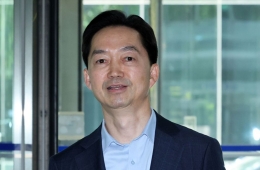
Lee Hyung-hoon, Second Vice Minister of Health and Welfare, stated, “Through this forum, we will thoroughly gather feedback from front-line healthcare workers, experts, and the general public to create long-term care hospitals where severely ill elderly patients can receive treatment with peace of mind and families can trust and depend on the care provided. We will develop and implement field-oriented policies without delay.”
© The Asia Business Daily. All rights reserved. Unauthorized AI training and use prohibited.