Another Research Project Launched for Consolidation of Power Generation Companies...Implementation Blueprint Taking Shape
Beyond the Need for Integration: How Will the Merger Happen?
Reviewing Implementation Plans and Institutional Reforms Including Performance Evaluation
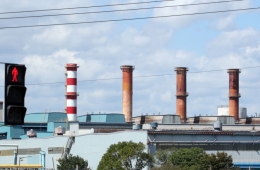
The government is reportedly moving forward with a follow-up research project to further develop the implementation plan for consolidating the five state-owned power generation companies: Korea South-East Power, Korea South-West Power, Korea East-West Power, Korea Western Power, and Korea Midland Power. While the previous study focused on whether these public power generation companies should be merged at all, and, if so, what form the merger should take, this next study is expected to focus on how to restructure organizations and functions and what standards to use for the allocation of personnel and assets.
According to the power generation industry on July 28, the government is reviewing measures to commission a follow-up research project related to the integration of these power generation subsidiaries. Although the exact timeline for placing an order for this study and the scope of the tasks have yet to be determined, it is widely believed that the main direction involves establishing detailed guidelines for the actual implementation of consolidating the five power generation companies.
The government is currently reviewing the necessity and direction for reorganization of the public power generation companies through the first-phase research project under the theme “New Roles for State-Owned Power Utilities in the Era of Energy Transition.” In an earlier interim report, merging the five companies into one was presented as the leading alternative. The rationale is to bring together the dispersed functions of each generation company to reduce redundant investments and respond more consistently to energy transition and renewable energy expansion.
If the first research phase was about addressing the question “Is integration necessary?”, the follow-up research is expected to focus on “How exactly will the integration be carried out?” Major issues to be addressed include the organizational structure and composition of the integrated company, the allocation of functions by power generation source, the management of the headquarters and field offices, personnel reallocation, the handling of assets and liabilities, and the restructuring of subsidiaries and affiliates.
Currently, each of the five power generation companies operates its own organizations for planning, finance, human resources, procurement, information technology, renewable energy businesses, and more. If consolidation occurs, issues will inevitably arise regarding the extent to which similar or duplicate functions should be merged, and how responsibilities should be divided between the integrated headquarters and regional business units. If the existing functions of the five headquarters are left unchanged, the impact of integration may be limited; on the other hand, if functions are largely consolidated, it could lead to downsizing and the need for significant personnel reallocation.
In particular, the streamlining of overlapping management functions is viewed as the most sensitive issue. There are observations that it would be difficult for the integrated corporation to maintain all of the independently established human resources, finance, planning, audit, communications, and procurement departments currently present in each company. On-site roles, such as power plant operations and maintenance, are expected to largely remain in place, but overlapping back-office functions at headquarters will likely need adjustment.

Industry consensus appears to broadly support the need for integration of the state-owned power generation companies. This is because the roles and business areas of the companies overlap significantly, and, in the process of energy transition—such as the reduction of coal-fired power and expansion of renewables—joint action has become more important than competition among individual companies.
There have also been persistent criticisms that having each company pursue similar renewable energy initiatives or separately invest in overseas power projects, fuel procurement, and research and development leads to inefficiencies. By promoting joint fuel purchasing, equipment procurement, power plant maintenance, and R&D, the integration is expected to realize economies of scale and reduce costs.
However, some point out that there is a key difference between broad agreement over the direction of integration and the actual process of executing it. This is because, depending on which company will serve as the centerpiece for particular organizations and functions, where the consolidated headquarters will be located, and how the ranks and pay structures of executives and employees will be harmonized, there could be significantly diverging interests among the companies involved.
Although all five companies are subsidiaries of Korea Electric Power Corporation, each differs in terms of workforce size, main power generation type, financial condition, and corporate culture. Their primary energy sources—such as coal, liquefied natural gas (LNG), or renewables—also differ, as do the locations of their power plants and headquarters. If the perception spreads that the integration process will reduce the roles or functions of a specific company, significant internal resistance may arise.
Handling redundant personnel is also cited as a key challenge. Both the government and the power companies are reluctant to pursue forced layoffs, so they are expected to consider a mix of options: natural attrition through retirement, adjustments in new hiring, reassignments among departments, and retraining for new business areas. However, there are concerns that, in the process of unifying promotion standards, rank structure, and compensation levels across companies, conflicts between management and labor may arise.
The government has been operating a working-level task force (TF), with three practitioners from each power generation company participating, to discuss anticipated institutional and practical challenges in the integration process. Within the TF, some have suggested that, to strengthen inter-company collaboration, the performance evaluation system for public institutions should also be revised to better align with the objectives of integration.
Currently, the power generation companies are in de facto competition with one another for performance evaluations and power generation business results. There is concern that, if the evaluation system continues to prioritize individual company performance over joint projects, it will be difficult to foster the cooperation necessary for integration. Consequently, the task force has reportedly discussed reflecting joint business achievements, collaboration among the companies, and contributions to the energy transition in future evaluation criteria.
Hot Picks Today
 "Let's Give Unemployment Benefits to Those Who Find Jobs Quickly and Stay Long-Term"... Petition Takes Aim at Compensation for 'Voluntary Resignations'
- "How Much Can You Buy for 20,000 Won?" Bustling... Millennials and Gen Z Flock to an 'Unexpected Shopping Hotspot' [China.zip]
- "Same facial mole and gait?" ... Kim Jong Un appears in a show of defiance, rendering death rumors moot
- "Survives Fall from 35th Floor," Chinese Influencer Returns After 17 Months
- "Shares Hit Daily Limit on 56 Billion Won News"... Marubeni Launches Tender Offer for K-Beauty Firm of 'Chae Sira's Husband' Kim Taewook
An industry official stated, “To my knowledge, nothing has been formally decided by the government yet. Reform of performance evaluation systems will require coordination with related ministries such as the Ministry of Economy and Finance, and a concrete plan and timeline for integration will need to be established before any full-scale review is possible.”
© The Asia Business Daily. All rights reserved. Unauthorized AI training and use prohibited.