Mayor Shin Sangjin: "All Municipal Resources to Be Focused on Including Gyeonggi Southern Metropolitan Railway in National Rail Network"
Sangjin Shin, Seongnam Mayor, Stakes Future on Gyeonggi Southern Metropolitan Railway
A Bold Move to Build Seongnam's Transportation Network for the Next 50 Years
A 50.7km Line Connecting Seongnam, Seoul, Yongin, Suwon, and Hwaseong
Gyeonggi Southern Metropolitan Railway Secures Economic Viability with B/C Ratio of 1.20
Mayor Shin: "A Core Infrastructure Linking National High-Tech Industry Hubs"
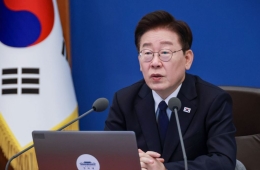
Sangjin Shin, Mayor of Seongnam City, announced that he would mobilize all administrative resources to ensure that the Gyeonggi Southern Metropolitan Railway is included in the 5th National Rail Network Construction Plan. His initiative aims to secure a key transportation network connecting major hi-tech industrial hubs in southern metropolitan areas such as Pangyo Techno Valley, thereby taking regional competitiveness to the next level.

On July 28, Mayor Shin stated, "The Gyeonggi Southern Metropolitan Railway is not simply a route connecting regions—it is a national core transportation infrastructure linking Seongnam, the center of South Korea's high-tech industry, with central Seoul. We will dedicate every capability of the city administration to ensure that this project, which embodies the aspirations of our citizens, is included in the national rail network."
The Gyeonggi Southern Metropolitan Railway project envisions a total length of 50.7 kilometers, starting from Jamsil Sports Complex Station on Seoul Subway Lines 2 and 9, and connecting Seongnam, Yongin, Suwon, and Hwaseong. Upon completion, it is expected to significantly reduce travel times between key cities in southern Gyeonggi and help address chronic traffic congestion issues in the region.
According to the results of a preliminary feasibility study jointly conducted by four local governments, including Seongnam City, the benefit-cost ratio (B/C) was found to be 1.20. Given that a B/C ratio of 1.0 or greater is generally considered economically viable, the Gyeonggi Southern Metropolitan Railway is assessed as a route possessing both strong business justification and economic feasibility.
Mayor Shin stated, "This is an important project that will ease the transportation burden on existing road networks, including the Yongin-Seoul Expressway, and provide eco-friendly public transit services to 4.2 million citizens in southern Gyeonggi. Based on the cooperative system established with Suwon, Yongin, and Hwaseong, Seongnam City will actively explain the necessity and justification of the project to central government ministries such as the Ministry of Land, Infrastructure and Transport, as well as to the National Assembly."
He continued, "This will present a significant opportunity to further enhance Seongnam’s competitiveness in high-tech industries centering around Pangyo Techno Valley and dramatically improve accessibility to Seoul’s Gangnam area. Through close cooperation with Suwon, Yongin, and Hwaseong, we will absolutely achieve the goal of having the project included in the national rail network."
Once the Gyeonggi Southern Metropolitan Railway is established, travel times between Seoul's Gangnam area and major cities in southern Gyeonggi—including Seongnam—will be greatly reduced; this is expected to significantly strengthen the competitiveness of hi-tech industries centered on Pangyo Techno Valley, invigorate the regional economy, and promote balanced regional development.
Hot Picks Today
 "Surviving on One Meal a Day to Invest 3.5 Million Won Monthly... 'FIRE' Craze Sparks 'NISA Poverty' in Japan"
- "Correction Over for Samsung and SK hynix" "670,000 for Samsung, 4.7 Million for SK hynix": Why Global IBs Remain Optimistic
- "Used for the Wedding" 300,000-Won Ring and Dress...Changing Wedding Trends
- Causing Trouble Without a Simple "Sorry"... The Reason Behind the 'Gen Z Stare' Revealed
- Nongshim Third-Generation Executive Sangyul Shin to Wed SKT Employee on the 13th
Seongnam City plans to continue close cooperation with Suwon, Yongin, and Hwaseong and jointly respond to ensure the inclusion of the Gyeonggi Southern Metropolitan Railway project until the official announcement of the finalized 5th National Rail Network Construction Plan.
© The Asia Business Daily. All rights reserved. Unauthorized AI training and use prohibited.