Full-Scale Launch of Nuclear Submarine Acquisition Project... Special Act to Be Announced Soon
Ministry of National Defense Clearly States Principle of 'No Nuclear Weapons Development'
The government is set to formally launch the “Jangbogo N Project,” a program to acquire nuclear-powered submarines. This comes less than a year after the Trump Administration expressed support for South Korea’s construction of nuclear-powered submarines during the South Korea-U.S. summit in October of last year.

According to the Ministry of National Defense on July 28, the government plans to soon announce the “Special Act on the Acquisition, Operation, and Safety Management of Nuclear-Powered Submarines” (the Special Act) for public review. With the Navy recently submitting a Statement of Requirements for nuclear submarines to the Joint Chiefs of Staff, the government is beginning the formal processes necessary for weapons system procurement, signaling its intention to proceed officially with the project.
Under the name “Jangbogo N Project,” the government is pursuing the introduction of a Korean-style nuclear-powered submarine that uses low-enriched uranium (with an enrichment level below 20%) as fuel. The plan is to launch the lead vessel in the mid-2030s and have it operational by the late 2030s. While specific details have not been disclosed, military authorities are reportedly planning to develop three nuclear-powered submarines, each with a displacement of 8,000 tons.
The Special Act will explicitly state the principle that the project is “not intended for the development, manufacture, or possession of nuclear weapons.” This marks the first instance in which the principle of not developing nuclear weapons has been expressly enshrined in domestic law. This is intended to dispel international concerns that South Korea might use the nuclear submarine program as a stepping stone to pursue nuclear weapon development.
Earlier, according to the basic plan announced in May, the government made it clear that it has no intention of possessing or developing any form of nuclear weapons. The government also emphasized that, “in close consultation with the United States, South Korea will faithfully fulfill its nuclear non-proliferation obligations throughout the entire process of securing and managing the low-enriched uranium fuel required for the nuclear-powered submarine propulsion system.” Furthermore, it pledged to “work together with the International Atomic Energy Agency (IAEA) to establish a safeguarding regime applicable to nuclear-powered submarines and to uphold a high level of nuclear non-proliferation commitments.”
The Special Act also includes fundamental principles such as compliance with the Non-Proliferation Treaty (NPT), cooperation with verification procedures of international organizations like the IAEA, measures to protect public safety and the environment from radioactive materials, and setting safety standards for nuclear power on submarines.
Given that the nuclear submarine project is a strategic initiative that will mobilize national capabilities, the Special Act contains numerous preferential provisions to ensure timely execution. For instance, the nuclear submarine project can be exempted from the mandatory feasibility study required before the launch of large-scale weapons acquisition programs; research, development, and testing periods may be shortened; and different cost calculation rules can be applied to defense procurement contracts. Notably, if delays occur in the procurement of nuclear materials related to the submarine, in international negotiations, or in the designation of installation sites, the contract period, amount, and terms for the project can be adjusted even after contracts have been signed.
Hot Picks Today
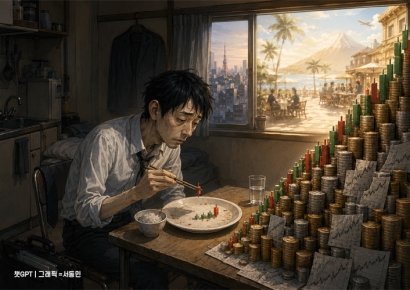 "Surviving on One Meal a Day to Invest 3.5 Million Won Monthly... 'FIRE' Craze Sparks 'NISA Poverty' in Japan"
- "Correction Over for Samsung and SK hynix" "670,000 for Samsung, 4.7 Million for SK hynix": Why Global IBs Remain Optimistic
- "Used for the Wedding" 300,000-Won Ring and Dress...Changing Wedding Trends
- Causing Trouble Without a Simple "Sorry"... The Reason Behind the 'Gen Z Stare' Revealed
- Nongshim Third-Generation Executive Sangyul Shin to Wed SKT Employee on the 13th
Meanwhile, the bill stipulates the establishment of the “Nuclear-Powered Submarine Strategy Committee” (Strategy Committee), chaired by the Prime Minister, to review key issues such as the designation of installation locations and funding arrangements. The Strategy Committee will have the Minister of National Defense as vice chair, and the Chief of Naval Operations as an ex officio member. In addition, it is stipulated that a basic plan for nuclear-powered submarines and a basic safety management plan—including radioactive waste management and radiation disaster prevention and response—must be formulated and implemented every ten years.
© The Asia Business Daily. All rights reserved. Unauthorized AI training and use prohibited.