Korea and Brazil Sign 7 MOUs on Aerospace, Energy, and Advanced Industries... Simplifying Use of Brazilian Space Launch Sites
Five MOUs Signed in the Presence of Both Leaders; Film and Cybersecurity Agreements Also Inked
Satellite Data Sharing to Include Satellite Imagery and Videos
R&D Cooperation in AI, Semiconductors, and Batteries in Industrial Technology
Expa
South Korea and Brazil have signed seven Memoranda of Understanding (MOUs) covering future industries and people-to-people exchanges, including space, energy, industrial technology, education, and sports. The two countries agreed to reduce unnecessary duplicative procedures when South Korean private companies use Brazilian launch facilities and to establish a joint R&D framework for strategic high-tech sectors such as artificial intelligence (AI), semiconductors, and batteries.

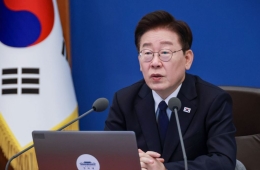
President Lee Jae-myung and Brazilian President Luiz Inácio Lula da Silva are holding an expanded summit at the Presidential Palace in Brasilia on the 27th (local time). 2026.7.28 Yonhap News Agency
View original imagePresident Lee Jae-myung and Brazilian President Luiz Inácio Lula da Silva attended an MOU signing ceremony at the Alvorada Palace in Brasília on the 27th (local time) after holding a summit. The documents signed in front of the leaders included five main MOUs on space cooperation, sports cooperation, educational cooperation, energy cooperation, and industrial technology cooperation, along with separately concluded MOUs on film cooperation and cybersecurity. In total, seven agreements were signed between the two countries.
The most notable achievement was in the area of space cooperation. The two countries agreed to harmonize and streamline regulations, including launch licensing, when South Korean companies use Brazilian launch facilities. They also pledged to promote lunar exploration, related scientific, technological, and commercial activities, the advancement of the space industry, and the sharing of satellite data, including images and video. The government plans to amend domestic regulations during the second half of this year to address overlapping procedures between the two countries. Once revised, it is expected that South Korean private launch vehicle firms will be able to use Brazilian launch sites with reduced administrative costs, shorter wait times for launches, and less business uncertainty.
Brazil is home to the Alcântara Space Center, located near the equator. Launching from near the equator makes it possible to leverage the Earth’s rotational speed, allowing heavier satellites to be placed into orbit with the same amount of fuel or reducing launch costs. The government sees these MOUs as a foundational system to support domestic space companies seeking entry into the Brazilian market.
In industrial technology, the countries will promote cooperation in seven areas: supply chains, the bioeconomy, sustainable fuels, industrial decarbonization, low-carbon and sustainable materials, and strategic high-tech industries. These strategic sectors include AI, semiconductors, automobiles, shipbuilding, and batteries. The two governments plan to expand joint research and development (R&D) and technology exchanges to enhance industrial competitiveness and to establish an institutional platform that will support joint business ventures between companies over the medium and long term.
The MOU for energy cooperation contains plans to accelerate the energy transition through joint efforts in renewable energy, power grids, smart grids, and energy efficiency. The two governments will share policies and technologies, identify joint projects, support public-private cooperation, and promote the entry of South Korean firms into Brazil’s energy market.
In education, the two countries agreed to expand Korean language education in regular Brazilian schools. They will also strengthen cooperation in technical, vocational, and higher education, and share AI and digital education policies and expertise. This marks the first educational cooperation agreement between the two countries in 60 years since the Korea-Brazil Cultural Agreement in 1966. Responding to Brazilian students’ increasing interest in Korean, plans have been made to further activate Korean language education and expand exchanges of teachers and students.
In sports, this is the first time the two countries have signed a cooperation MOU. They will expand exchanges of athletes, experts, and coaches, and share experiences in sports policy and the management of international sporting events. The government expects that exchanges with Brazil, a country with global competitiveness in sports such as football and volleyball, will help enhance the performance and leadership capabilities of South Korea’s sports professionals.
The film cooperation MOU, originally signed in 2015, has been revised and strengthened. The two countries will expand joint film production projects and screenings of each other’s films, and enhance exchanges of information and talent in the film policies and industry. Efforts will also be made to broaden Korean film’s entry into the Ibero-American co-production market through producer and director exchanges and events to attract co-production partners. Policies to support small and medium-sized film producers will be also shared.
In cybersecurity, a cooperation system will be established for incident response, joint research, policy exchange, and workforce training. The government expects this MOU to create a favorable environment for South Korean information security companies to enter not only Brazil but the broader Central and South American markets.
Hot Picks Today
 "Surviving on One Meal a Day to Invest 3.5 Million Won Monthly... 'FIRE' Craze Sparks 'NISA Poverty' in Japan"
- "Correction Over for Samsung and SK hynix" "670,000 for Samsung, 4.7 Million for SK hynix": Why Global IBs Remain Optimistic
- "Used for the Wedding" 300,000-Won Ring and Dress...Changing Wedding Trends
- Causing Trouble Without a Simple "Sorry"... The Reason Behind the 'Gen Z Stare' Revealed
- Nongshim Third-Generation Executive Sangyul Shin to Wed SKT Employee on the 13th
This series of agreements is focused on expanding bilateral ties from traditional trade and resource cooperation to advanced sectors such as space, AI, semiconductors, and the energy transition. The follow-up measures also serve as practical implementation of the vision for an 'upgrade to the Korea-Brazil Strategic Partnership' agreed upon at the summit, through concrete projects and institutional platforms.
© The Asia Business Daily. All rights reserved. Unauthorized AI training and use prohibited.