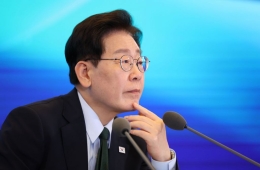
After Five Forums, Real Estate Policy Outline Emerges: Property Tax Based on Value, Targeted Lending, Greenbelt Review (Comprehensive)
Government Finalizing Comprehensive Real Estate Policy and Tax Reform
Higher Property Holding Taxes and Temporary Eased Capital Gains Tax... Exit Route for Multiple Homeowners?
Project Period for Third New Towns to Be Halved... Non-Apartment Housing

If the government's planned tax reform proposal and comprehensive real estate measures are finalized according to the outline raised over the course of five public forums, key changes are expected to include reworking property holding taxes to focus on the value of the property owned rather than the number of properties, selective relaxation of lending rules, and expanding supply through support for new non-apartment housing development. Measures such as differentiated capital gains taxes for multiple property owners and partial lifting of green belt zones are also expected to be included.
The series of real estate policy grand debates that had been held in relay over the past two weeks concluded on the 27th with the last session presided over by Prime Minister Han Sung-sook. Originally, the forums—hosted by the Ministry of Land, Infrastructure and Transport, Financial Services Commission, Ministry of Economy and Finance, and concluding with a session led by President Lee Jae-myung—were supposed to end there. However, at President Lee’s suggestion, another forum was held under the prime minister’s direction if the discussion was deemed insufficient. According to Kim Jin, Director of Economic Coordination at the Office for Government Policy Coordination, as of 3:00 p.m. on the 27th, a total of 7,153 public opinions had been submitted to the real estate policy forum website: 2,277 in the supply category, 2,833 in finance, and 2,012 in taxation.
Taxation: From Number of Homes to Property Value for Comprehensive Real Estate Tax

Prime Minister Han Sung-sook, Deputy Prime Minister and Minister of Strategy and Finance Koo Yoon-chul, and Minister of Land, Infrastructure and Transport Kim Yoon-duk are receiving questions from attendees at the National Real Estate Policy Public Forum held on the 27th at the Korea Chamber of Commerce and Industry in Jung-gu, Seoul. Photo by Dongju Yoon
View original imageIn terms of taxation, there is strong support for calculating the comprehensive real estate holding tax (종부세) based on the aggregate value of owned housing, rather than merely by the number of properties. The aim is to correct the current distortion where an individual with a single 3 billion won home ends up paying a lower tax rate than someone with three homes totaling 1 billion won each.
The government appears likely to use property value and residency status as the main indicators for taxation, rather than property count. Professor Kang Sung-hoon of Hanyang University, who attended both the Ministry of Economy and Finance forum and this session, proposed that for owner-occupied single homes under a certain price threshold, comprehensive real estate tax should be maintained or even reduced, while placing a limit on the total tax deduction available for ultra-high-value owner-occupied properties. For single-owned non-occupied properties, he suggested deductions should focus more on the period of residence rather than the period of ownership. For multiple property owners, he recommended adjustments in the basic deduction, the fair market value ratio, and the tax rate.
Koo Yoon-chul, Deputy Prime Minister and Minister of Economy and Finance, stated, "For homes that are held long-term but not occupied, we will consider differentiated capital gains tax burdens." This reflects the intention to reduce the tax burden for owner-occupied properties, while shrinking deduction benefits for non-occupied and ultra-high-value homes.
The special long-term ownership deduction for capital gains tax for single-household homeowners also may shift to focus more on the period of residence. The current system allows up to a 40% deduction for both the holding period and residence period for sales above 1.2 billion won. In the policy forums, suggestions were made to reduce holding period deductions for non-occupied homes, expand deductions based on residence period, and impose caps on deduction amounts for ultra-high-value homes with large capital gains.
Limiting the number of times an individual can receive tax exemption on capital gains is also under consideration. At the July 23rd forum, President Lee Jae-myung personally invited Kwangsoo Lee, the CEO of Kwangsoon's Real Estate Brokerage, whose content he often follows. President Lee agreed with Mr. Lee’s suggestion to limit the non-taxable benefit for single-homeowners to once per lifetime, remarking, "It is problematic to provide unlimited opportunities." President Lee said the government could consider granting a much larger deduction for the first sale, reducing it for the second onward, or setting a lifetime cap on total tax relief one could receive.
There are also discussions about temporarily lowering capital gains tax when multiple property owners decide to sell, while simultaneously raising holding taxes. On July 23rd, President Lee said, "We cannot only strengthen the holding tax; we must also open up an exit (sales opportunity)." On July 27th, Deputy Prime Minister Koo likewise said, "For multiple homes held a long time and not occupied, we are considering differentiated capital gains tax burdens"—thereby reviewing temporary opportunities for disposal by multiple property owners.
The government is reviewing ways to avoid increasing the tax burden on actual owner-occupants and middle- to lower-priced homeowners. Prime Minister Han, citing the 2025 national balance sheet, noted that 71.9% of household net assets are in real estate. If taxes for single-homeowners are raised uniformly, it could have a significant shock on households. Therefore, the likelihood is high that deduction benefits will be reduced starting with non-occupied or ultra-high-value homes.
The threshold prices for what constitutes ultra-high-value homes and the scale of deduction reduction have not been finalized. While experts mention a market price range from 3 billion to 5 billion won, public opinion ranges widely from 1 billion to 10 billion won.
Finance: Lending Rules Maintained...Mitigating Inconvenience for Genuine Homebuyers

President Lee Jae-myung is speaking at the National Debate on Real Estate Policy held at the KBS annex in Yeouido, Seoul on the 23rd. Photo by Yonhap News
View original imageIn the finance sector, the government is considering maintaining strict regulations on household and real estate loans, while introducing exceptions for young adults, newlyweds, and first-time homebuyers. There will also be reviews of criteria for income and assets in policy mortgages, as well as addressing difficulties faced by buyers who are unable to make balance payments because of bank lending limits.
On July 15, at the FSC forum, Youngdo Kim, Senior Research Fellow at the Korea Institute of Finance, proposed expanding policy mortgages for young people, but emphasized the need to assess income, assets, and housing price to accurately identify genuine homebuyers. At the July 23rd forum, it was suggested that while maintaining support for non-homeowners in the security deposit loan market, loans used for expensive rentals or for gap investing should be gradually curtailed.
On July 27th, Vice Chairman Eogwon Lee of the Financial Services Commission commented, "Because supply isn’t sufficient and the market is flush with liquidity, relaxing lending rules would reignite the housing market and fuel price increases. Consistent and strict regulation of household and real estate loans is unavoidable."
However, Vice Chairman Lee said that the individual difficulties faced by young people and newlyweds would be addressed case by case. For example, the "marriage penalty," where couples are excluded from policy loan support after their incomes are combined, and the inability of young people living with parents to be recognized as first-time homebuyers due to requirements for household separation, are cited as typical issues.
It is highly likely that supplementary measures for balance payment loans will be introduced. Vice Chairman Lee explained that even those covered by previous lending rules sometimes fail to receive loans because banks are trying to meet household lending quotas, noting that the FSC will consult with the banking sector. The government also intends to investigate cases where a dedicated mortgage product provided at the time of "New Home" pre-subscription was changed in the main contract process.
Regarding security deposit loans, the government is considering continuing support for non-homeowners, but reducing both loans and guarantees for homeowners and those seeking high-priced rental deposits. At the July 23rd forum, President Lee pointed out that these loans have been used to inflate home prices and for rental fraud. The FSC will also review whether to allow exceptions for genuine transactions in cases where security deposit loans are prohibited for gap investing, such as for rental agreements with transfer of ownership conditions.
Some called for redevelopment relocation loans to be handled separately from ordinary mortgage loans. At the FSC forum, a Seoul city official argued that the 600 million won cap on relocation loans slows resident relocation, demolition, and construction. On the other hand, critics said that relaxing these limits would mainly benefit members of high-value redevelopment projects in Seoul and could cause a surge in local monthly and yearly rental prices due to concentrated demand for temporary relocation. Even if included in comprehensive countermeasures, such support may be restricted to projects with poor business viability or those nearing groundbreaking.
Supply: Review of Green Belt Release and Non-apartment Financing

Minister of Land, Infrastructure and Transport Yoon-duk Kim is drinking water at the National Real Estate Policy Public Debate, held on the 23rd at the KBS annex in Yeouido, Seoul, presided over by President Jae-myung Lee. Photo by Yonhap News Agency
View original imageSupply strategies are expected to include shortening development periods for existing public housing sites such as the third-generation new towns, supporting construction finance for non-apartment buildings, and converting vacant commercial and office spaces into housing. The Ministry of Land, Infrastructure and Transport is additionally considering partially lifting green belt restrictions in the greater Seoul area if needed.
On this day, Minister Kim Yoon-duk stated, "I am willing to build homes by lifting green belt restrictions if necessary," and added, "We are considering partially releasing green belts to secure housing supply if necessary." However, as concerns also exist regarding environmental preservation and local house price increases, the comprehensive plan may contain only guidelines for consideration, rather than naming specific candidate areas.
The supply process is expected to transition from sequential to parallel processing. This involves concurrent handling of land designations, housing permits, and housing guarantee screenings by the Housing and Urban Guarantee Corporation, thus speeding up groundbreaking. The integrated review approach will likely also be applied to projects converting vacant shops, offices, and knowledge industry centers into homes within city centers.
Separate discussions are being held for non-apartment solutions such as villas and officetels, which can increase the housing supply in the short term. Minister Kim said that he is working with the Financial Services Commission on supporting construction finance for non-apartment buildings and fostering institutional rental property companies, with a plan to reach a conclusion soon. Support for construction funds, expansion of guarantees by the Housing and Urban Guarantee Corporation (HUG), and relaxed building standards for multi-unit and multifamily housing are also on the table.
For redevelopment and reconstruction, the focus is shifting from universally raising floor area ratios to tailored project-by-project support. Both President Lee and Minister Kim pointed out that the demolition of existing homes during urban renewal reduces supply temporarily and drives up local rents and monthly payments. Priority areas for review will likely include financial support for less viable neighborhoods, shortening of permitting periods, verification of construction costs, and adjustments of rental housing ratios by region.
The final details—including the price threshold and deduction cut for ultra-high-value homes, the timeline for temporary capital gains tax relief for multiple homeowners, eligibility for lending rule exceptions for genuine homebuyers, and candidate green belt areas—will be determined through further inter-ministerial consultations.
Hot Picks Today
![Claims That "Daiso Is Being Shut Down to Save AliExpress and Temu" Spread Widely... A Fact-Check [Why&Next]](https://cwcontent.asiae.co.kr/asiaresize/93/2023121315590987574_1702450749.jpg) Claims That "Daiso Is Being Shut Down to Save AliExpress and Temu" Spread Widely... A Fact-Check [Why&Next]
Claims That "Daiso Is Being Shut Down to Save AliExpress and Temu" Spread Widely... A Fact-Check [Why&Next]
- "Three-Star Rooms at 980,000 Won a Night, Five-Star at 2 Million"... Busan Fireworks Festival Seats Cost 100,000 Won, but Hotel Views Bring Another Price-Gouging Row
- Lotte Successfully Wraps Up the '11th Super Blue Marathon'; More Than 8,000 Participate
- "All He Did Was Reheat and Eat Fried Rice Made the Day Before"... Man in His 20s Nearly Needed a Liver Transplant
- "Looks Like They're Having an Affair": What If You Opened a KakaoTalk Chat, Filmed It, and Shared the Video With Coworkers?
© The Asia Business Daily. All rights reserved. Unauthorized AI training and use prohibited.