Private Investment in Ports Rises 17.5%... 252.3 Billion Won Attracted in First Half
Expansion of Investment in Solar Energy and Seafood Distribution Facilities

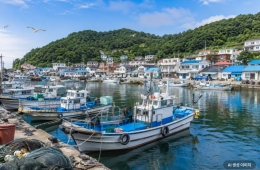
The Ministry of Oceans and Fisheries attracted 252.3 billion won in private investment in port development projects during the first half of this year. Despite a slump in the construction market, investment increased by 17.5% compared to the same period last year, led by solar energy facilities and seafood distribution centers.
On July 27, the Ministry announced that there were a total of 78 permits for non-government port development projects in the first half of the year, amounting to 252.3 billion won. These non-government port development projects refer to a system in which private entities obtain permission from regional offices of oceans and fisheries or local governments to construct, reconstruct, or reinforce port facilities, as well as to perform maintenance or dredging work. This allows the private sector to expand necessary facilities in a timely manner and reduces the government's fiscal burden.
By authorization agency, a total of 78 projects were approved by 10 regional offices of oceans and fisheries and five local governments across the country. By type of facility, low-carbon facilities such as solar power infrastructure accounted for the largest share with 21 cases, followed by other functional facilities and additional support facilities with 14 cases each.
The largest project was the establishment of the Mokpo Suhyup dried seaweed (gim) processing and distribution facility, with an investment of 67 billion won. Next were the Mokpo Orion Suhyup seasoned gim processing plant construction (43.6 billion won), the new warehouse construction at Pyeongtaek Port (24 billion won), and the modernization project for the fish market at Hallim Port, Jeju (18.4 billion won), all among the major investments.
The Ministry of Oceans and Fisheries commented that, since 2021, despite prolonged stagnation in construction investment, private demand for eco-friendly and high value-added logistics facilities such as solar energy facilities in ports and the modernization of seafood distribution centers has been steadily increasing.
Hot Picks Today
 "Surviving on One Meal a Day to Invest 3.5 Million Won Monthly... 'FIRE' Craze Sparks 'NISA Poverty' in Japan"
- "Correction Over for Samsung and SK hynix" "670,000 for Samsung, 4.7 Million for SK hynix": Why Global IBs Remain Optimistic
- "Used for the Wedding" 300,000-Won Ring and Dress...Changing Wedding Trends
- Causing Trouble Without a Simple "Sorry"... The Reason Behind the 'Gen Z Stare' Revealed
- Nongshim Third-Generation Executive Sangyul Shin to Wed SKT Employee on the 13th
Gong Doopyo, Director General of Ports at the Ministry of Oceans and Fisheries, said, "We are reviewing various institutional improvements to expand private participation in non-government port development projects. We will continue to create support measures that reduce entry barriers for the private sector and ensure that port facilities needed by real users can be secured in a timely manner."
© The Asia Business Daily. All rights reserved. Unauthorized AI training and use prohibited.