August BSI Falls to 89.9...Slips Back to 80s After Three Months as Middle East Risk Reignites
Manufacturing and Non-Manufacturing Sectors Both Decline
Oil and Chemicals Hit Lowest in 17 Years and 6 Months
Semiconductors and Holiday-Related Industries Show Strong Performance
With the risk of conflict in the Middle East reigniting, sentiment in the domestic economy has contracted, especially among industries sensitive to the business cycle such as energy, materials, construction, and machinery.
On July 28, the Korea Economic Federation (hereinafter, KEF) announced that, according to its Business Survey Index (BSI) survey targeting the top 600 companies by sales revenue, the BSI outlook for August 2026 posted 89.9, slipping back into the 80-point range for the first time in three months.

The Korea Economic Association conducted a Business Survey Index (BSI) survey targeting the top 600 companies by sales revenue. The Korea Economic Association
View original imageA BSI figure above 100 indicates a positive economic outlook compared to the previous month, while a value below 100 points to a negative sentiment.
The BSI outlook has remained below the baseline of 100 for five consecutive months since March (102.7), which was before the outbreak of the U.S.-Iran war, and has now fallen back to the 80-point range for the first time in three months since May (87.5). The BSI actual figure for July also stayed weak at 94.4, marking a poor performance for 54 consecutive months.
By sector, both manufacturing (88.4) and non-manufacturing (91.5) indices fell below the baseline of 100, returning to negative territory in parallel after three months.
Within manufacturing, “electronics and communication equipment”—which includes semiconductors (118.8)—and “food, beverages, and tobacco” (105.6), buoyed by expectations of a summer holiday season uptick, showed strong results. In contrast, “oil refining and chemicals” (57.7) marked its lowest level in 17 years and 6 months since February 2009 (54.5), in the aftermath of the global financial crisis, due to the prolonged Middle East war, rising raw material and energy costs, and heightened supply chain uncertainties.
In non-manufacturing, except for “leisure, lodging, and food services” (116.7), which is expected to benefit from summer vacations, all of the remaining six sectors, such as “electricity, gas, and water supply” (73.7), presented a negative outlook.
Among individual categories, the export outlook (100.0) stayed at the baseline, maintaining relatively healthy momentum. However, the BSI for financial conditions (87.8), directly impacted by rising oil prices and growing uncertainty, dropped to its lowest level in three years and seven months since January 2023. The investment BSI (97.0) remained below the baseline, but, reflecting facility investment expectations in key export-oriented manufacturing sectors such as semiconductors, it achieved its highest reading in three years and eleven months.
Hot Picks Today
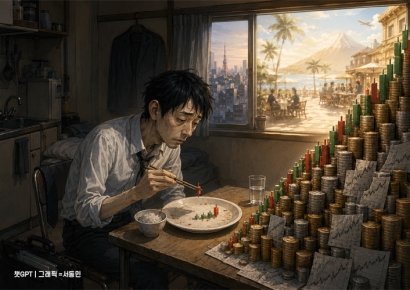 "Surviving on One Meal a Day to Invest 3.5 Million Won Monthly... 'FIRE' Craze Sparks 'NISA Poverty' in Japan"
- "Correction Over for Samsung and SK hynix" "670,000 for Samsung, 4.7 Million for SK hynix": Why Global IBs Remain Optimistic
- "Used for the Wedding" 300,000-Won Ring and Dress...Changing Wedding Trends
- Causing Trouble Without a Simple "Sorry"... The Reason Behind the 'Gen Z Stare' Revealed
- Nongshim Third-Generation Executive Sangyul Shin to Wed SKT Employee on the 13th
Lee Sangho, Head of the Economic Division at the Korea Economic Federation, commented, "While a handful of key export industries such as semiconductors are providing some support, corporate sentiment on the whole is deteriorating as instability in the Middle East returns." He emphasized, "In order to minimize the impact of external uncertainties, it is necessary to continue supporting the restructuring of the refining and petrochemical sectors—which are facing a critical juncture—along with efforts to alleviate the burden of raw material and logistics costs."
© The Asia Business Daily. All rights reserved. Unauthorized AI training and use prohibited.